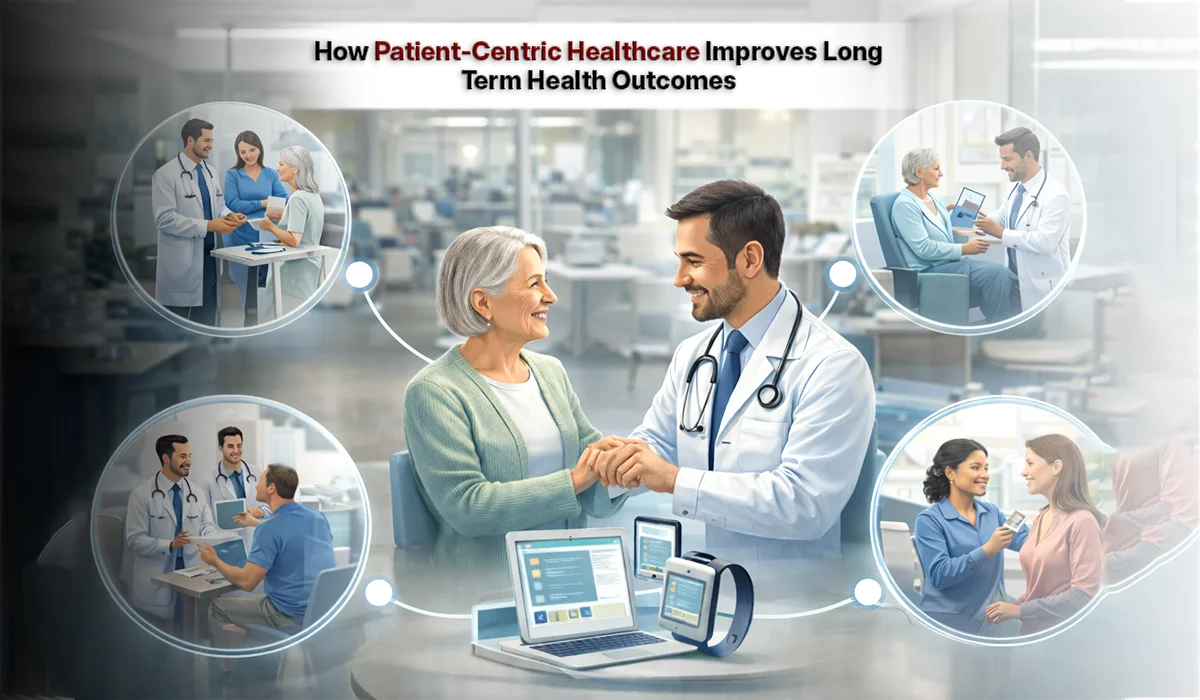
Introduction: What If Healthcare Truly Listened?
When Maria moved from Chicago to Houston, she expected her new doctor to review her reports, prescribe medicines, and move on. Instead, something different happened. The doctor asked her about her daily routine, her work stress, her family support, and even what foods she grew up eating.
For the first time, Maria felt seen — not just treated.
That moment captures the heart of patient-centric healthcare. It shifts the focus from diseases to people. And research across the USA, India, the UK, and other major countries shows that when healthcare revolves around patients’ needs, values, and preferences, long-term health outcomes improve.
But how exactly does patient-centric healthcare improve long-term health outcomes? Let’s explore the story behind this powerful shift in modern medicine.
What Is Patient-Centric Healthcare?
Patient-centric healthcare is a care model that places patients at the center of decision-making. Instead of focusing only on symptoms, providers consider:
- Personal goals
- Lifestyle habits
- Cultural background
- Emotional well-being
- Social support systems
The goal is simple: treat the whole person, not just the condition.
Core Principles of Patient-Centric Healthcare
- Respect for patient preferences
- Shared decision-making
- Clear communication
- Emotional support
- Coordinated care
In both the USA and India, healthcare systems are increasingly adopting patient-centered care models to improve outcomes and reduce costs.
Why Long-Term Health Outcomes Matter
Short-term treatment can relieve symptoms. But long-term health outcomes determine:
- Life expectancy
- Quality of life
- Chronic disease control
- Hospital readmission rates
- Mental well-being
When healthcare focuses only on immediate fixes, patients may relapse or struggle with complications. Patient-centric healthcare improves long-term health outcomes by building trust, encouraging adherence, and addressing root causes.
How Patient-Centric Healthcare Improves Long-Term Health Outcomes
Let’s break it down clearly.
1. Better Treatment Adherence
Patients are more likely to follow treatment plans when they understand and agree with them.
For example:
- A diabetic patient involved in meal planning is more likely to maintain glucose control.
- A cardiac patient who understands lifestyle changes reduces the risk of repeat hospitalization.
Studies from the Agency for Healthcare Research and Quality (AHRQ) show that patient engagement improves medication adherence significantly.
2. Stronger Doctor-Patient Relationships
Trust improves communication.
When patients feel comfortable:
- They report symptoms early.
- They share mental health concerns.
- They ask questions.
This early reporting helps prevent complications — a major reason patient-centric healthcare improves long-term health outcomes.
3. Improved Chronic Disease Management
Chronic diseases like:
- Diabetes
- Hypertension
- Arthritis
- Heart disease
require long-term monitoring.
Patient-centered care models use:
- Personalized care plans
- Digital health tracking
- Continuous follow-ups
These approaches improve disease control rates in both developed and developing healthcare systems.
The Role of Shared Decision-Making in Healthcare
Shared decision-making is a core part of patient-centric healthcare.
Instead of doctors making unilateral decisions, they discuss:
- Risks and benefits
- Alternative treatments
- Lifestyle adjustments
- Financial implications
In the USA, hospitals using shared decision-making programs report lower readmission rates. In India, patient education initiatives are improving rural healthcare outcomes.
Emotional and Mental Health Support
Physical and emotional health are connected.
When patients face serious illnesses, fear and anxiety often follow. Patient-centric healthcare includes:
- Counseling support
- Mental health screenings
- Family involvement
Long-term recovery improves when emotional support is integrated into medical care.
Cultural Sensitivity and Personalized Care
Healthcare must adapt to cultural and regional contexts.
For example:
- Dietary advice differs between the USA and India.
- Family involvement may be more significant in Asian healthcare settings.
- Language barriers affect treatment understanding.
Patient-centric healthcare improves long-term health outcomes by respecting cultural preferences and adapting care accordingly.
Technology and Digital Patient-Centered Care
Technology plays a vital role in modern patient-centered healthcare systems.
Examples include:
- Telemedicine consultations
- Remote patient monitoring
- Health apps
- Electronic health records
These tools improve follow-ups, track chronic conditions, and reduce emergency visits.
During the COVID-19 pandemic, telehealth adoption in the USA increased dramatically. India also expanded digital health missions to reach rural populations.
Preventive Care and Early Intervention
Prevention is one of the strongest ways patient-centric healthcare improves long-term health outcomes.
When patients are actively engaged, they are more likely to:
- Schedule regular screenings
- Follow vaccination programs
- Maintain healthy lifestyles
Preventive healthcare reduces healthcare costs and improves survival rates.
Comparing Traditional vs. Patient-Centric Healthcare
| Traditional Model | Patient-Centric Model |
|---|---|
| Disease-focused | Person-focused |
| Limited communication | Open dialogue |
| Standard treatment plans | Personalized care |
| Reactive approach | Preventive approach |
The difference lies in partnership.
Real-Life Example: Managing Diabetes
In a traditional model:
A doctor prescribes insulin and advises diet control.
In a patient-centric model:
- The provider discusses food habits.
- They explore stress triggers.
- They set realistic goals.
- They use digital monitoring tools.
The second approach leads to better glycemic control and reduced complications.
Economic Benefits of Patient-Centric Healthcare
Improving long-term health outcomes also reduces healthcare costs.
Benefits include:
- Fewer hospital readmissions
- Reduced emergency visits
- Lower medication wastage
- Better chronic disease control
The World Health Organization emphasizes integrated, patient-centered health services as a cost-effective strategy worldwide.
Challenges in Implementing Patient-Centric Healthcare
Despite its benefits, challenges remain:
- Time constraints in busy clinics
- Limited healthcare infrastructure
- Financial barriers
- Resistance to change
However, healthcare systems in the USA and India are investing in training programs and digital tools to overcome these barriers.
Conclusion
Healthcare is changing. Patients no longer want to be passive recipients of treatment. They want partnership, respect, and clarity.
Patient-centric healthcare improves long-term health outcomes by building trust, improving adherence, supporting prevention, and addressing emotional well-being. Whether in the USA, India, or anywhere else, the future of medicine lies in listening, understanding, and collaborating. When healthcare sees the person behind the diagnosis, recovery becomes sustainable.
Web Stories