Emerging Zoonotic Diseases: What Nipah and Bird Flu Teach Us About Global Health Risks

Introduction: A Warning We Keep Hearing Too Late

In early 2020, the world learned a hard lesson: a disease that starts quietly in animals can change human life overnight. Lockdowns, overwhelmed hospitals, and fear became part of daily life. But COVID-19 was not the first warning—and it will not be the last.

Long before the pandemic, scientists were tracking dangerous infections that jump from animals to humans. Two of the most concerning examples are Nipah virus and Bird Flu. These diseases may not dominate headlines every day, but they reveal something deeply important about our future.

Emerging zoonotic diseases—illnesses that spread from animals to people—are rising in number and impact. Nipah and Bird Flu show us how quickly outbreaks can begin, how hard they are to control, and why global health systems must work together.

This article explores what these two diseases teach us about global health risks, prevention, and preparedness—and why the next outbreak may depend on what we do today.

What Are Emerging Zoonotic Diseases?

Emerging zoonotic diseases are infections that originate in animals and then spread to humans, often for the first time or in new ways.

These diseases emerge when:

  • Humans live closer to wildlife
  • Animal farming becomes more intensive
  • Global travel increases
  • Climate change alters animal habitats

More than 60% of infectious diseases in humans come from animals. When these diseases adapt to human transmission, they can spread rapidly—sometimes before symptoms are even recognized.

Emerging zoonotic diseases are especially dangerous because:

  • Humans often have no immunity
  • Treatments may be limited
  • Early detection is difficult

Nipah virus and Bird Flu are powerful examples of how zoonotic threats can move from local outbreaks to global concerns.

Why Nipah and Bird Flu Matter in Global Health Discussions

Nipah virus and Bird Flu are not just regional problems. They represent global health risks with the potential for international spread.

What makes them critical:

  • High mortality rates
  • Animal-to-human transmission
  • Possibility of human-to-human spread
  • Limited treatment options

These diseases test how prepared health systems truly are—especially in a world where borders cannot stop viruses.

Understanding them helps us prepare not just for these specific infections, but for future zoonotic diseases that may follow similar patterns.

Nipah Virus: A Silent but Deadly Threat

Nipah virus was first identified in 1999 during an outbreak linked to pigs and fruit bats. Since then, outbreaks have appeared in parts of South and Southeast Asia.

What makes Nipah especially dangerous:

  • Fatality rates can reach 40–75%
  • No specific antiviral treatment exists
  • Human-to-human transmission has been confirmed

Nipah often begins quietly. A few cases of fever and headache may appear before severe symptoms such as brain inflammation develop. By the time authorities react, containment becomes difficult.

Nipah teaches us that small outbreaks can carry massive consequences if not detected early.

Bird Flu: A Virus That Keeps Changing

Bird Flu, also known as avian influenza, has existed for decades. What makes it dangerous is its ability to mutate and adapt.

Key concerns with Bird Flu:

  • Wild birds act as natural carriers
  • Poultry farming increases exposure risk
  • Some strains can infect humans directly

While many Bird Flu strains mainly affect birds, certain types have caused severe illness and death in humans. The fear is not just current infections—but the chance that the virus could adapt for easier human spread.

Bird Flu reminds us that constant surveillance is necessary, even when outbreaks seem controlled.

How Zoonotic Diseases Jump From Animals to Humans

The jump from animals to humans—called spillover—does not happen by chance. It is often driven by human activity.

Common spillover pathways include:

  • Wildlife trade and consumption
  • Deforestation and habitat loss
  • Close contact with livestock
  • Poor sanitation in animal handling

In the case of Nipah, fruit bats contaminate food sources. For Bird Flu, infected birds transmit the virus through direct contact or contaminated surfaces.

These examples show that human behavior plays a major role in zoonotic disease emergence.

The Role of Climate Change in Emerging Zoonotic Diseases

Climate change is not just an environmental issue—it is a health issue.

Rising temperatures and changing weather patterns:

  • Alter animal migration routes
  • Expand the range of disease-carrying species
  • Increase contact between humans and wildlife

As animals move into new areas, viruses move with them. This increases the chance of new zoonotic outbreaks in regions that may not be prepared.

Nipah and Bird Flu highlight how environmental changes amplify global health risks.

Global Travel and the Speed of Disease Spread

In today’s world, a virus can cross continents in less than a day.

Air travel, trade, and migration mean:

  • Local outbreaks can become global threats
  • Detection delays increase spread
  • Border controls alone are not enough

Even though Nipah outbreaks have been geographically limited so far, experts worry that increased travel could change that reality.

Bird Flu already affects multiple continents through bird migration alone.

These diseases show that global health security depends on international cooperation.

Why Early Detection Makes the Difference

One of the strongest lessons from Nipah and Bird Flu is the power of early detection.

When outbreaks are identified early:

  • Transmission chains can be broken
  • Healthcare systems can prepare
  • Mortality rates drop

Delayed detection leads to:

  • Community spread
  • Healthcare worker exposure
  • Public panic

Strong disease surveillance systems are not optional—they are essential tools for preventing pandemics.

Public Awareness: The Missing Link in Prevention

Many outbreaks grow worse because people do not recognize the risks.

Public awareness helps by:

  • Encouraging early medical care
  • Reducing risky behaviors
  • Supporting public health measures

Simple actions—like avoiding raw foods during outbreaks or reporting unusual animal deaths—can save lives.

Nipah and Bird Flu show us that informed communities are safer communities.

What Nipah and Bird Flu Teach Us About Healthcare Preparedness

These diseases expose weaknesses in healthcare systems, especially in low-resource settings.

Key preparedness lessons include:

  • Protecting healthcare workers
  • Ensuring isolation facilities
  • Stockpiling essential supplies
  • Training rapid response teams

Healthcare preparedness is not just about hospitals—it includes labs, communication systems, and public trust.

Without preparation, even small outbreaks can overwhelm systems.

The One Health Approach: A Smarter Way Forward

One Health is a global strategy that recognizes the connection between human, animal, and environmental health.

Nipah and Bird Flu perfectly illustrate why One Health matters:

  • Animal health surveillance detects risks early
  • Environmental protection reduces spillover
  • Human healthcare responds faster

Countries that adopt this integrated approach are better equipped to prevent and control emerging zoonotic diseases.

Conclusion: The Future Depends on What We Learn Today

Nipah virus and Bird Flu are not distant threats. They are living lessons in how fragile global health security can be.

They teach us that:

  • Prevention is more powerful than reaction
  • Early detection saves lives
  • Human actions shape disease risks
  • Global cooperation is essential

Emerging zoonotic diseases will continue to challenge us. Whether they become global disasters or contained outbreaks depends on preparedness, awareness, and shared responsibility.

The next outbreak may already be forming somewhere in the world. What matters is whether we are ready when it appears.

Latest Post

Web Stories

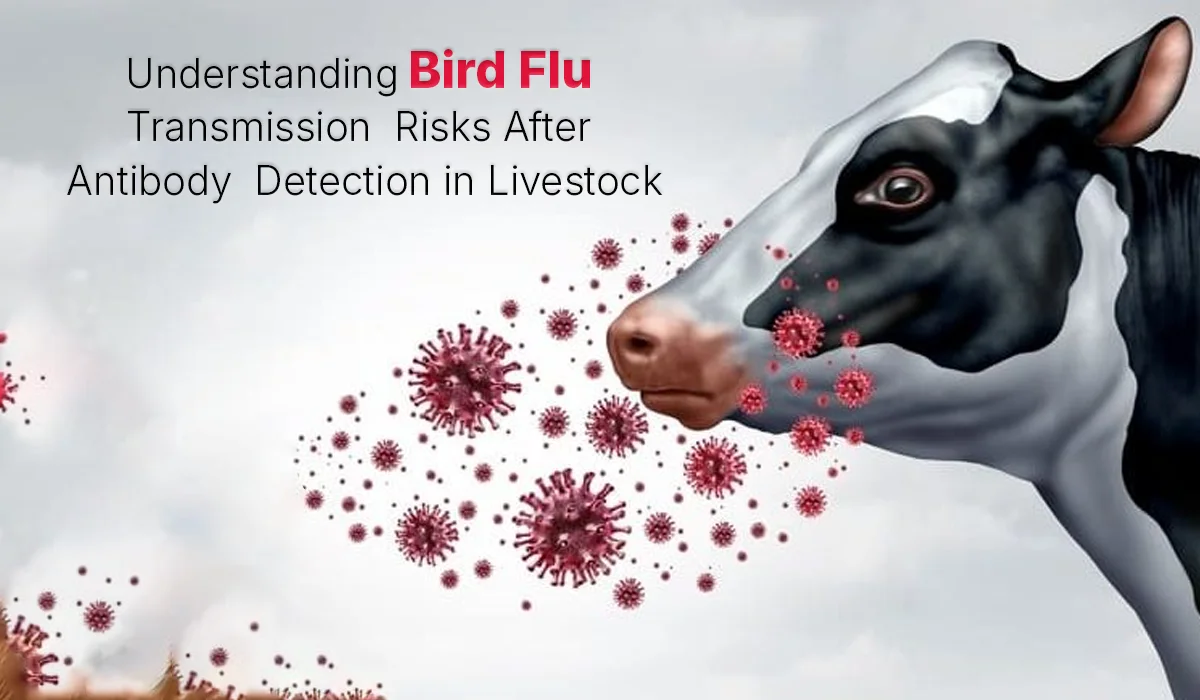
Understanding Bird Flu Transmission Risks After Antibody Detection in Livestock

Introduction

The recent detection of bird flu antibodies in livestock has intensified global concern about how zoonotic viruses move silently across species. Understanding bird flu transmission risks after antibody detection in livestock is no longer a topic limited to scientists—it directly affects farmers, policymakers, healthcare professionals, and consumers alike.

Antibody presence does not always signal an active outbreak, but it strongly indicates prior exposure to avian influenza viruses, raising important questions about cross-species transmission. In regions with dense farming systems and close human–animal interaction, these findings demand careful attention. As experts monitor evolving strains, the focus has shifted from reaction to early risk assessment and prevention, especially where food systems and public health intersect.

This article explains what antibody detection really means, why it matters now, and how it reshapes global bird flu preparedness.

What Does Antibody Detection in Livestock Mean for Bird Flu Transmission?

Antibody detection shows that an animal’s immune system has previously encountered the bird flu virus. This does not necessarily mean the animal is currently infected or contagious.

However, understanding bird flu transmission risks after antibody detection in livestock requires recognizing antibodies as early warning signals. They suggest that avian influenza viruses have breached expected species barriers at least once.

Experts emphasize that such findings:

  • Indicate silent circulation of the virus
  • Reveal gaps in biosecurity systems
  • Help identify regions requiring enhanced surveillance

From a public health perspective, antibody detection acts as a risk marker, prompting closer investigation rather than immediate alarm.

How Can Bird Flu Spread from Birds to Livestock and Humans?

Bird flu viruses primarily originate in wild birds, especially waterfowl. Transmission pathways widen when farming ecosystems overlap.

Common transmission routes include:

  • Contaminated water sources shared by birds and livestock
  • Contact with infected poultry waste
  • Poor farm-level hygiene and equipment reuse

Humans are typically exposed through:

  • Direct contact with infected animals
  • Handling raw or undercooked animal products
  • Prolonged exposure in high-risk farm environments

This is why understanding bird flu transmission risks after antibody detection in livestock is crucial—it highlights indirect exposure pathways that often go unnoticed until patterns emerge.

Why Is Antibody Detection in Livestock a Growing Concern in Asia?

Asia has unique agricultural and ecological conditions that amplify zoonotic risks. High-density poultry farming, mixed livestock systems, and live animal markets create ideal conditions for viral adaptation.

Health experts note three major concerns:

  1. Virus mutation potential in mammals
  2. Increased human exposure frequency
  3. Delayed detection due to asymptomatic animals

Antibody detection suggests the virus may already be adapting. While adaptation does not guarantee human transmission, it raises the stakes for monitoring viral evolution.

This is why regional health authorities increasingly link understanding bird flu transmission risks after antibody detection in livestock with long-term pandemic preparedness.

Is Antibody Detection Proof of an Imminent Bird Flu Outbreak?

No. Antibody presence alone does not confirm an active outbreak or immediate threat to humans.

According to epidemiologists:

  • Antibodies reflect past exposure, not active infection
  • Many animals clear the virus without symptoms
  • Continuous surveillance is more important than emergency response

However, dismissing antibody findings would be risky. History shows that early biological signals often precede outbreaks by months or years.

Thus, understanding bird flu transmission risks after antibody detection in livestock allows authorities to:

  • Strengthen surveillance systems
  • Adjust farm biosecurity protocols
  • Prepare healthcare response frameworks

What Are Experts Saying About Future Bird Flu Risks?

Virologists and public health experts largely agree on one point: zoonotic spillover risk is rising globally.

Expert consensus highlights:

  • Climate change altering bird migration patterns
  • Expanding livestock production increasing contact points
  • Viruses adapting faster in mixed-species environments

Several global health agencies now treat antibody detection as part of predictive outbreak modeling, not merely retrospective analysis.

By integrating veterinary data with human health surveillance, experts aim to intercept outbreaks before they escalate, reinforcing the value of understanding bird flu transmission risks after antibody detection in livestock.

How Can Governments, Farmers, and Consumers Reduce Risk?

Risk mitigation requires coordinated action across sectors.

For governments:

  • Expand routine serological testing in livestock
  • Improve data sharing between animal and human health agencies

For farmers:

  • Enforce strict farm biosecurity
  • Limit wildlife–livestock interaction
  • Report unusual animal illness promptly

For consumers:

  • Avoid raw or undercooked animal products
  • Follow food safety advisories
  • Stay informed through official health channels

Prevention depends less on fear and more on awareness-driven behavior change.

Conclusion

Understanding bird flu transmission risks after antibody detection in livestock provides a critical lens into how zoonotic threats develop long before human cases appear. Antibodies are not alarms—but they are signals that demand attention, preparedness, and coordinated response.

As animal and human health become increasingly interconnected, early detection tools like antibody surveillance play a vital role in protecting food systems, livelihoods, and public health. Proactive monitoring, informed policy decisions, and responsible farming practices remain our strongest defense against the next potential outbreak.

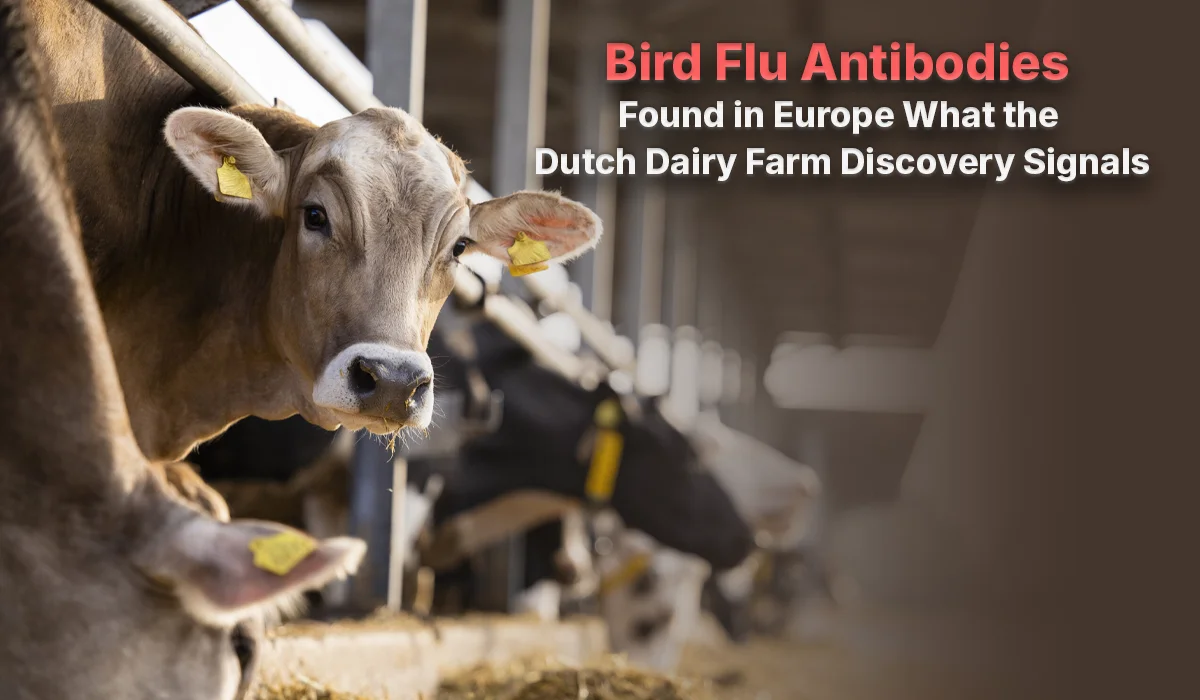
Bird Flu Antibodies Found in Europe: What the Dutch Dairy Farm Discovery Signals

Introduction

Bird flu has long been considered a threat primarily confined to poultry and wild birds. That assumption is now being re-examined. The recent discovery of bird flu antibodies in a Dutch dairy farm has raised new questions about how avian influenza viruses behave, spread, and adapt in Europe.

The finding—reported after routine health surveillance—suggests that exposure may be broader and more complex than previously understood. Bird Flu Antibodies Found in Europe is no longer a hypothetical scenario; it is a documented event with implications for animal health, human safety, and disease monitoring systems.

As someone who closely follows zoonotic disease research and public health risk assessments, this development stands out as a critical signal. It highlights why avian influenza surveillance in dairy cattle and cross-species transmission studies are gaining urgency worldwide. This article breaks down what the Dutch dairy farm discovery really means—and why it matters now.

What Are Bird Flu Antibodies and Why Does Their Presence Matter?

Bird flu antibodies are proteins produced by the immune system after exposure to an avian influenza virus. Their presence does not necessarily indicate active infection. However, they confirm prior exposure, which is what makes the Dutch dairy farm discovery significant.

In this case, antibody detection suggests that cattle were exposed to a bird flu strain at some point. This challenges the long-held belief that avian influenza viruses rarely interact with livestock beyond birds.

From a public health perspective, bird flu antibodies found in Europe raise important questions:

  • How did the exposure occur?
  • Was it environmental, feed-related, or wildlife-driven?
  • Could similar exposures be happening undetected elsewhere?

These questions explain why experts view antibody findings as early-warning signals rather than isolated anomalies.

Why Is the Dutch Dairy Farm Discovery Trending Across Europe?

The discovery is trending because it represents a potential shift in avian influenza behavior. Europe has invested heavily in monitoring bird flu in poultry, but cattle have not traditionally been part of routine avian influenza surveillance.

Experts are paying attention for three reasons:

  1. Cross-Species Exposure Risk
    While antibodies do not mean illness, they indicate that the virus crossed a biological boundary. That alone warrants deeper investigation.
  2. Food Chain Safety Concerns
    Dairy farms sit at the intersection of agriculture and human consumption. Even low-risk findings prompt scrutiny when food systems are involved.
  3. Pandemic Preparedness Lessons
    Previous global outbreaks have shown that early signals are often missed or underestimated. This discovery is being taken seriously to avoid repeating that mistake.

The fact that bird flu antibodies were detected without widespread illness suggests surveillance systems are doing their job—but also that they may need to expand.

Can Bird Flu Spread from Cattle to Humans? What Experts Say

This is one of the most searched questions following the announcement. Current evidence indicates that the risk to humans remains very low. No direct transmission from cattle to humans has been confirmed in this case.

Experts emphasize several reassuring points:

  • Antibodies indicate exposure, not active infection
  • No symptoms were reported in farm workers
  • Pasteurization and food safety protocols remain effective

That said, scientists caution against complacency. Avian influenza viruses are known for mutation and adaptation. Monitoring antibody presence helps researchers track how viruses behave outside their usual hosts.

In short, the discovery does not signal an immediate health crisis—but it does reinforce the importance of proactive monitoring.

What This Means for Global Health Surveillance and Policy

The Dutch dairy farm case is already influencing how health authorities think about disease surveillance. Traditionally, monitoring focused on:

  • Poultry farms
  • Wild bird populations
  • Live animal markets

Now, experts are discussing broader livestock surveillance, particularly in regions with dense farming and migratory bird routes.

Key policy implications include:

  • Expanding routine testing to non-avian livestock
  • Strengthening One Health frameworks that link animal, human, and environmental health
  • Improving data sharing between agricultural and public health agencies

The discovery shows that early signals can appear outside expected settings, reinforcing the need for flexible, science-driven monitoring systems.

Conclusion

The finding of bird flu antibodies found in Europe at a Dutch dairy farm is not a cause for panic—but it is a clear signal. It tells us that avian influenza viruses may be interacting with animal populations in ways we are only beginning to understand.

This discovery underscores the value of early detection, cross-sector collaboration, and transparent communication. It also reminds us that public health preparedness depends on paying attention to subtle clues before they become major problems.

As research continues, one thing is certain: the Dutch dairy farm discovery will shape future conversations about zoonotic disease surveillance, food safety, and global health resilience.

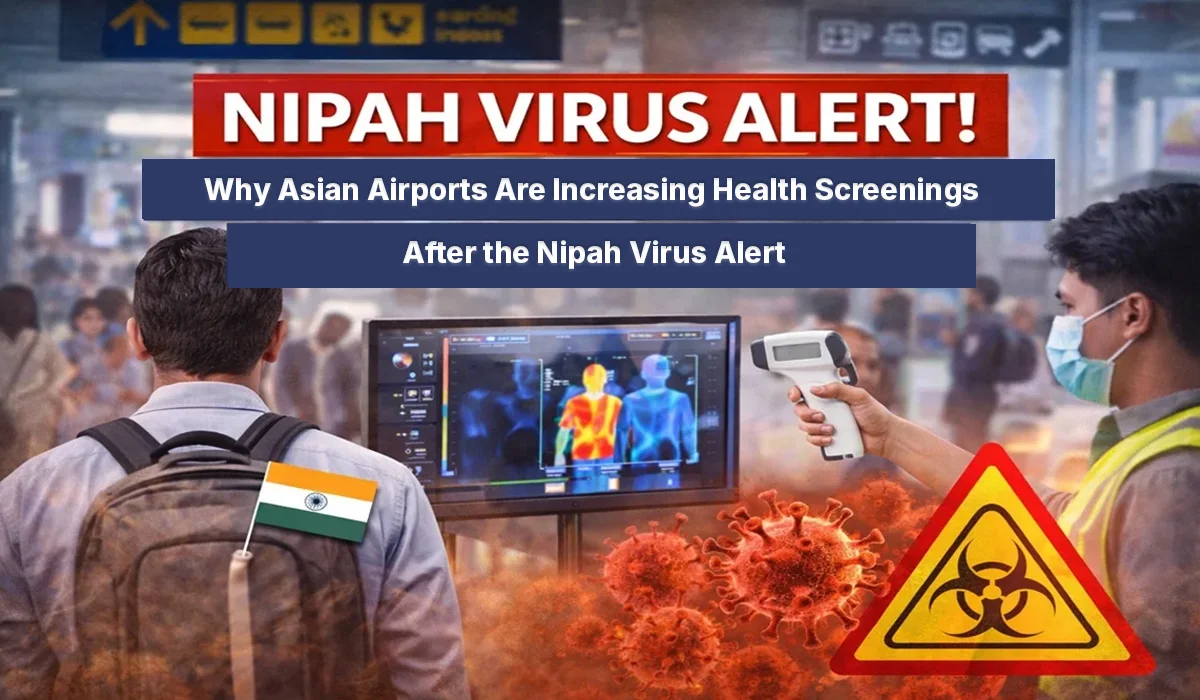
Why Asian Airports Are Increasing Health Screenings After the Nipah Virus Alert

Introduction

The recent Nipah virus alert in India has reignited global concern about the rapid cross-border spread of emerging infectious diseases. In response, Asian airports are increasing health screenings after the Nipah virus alert, marking a decisive shift in how aviation hubs manage biosecurity risks.

With Asia handling some of the world’s busiest international travel corridors, even localized outbreaks can have far-reaching implications. According to public health experts, early detection at points of entry remains one of the most effective ways to prevent global transmission of high-fatality viruses like Nipah.

This renewed focus on airport health screening protocols in Asia reflects lessons learned from past outbreaks, including COVID-19, SARS, and avian influenza. Airports are no longer just transit points—they are now frontline defenses in global disease surveillance.

What Is the Nipah Virus and Why Is It Triggering Airport Alerts in Asia?

The Nipah virus is a zoonotic pathogen first identified in 1999. It spreads from animals to humans and can also transmit through close human contact. What makes Nipah particularly alarming is its high fatality rate, which can range between 40% and 75% depending on outbreak conditions.

Recent clusters reported in parts of India have prompted health authorities to issue advisories. As a result, Asian airport health screenings after the Nipah virus alert have intensified, especially at hubs connecting South Asia to Southeast Asia and the Middle East.

Public health agencies warn that early symptoms—fever, headache, and respiratory distress—can be mistaken for common viral infections. This uncertainty increases the risk of undetected international spread, making airports a critical checkpoint.

Why Are Asian Airports Increasing Health Screenings After the Nipah Virus Alert?

The decision to enhance screenings is not reactive panic—it is risk-based prevention. Experts highlight three key reasons:

  1. High Passenger Volume: Asia accounts for a large share of global air travel.
  2. Incubation Period Risks: Travelers may appear healthy while incubating the virus.
  3. No Approved Vaccine: Prevention relies heavily on early identification and isolation.

By strengthening health screening measures at Asian airports, authorities aim to identify symptomatic passengers before community transmission occurs. These measures also reassure travelers that safety protocols are actively enforced.

What Health Screening Measures Are Asian Airports Implementing?

Following the Nipah virus alert, airports across Asia are deploying multi-layered screening systems, including:

  • Thermal scanning for fever detection
  • Health declaration forms for recent travel and exposure history
  • Visual assessments by trained medical staff
  • Isolation rooms for suspected cases
  • Coordination with national disease control centers

These airport screening protocols for Nipah virus prevention are designed to be non-intrusive yet effective. Importantly, they are integrated with digital surveillance systems that allow rapid reporting to public health authorities.

Is Airport Health Screening Effective in Preventing Disease Spread?

Experts agree that airport screening alone cannot eliminate risk—but it significantly reduces it. According to epidemiologists, early detection at travel hubs can delay outbreak escalation, buying critical time for healthcare systems to respond.

Studies from previous outbreaks show that layered interventions—screening, contact tracing, and public awareness—are most effective when implemented together. This is why Asian airports increasing health screenings after the Nipah virus alert are also sharing passenger data with health ministries and international agencies.

The goal is containment, not disruption.

How This Impacts Travelers and Regional Public Health

For travelers, enhanced screenings may mean slightly longer processing times. However, surveys consistently show that passengers prefer safety over speed during health alerts.

From a broader perspective, these measures strengthen regional health security in Asia. Airports now act as surveillance nodes, helping detect patterns that might otherwise go unnoticed until hospitals report clusters.

Health officials emphasize that transparent communication is key. Clear signage, multilingual advisories, and staff training ensure cooperation rather than fear.

Conclusion

The reason Asian airports are increasing health screenings after the Nipah virus alert is clear: prevention is faster, safer, and more effective than response. In a region defined by mobility and interconnected economies, airports play a crucial role in protecting public health.

By applying lessons from past outbreaks and using modern screening tools, Asian aviation hubs are reinforcing their position as guardians of global health security. These measures are not just about Nipah—they represent a long-term shift toward smarter, more resilient disease prevention systems.

As global travel continues to rebound, proactive screening remains one of the strongest defenses against the next outbreak.

Latest Post

Nipah Virus in India: What the Latest Outbreak Means for Public Health Preparedness

Introduction

Nipah Virus in India has once again emerged as a critical public health concern, reminding the country of the persistent threat posed by zoonotic diseases. With a high fatality rate and no definitive antiviral treatment, Nipah virus outbreaks test not only medical readiness but also surveillance, communication, and community response systems.

As someone who closely tracks infectious disease preparedness and public health policy in India, it is evident that each Nipah outbreak reveals both progress and persistent gaps. The latest Nipah virus outbreak in India is not just a medical event—it is a stress test for early detection systems, hospital readiness, and coordinated response across state and central agencies.

Understanding what this outbreak means for public health preparedness in India is essential for policymakers, healthcare professionals, and the general public alike.

What Is Nipah Virus and Why Is It a Public Health Threat in India?

Nipah virus is a zoonotic virus transmitted from animals to humans, with fruit bats identified as the primary natural reservoir. Human infections can occur through contaminated food, direct animal contact, or human-to-human transmission in healthcare or household settings.

The concern around Nipah Virus in India stems from three key factors:

  • High mortality rate, often reported between 40–75%
  • Lack of specific treatment or licensed vaccine
  • Potential for rapid spread in densely populated areas

India has experienced multiple Nipah outbreaks since 2018, primarily concentrated in southern states. Each episode reinforces the virus’s capacity to re-emerge despite containment efforts.

What Does the Latest Nipah Virus Outbreak in India Reveal About Preparedness?

The latest Nipah virus outbreak in India highlights notable improvements in outbreak detection and response. Rapid identification of suspected cases, immediate isolation protocols, and contact tracing indicate a stronger surveillance network than in earlier years.

However, the outbreak also reveals continuing vulnerabilities:

  • Heavy dependence on state-level healthcare capacity
  • Limited availability of high-containment diagnostic laboratories
  • Public anxiety fueled by misinformation on social media

While emergency response mechanisms are activated quickly, long-term preparedness still requires sustained investment rather than reactive measures.

How Prepared Is India’s Healthcare System for Emerging Zoonotic Diseases?

India’s preparedness for emerging infections like Nipah has improved significantly after experiences with COVID-19 and earlier Nipah outbreaks. Hospitals are now faster at implementing infection control protocols, and healthcare workers are better trained in personal protective measures.

That said, public health preparedness in India remains uneven across regions. Urban tertiary hospitals are well-equipped, but rural and semi-urban areas face:

  • Shortage of trained infectious disease specialists
  • Limited ICU and isolation infrastructure
  • Gaps in continuous disease surveillance

The Nipah virus outbreak underscores the need for a uniform national preparedness framework, not just isolated centers of excellence.

Why Surveillance and Early Detection Are Critical for Nipah Virus Control

Early detection is the single most effective tool in controlling Nipah virus spread. Surveillance systems must integrate:

  • Human health data
  • Animal health monitoring
  • Environmental risk indicators

The Nipah Virus in India situation demonstrates the importance of the “One Health” approach, which links human, animal, and environmental health systems. When early warning signs are missed—such as unexplained encephalitis cases or animal deaths—the cost of containment rises sharply.

Strengthening real-time reporting, laboratory turnaround times, and inter-agency data sharing remains a priority for sustainable preparedness.

What Can the Public and Policymakers Learn From This Outbreak?

The latest outbreak offers clear lessons:

For policymakers:

  • Invest consistently in public health infrastructure, not only during crises
  • Expand high-level diagnostic labs across regions
  • Support research into vaccines and therapeutics for Nipah virus

For the public:

  • Rely on verified health advisories
  • Avoid panic-driven behavior
  • Follow infection prevention guidelines during outbreak alerts

Public cooperation, trust in health authorities, and transparent communication are as critical as medical interventions in managing Nipah virus outbreaks.

Conclusion: Why Nipah Virus in India Is a Wake-Up Call for Future Preparedness

Nipah Virus in India is more than a recurring outbreak—it is a reminder that emerging infectious diseases will continue to challenge public health systems. The latest outbreak shows meaningful progress in detection and response, yet it also exposes gaps that require long-term strategic action.

Strengthening surveillance, ensuring equitable healthcare capacity, and adopting a proactive “One Health” approach are essential steps toward resilient public health preparedness in India. The lessons learned today will determine how effectively the country responds to the next emerging threat.

Preparedness is not built during emergencies—it is built between them.

Latest Post

Let's Talk

Our team is ready to guide you—connect with us today.

Get in Touch


    Call Us

    +91-8851219099

    Reach Us

    Plot no.68, Phase-1, Block C, DLF Industrial Area, Sector 32, Faridabad, Haryana 121003

    Video Logo

    We Care of your Health

    Copyright © 2026 Nukind Pharma Pvt Ltd. All Rights Reserved.

    Add to cart
    Quitting smoking doesn’t just reduce risk—it strengthens the impact of lung cancer screening. Nukind Healthcare Bird Flu Antibodies Found in Europe: What the Dutch Dairy Farm Discovery Signals A Virus Few People Know, But Many Need to Watch Out For