Private Label Cosmetic Manufacturing: What Brands Need to Know

Introduction

Have you ever wondered how some beauty brands seem to appear overnight—complete with sleek packaging, trending ingredients, and loyal customers?

Behind many of these brands is a powerful engine most consumers never see: Private Label Cosmetic Manufacturing.

In today’s global beauty market, where skincare and cosmetics trends move fast, launching a brand no longer requires building a factory from scratch. Instead, entrepreneurs, influencers, and established companies are turning to private label cosmetic manufacturing to bring products to life efficiently and professionally.

From indie skincare startups in California to wellness brands expanding across Europe and Asia, private labeling has changed how cosmetics are developed, produced, and distributed. If you’re planning to launch a beauty brand—or scale one—understanding this model is essential.

What Is Private Label Cosmetic Manufacturing?

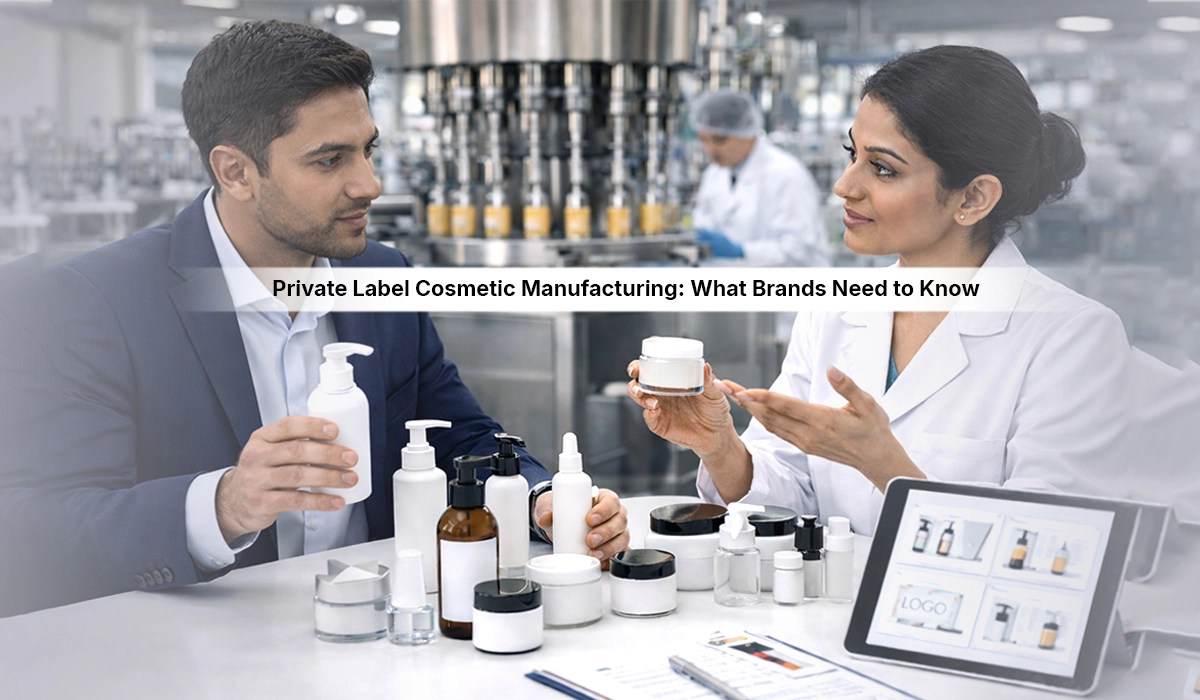
Private Label Cosmetic Manufacturing is a business model where a manufacturer produces cosmetic products that are branded and sold under another company’s name.

In simple terms:

  • The manufacturer creates the formula.
  • The brand adds its own logo and packaging.
  • The product is marketed as the brand’s own.

Unlike custom formulation (where products are developed from scratch), private labeling often uses pre-developed, tested formulations. This reduces time, cost, and complexity.

It allows brands to focus on:

  • Marketing
  • Brand identity
  • Distribution
  • Customer experience

While the manufacturer handles:

  • Product formulation
  • Compliance
  • Quality control
  • Bulk production

Why Private Label Cosmetic Manufacturing Is Growing Worldwide

The beauty industry is expanding rapidly. Consumers are demanding:

  • Clean ingredients
  • Vegan formulas
  • Cruelty-free products
  • Dermatologically tested skincare

Launching quickly matters more than ever.

Private label cosmetic manufacturing offers:

  • Faster time to market
  • Lower startup investment
  • Reduced regulatory burden
  • Scalable production

In the United States especially, small business owners are using private label solutions to enter crowded markets without heavy capital investment.

How Private Label Cosmetic Manufacturing Works

Step 1: Selecting a Manufacturer

Brands begin by choosing a private label cosmetic manufacturer that offers:

  • GMP certification
  • FDA-compliant processes (in the USA)
  • Ingredient transparency
  • Clear MOQs (minimum order quantities)

This partnership is critical. The manufacturer becomes the backbone of the brand.

Step 2: Choosing Products

Manufacturers often offer ready-made categories such as:

  • Facial serums
  • Moisturizers
  • Body lotions
  • Lip balms
  • Hair oils
  • Sunscreens

Brands select formulations that match their target audience.

Step 3: Branding and Packaging

The product formula may stay the same, but the identity changes.

Brands design:

  • Labels
  • Logo
  • Outer packaging
  • Marketing claims

This is where differentiation happens.

Step 4: Compliance and Testing

In the USA and other major markets, cosmetics must follow safety regulations.

Private label cosmetic manufacturing companies usually:

  • Conduct stability testing
  • Ensure ingredient compliance
  • Maintain manufacturing records
  • Provide necessary documentation

Step 5: Production and Delivery

Once finalized:

  • Products are manufactured in bulk
  • Labeled
  • Packed
  • Shipped to distribution centers

Brands then take over marketing and sales.

Private Label vs Custom Cosmetic Manufacturing

Many brands confuse these two models.

Private LabelCustom Formulation
Ready-made formulaDeveloped from scratch
Faster launchLonger R&D phase
Lower costHigher investment
Less flexibilityFull creative control

Private label cosmetic manufacturing is ideal for startups and mid-sized brands wanting speed and efficiency.

Benefits of Private Label Cosmetic Manufacturing

1. Lower Startup Costs

No need to invest in:

  • Equipment
  • Lab facilities
  • Regulatory teams

This reduces financial risk.

2. Faster Time to Market

Instead of spending 12–18 months on development, brands can launch in weeks.

3. Professional Quality Standards

Established manufacturers operate under:

  • GMP guidelines
  • International safety standards
  • Quality control systems

4. Scalability

As sales grow, production can scale without new infrastructure.

5. Focus on Brand Growth

Founders can concentrate on:

  • Social media marketing
  • Influencer collaborations
  • Retail expansion

Instead of managing production logistics.

Key Things Brands Must Evaluate Before Choosing a Manufacturer

Ingredient Transparency

Consumers today want clean beauty. Brands must understand:

  • Active ingredients
  • Preservatives
  • Allergen risks

Regulatory Compliance

For U.S. brands, compliance includes:

  • FDA cosmetic labeling requirements
  • INCI ingredient listing
  • Safety substantiation

MOQ (Minimum Order Quantity)

Some manufacturers require large production volumes. Startups should seek manageable MOQs.

Customization Options

Even in private labeling, brands may request:

  • Fragrance variations
  • Packaging upgrades
  • Ingredient enhancements

Common Mistakes Brands Make

Choosing Based Only on Price

Low-cost production can compromise quality.

Ignoring Documentation

Always request:

  • MSDS sheets
  • Ingredient certificates
  • Stability reports

Overlooking Packaging Quality

Packaging affects:

  • Shelf life
  • Brand perception
  • Consumer trust

Trends Influencing Private Label Cosmetic Manufacturing

The industry is evolving rapidly.

Clean Beauty

Demand for:

  • Paraben-free
  • Sulfate-free
  • Silicone-free formulas

Sustainable Packaging

Eco-friendly materials are becoming standard.

Personalized Skincare

Brands now segment products by:

  • Skin type
  • Age
  • Climate

Private label cosmetic manufacturing companies are adapting quickly to these demands.

How Private Label Supports Influencer and DTC Brands

Many social media influencers are launching skincare lines.

Private label cosmetic manufacturing allows them to:

  • Launch fast
  • Test product-market fit
  • Expand globally

Without investing in manufacturing plants.

Cost Structure of Private Label Cosmetic Manufacturing

Costs generally include:

  • Product formula cost
  • Packaging cost
  • Label printing
  • Bulk production
  • Shipping

Pricing varies by:

  • Ingredient complexity
  • Order volume
  • Customization level

Is Private Label Cosmetic Manufacturing Safe?

Yes—when done correctly.

Reputable manufacturers follow:

  • GMP guidelines
  • Microbial testing protocols
  • Stability testing
  • Safety assessments

Brands must ensure documentation before selling.

Conclusion

The beauty industry has changed. Today, launching a cosmetics brand is not about owning a factory—it’s about building a strong identity supported by reliable production. Private Label Cosmetic Manufacturing gives brands access to professional-grade formulations, regulatory compliance, and scalable production without overwhelming costs. For startups, influencers, and growing companies, it offers a practical path to market entry. For established brands, it offers expansion opportunities. The key lies in choosing the right manufacturing partner, understanding compliance, and maintaining quality standards. In the end, successful beauty brands are not built only on products—but on trust.
Innovation in Cosmetic Manufacturing: Blending Science with Care

Introduction

Have you ever wondered what truly goes into the cream you apply every morning or the serum you trust for your skin? Behind every smooth texture and glowing result lies a world of research, precision, and responsibility. Innovation in Cosmetic Manufacturing: Blending Science with Care is more than a trend—it is a shift in how beauty products are developed, tested, and delivered.

Across the United States and globally, consumers are demanding safer ingredients, transparent labeling, and products that genuinely work. At the same time, cosmetic manufacturers are investing in advanced research, sustainable processes, and smart technology. The result is a new era where science and care meet to create products that support both beauty and well-being.

What Is Innovation in Cosmetic Manufacturing: Blending Science with Care?

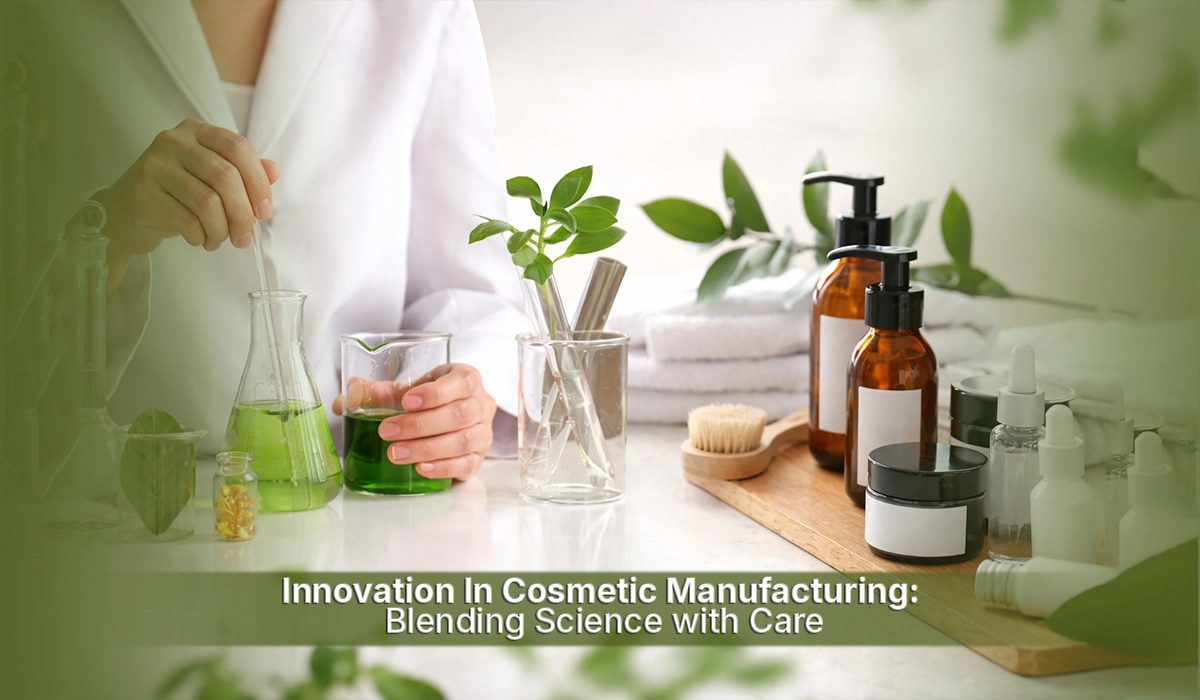
Innovation in Cosmetic Manufacturing: Blending Science with Care refers to the integration of advanced scientific research, safe formulation practices, sustainable production methods, and consumer-centered design in the development of cosmetic products.

It goes beyond simply creating new beauty items. It focuses on:

  • Evidence-based ingredients
  • Dermatologically tested formulations
  • Clean manufacturing processes
  • Ethical sourcing
  • Regulatory compliance
  • Sustainable packaging

At its core, it means developing products that are effective, safe, and aligned with consumer expectations.

Why Cosmetic Innovation Matters More Today Than Ever

The beauty industry has changed dramatically in the last decade. Consumers now:

  • Read ingredient labels
  • Research product safety
  • Demand cruelty-free testing
  • Care about sustainability
  • Expect real results

In the U.S., regulatory oversight from the FDA and increasing consumer awareness have raised the standards for cosmetic brands. Innovation in Cosmetic Manufacturing: Blending Science with Care ensures companies meet these expectations without compromising quality.

This shift is not about marketing claims. It is about measurable safety, transparency, and performance.

The Science Behind Modern Cosmetic Formulations

Modern cosmetic manufacturing relies heavily on scientific research. Laboratories test ingredients for:

  • Stability
  • Skin compatibility
  • Absorption rates
  • Long-term effects

Advanced technologies such as microencapsulation allow active ingredients to penetrate deeper layers of the skin safely. Biotechnology enables the creation of plant-derived actives with enhanced purity. Clinical trials help confirm product effectiveness before launch.

Science reduces guesswork. It replaces assumptions with data.

Clean Beauty and Responsible Ingredient Selection

One of the strongest drivers of innovation is the clean beauty movement. Consumers now seek products free from harmful chemicals such as parabens, phthalates, and harsh sulfates.

Innovation in Cosmetic Manufacturing: Blending Science with Care supports this demand by:

  • Using plant-based alternatives
  • Ensuring transparent ingredient sourcing
  • Conducting dermatological testing
  • Avoiding unnecessary additives

This does not mean every natural ingredient is safe, nor every synthetic one is harmful. Instead, it means carefully evaluating each ingredient based on scientific evidence.

Technology’s Role in Cosmetic Manufacturing

Technology is transforming how cosmetics are produced.

Smart Manufacturing Systems

Automated production lines reduce contamination risks and ensure consistent product quality.

AI in Product Development

Artificial intelligence analyzes consumer data to identify skin trends and ingredient combinations that perform well.

3D Skin Analysis

Advanced imaging tools allow personalized skincare recommendations.

Technology supports innovation by improving accuracy, efficiency, and safety.

Sustainability in Cosmetic Production

Modern cosmetic innovation is closely tied to environmental responsibility.

Sustainable practices include:

  • Eco-friendly packaging
  • Water-efficient production systems
  • Renewable energy use
  • Biodegradable formulations

Consumers increasingly favor brands that reduce their environmental footprint. Innovation in Cosmetic Manufacturing: Blending Science with Care includes protecting the planet while enhancing beauty.

Regulatory Compliance and Safety Standards

In the United States, cosmetic products must comply with FDA regulations. In Europe, stricter cosmetic directives require additional testing.

Innovation ensures:

  • Accurate labeling
  • Safe ingredient limits
  • Proper documentation
  • Transparent claims

Compliance builds trust. It protects both consumers and brands.

Personalization: The Future of Cosmetic Manufacturing

One growing trend is personalized skincare.

Instead of a one-size-fits-all approach, companies now develop:

  • Customized serums
  • Targeted skin treatments
  • DNA-based beauty recommendations

Data-driven innovation allows manufacturers to design products suited to individual needs.

This is where science meets personal care in a very direct way.

The Human Side of Cosmetic Innovation

While science is central, care remains equally important.

Innovation in Cosmetic Manufacturing: Blending Science with Care means understanding:

  • Consumer lifestyle
  • Skin diversity
  • Cultural beauty standards
  • Emotional well-being

Beauty is personal. Products must respect different skin tones, sensitivities, and concerns.

Comparing Traditional vs. Modern Cosmetic Manufacturing

Traditional Manufacturing:

  • Limited ingredient research
  • Basic testing methods
  • Mass production focus

Modern Innovative Manufacturing:

  • Advanced dermatological testing
  • Sustainable ingredient sourcing
  • Personalized formulation
  • Data-driven development

The difference lies in responsibility and precision.

Real-World Example: From Lab to Shelf

Imagine a new anti-aging cream in development.

Step 1: Researchers identify a safe peptide through lab trials.
Step 2: Stability tests ensure the ingredient remains active over time.
Step 3: Clinical testing confirms wrinkle reduction.
Step 4: Packaging is designed using recyclable materials.
Step 5: Regulatory approval ensures safety compliance.

This is Innovation in Cosmetic Manufacturing: Blending Science with Care in action.

Global Impact of Cosmetic Innovation

The global cosmetic industry continues to grow. Countries across North America, Europe, and Asia are adopting higher standards in manufacturing.

Innovation supports:

  • Export readiness
  • International regulatory compliance
  • Cross-border consumer trust

As global awareness increases, innovation becomes essential for competitiveness.

Conclusion

Innovation in Cosmetic Manufacturing: Blending Science with Care represents a new standard in beauty production. It combines scientific research, advanced technology, ethical sourcing, regulatory compliance, and environmental responsibility.

In today’s world, consumers expect more than attractive packaging. They expect safety, transparency, and proven results.

As science advances and awareness grows, cosmetic innovation will continue shaping a safer, more responsible beauty industry—one that truly blends science with care.

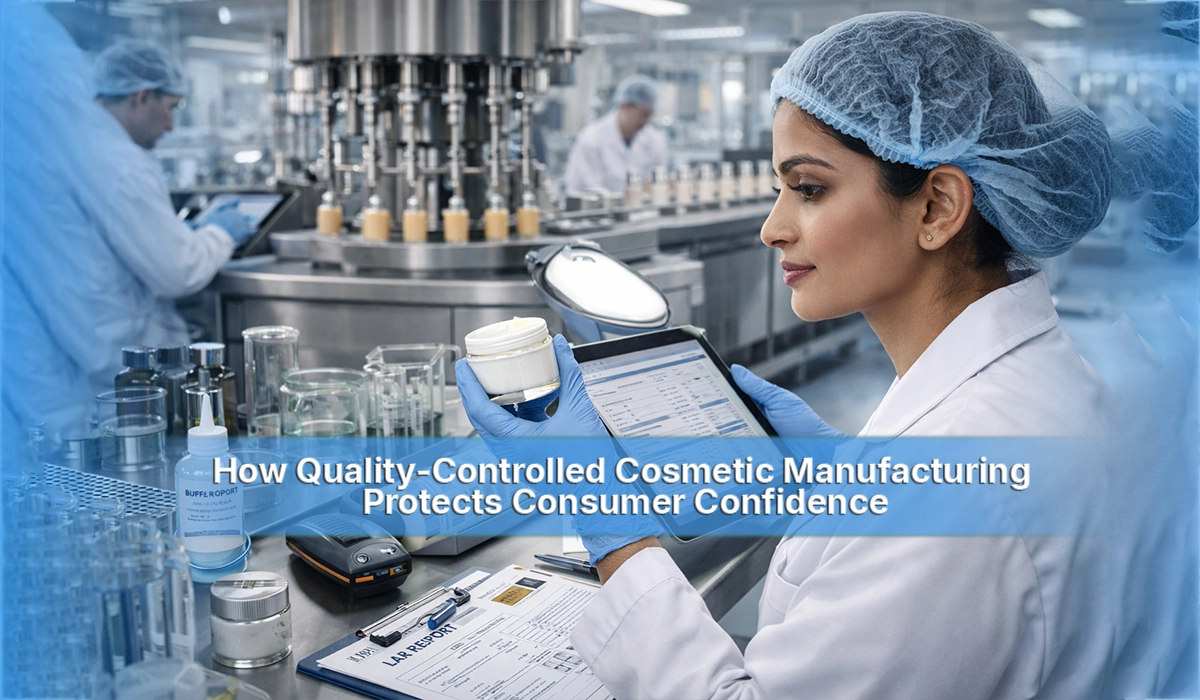
How Quality-Controlled Cosmetic Manufacturing Protects Consumer Confidence

Introduction

Have you ever picked up a skincare product and wondered, “Can I really trust what’s inside this bottle?”

In today’s beauty market, consumers are more informed than ever. They read ingredient lists. They research brands. They care about safety, transparency, and ethical production. That is why Quality-Controlled Cosmetic Manufacturing Protects Consumer Confidence in ways that go far beyond appearance.

Behind every trusted cosmetic product lies a system of checks, testing, compliance standards, and manufacturing discipline. When done right, it builds long-term trust. When ignored, it damages reputation overnight.

Let’s explore how quality control in cosmetic manufacturing directly influences consumer confidence—and why it matters more today than ever before.

What Is Quality-Controlled Cosmetic Manufacturing?

At its core, quality-controlled cosmetic manufacturing refers to a structured production process where every stage—from raw materials to final packaging—is tested, documented, and monitored for safety, consistency, and compliance.

This includes:

  • Ingredient verification
  • Stability testing
  • Microbiological testing
  • Batch consistency checks
  • Regulatory compliance
  • Safe packaging procedures

When companies follow strict quality control in cosmetics, they reduce contamination risks, ensure ingredient accuracy, and maintain product performance across batches.

This is not optional in modern markets like the USA or Europe. It is foundational.

Why Consumer Confidence Matters in the Beauty Industry

Cosmetics are personal. They touch skin. They affect appearance. They influence self-esteem.

Consumer confidence grows when buyers believe:

  • The product is safe
  • Ingredients are accurately labeled
  • Claims are honest
  • The brand is transparent

If one product causes irritation or fails quality standards, trust erodes quickly. Social media amplifies both praise and criticism.

That’s why Quality-Controlled Cosmetic Manufacturing Protects Consumer Confidence by preventing avoidable risks before they reach the shelf.

The Growing Demand for Safe Cosmetic Manufacturing Standards

Over the past decade, safety regulations have tightened worldwide.

In the United States:

  • The FDA monitors cosmetic safety.
  • Brands must ensure products are not adulterated or misbranded.

Globally:

  • GMP (Good Manufacturing Practices) certification is increasingly expected.
  • Stability and microbial testing are standard requirements.

Consumers now search for:

  • “Safe cosmetic manufacturing process”
  • “How cosmetics are tested for safety”
  • “What does GMP mean in cosmetics?”

This shift reflects a deeper awareness. Buyers want evidence—not marketing promises.

How Quality Control Works in Cosmetic Manufacturing

Raw Material Verification

Before production begins, every ingredient must be tested. This includes checking for purity, contamination, and compliance with safety guidelines.

Without this step, even natural ingredients can introduce bacteria or impurities.

Controlled Production Environment

Manufacturing facilities must maintain:

  • Clean air systems
  • Controlled temperature
  • Hygienic handling processes
  • Trained personnel

These steps reduce cross-contamination risks.

Batch Testing and Documentation

Each production batch undergoes:

  • Physical stability tests
  • Microbial testing
  • Texture and color consistency checks

Proper documentation ensures traceability. If a concern arises, the company can identify affected batches quickly.

The Role of GMP in Cosmetic Manufacturing

Good Manufacturing Practices (GMP) provide a framework that standardizes cosmetic production.

GMP ensures:

  • Equipment is properly maintained
  • Staff are trained
  • Procedures are documented
  • Safety protocols are enforced

When brands follow GMP cosmetic manufacturing guidelines, they create predictable, repeatable quality.

That predictability builds trust.

Transparency: The Bridge Between Quality and Trust

Quality control alone is not enough. Consumers must know it exists.

Brands that openly communicate:

  • Ingredient sourcing
  • Testing standards
  • Compliance certifications
  • Manufacturing audits

create stronger emotional loyalty.

When Quality-Controlled Cosmetic Manufacturing Protects Consumer Confidence, transparency turns quality into reputation.

What Happens When Quality Control Fails?

History shows the consequences:

  • Product recalls
  • Allergic reactions
  • Brand lawsuits
  • Social media backlash
  • Long-term reputation damage

One contamination incident can undo years of marketing investment.

In contrast, strong quality systems act as preventive shields.

How Quality Control Impacts Brand Reputation

Reputation in the cosmetic industry is fragile.

Consumers often choose brands based on:

  • Reviews
  • Ingredient transparency
  • Manufacturing credibility
  • Certifications

When quality systems are visible and reliable, brands enjoy:

  • Higher repeat purchase rates
  • Stronger retailer partnerships
  • Greater global expansion opportunities

In competitive markets, manufacturing discipline becomes a strategic advantage.

The Psychological Side of Consumer Confidence

Trust is not built through ads alone. It is built through consistency. When a consumer buys the same moisturizer three times and receives identical texture, scent, and performance each time, trust deepens. Consistency is the visible outcome of quality-controlled cosmetic manufacturing. Without it, doubt replaces loyalty.

The Future of Cosmetic Manufacturing Quality Standards

Technology is reshaping quality systems.

Modern cosmetic manufacturers use:

  • Automated filling systems
  • Real-time contamination detection
  • Digital batch tracking
  • AI-driven formulation testing

These innovations improve precision and reduce human error.

In the coming years, brands that invest in quality infrastructure will likely lead the market.

Real-World Example: A Consumer’s Perspective

Imagine buying a serum that promises hydration. The first bottle works beautifully. The second feels different—thicker texture, strange scent. Even if the issue is minor, doubt creeps in. Now imagine consistent performance every time. That reliability reinforces belief in the brand. This simple example shows how Quality-Controlled Cosmetic Manufacturing Protects Consumer Confidence through repeatable excellence.

The Connection Between Compliance and Global Market Access

Brands seeking international expansion must meet strict regulatory standards.

Compliance helps:

  • Enter US markets
  • Meet EU cosmetic regulations
  • Expand into Asia-Pacific markets

Without documented quality control, expansion becomes difficult. Quality is not just safety—it is access.

Conclusion

In a world where consumers read labels, compare ingredients, and demand transparency, manufacturing quality is no longer hidden behind factory walls. It defines brand credibility. Quality-Controlled Cosmetic Manufacturing Protects Consumer Confidence by ensuring safety, consistency, compliance, and transparency. When brands prioritize quality systems, they do more than produce cosmetics. They protect trust. And in the beauty industry, trust is everything.

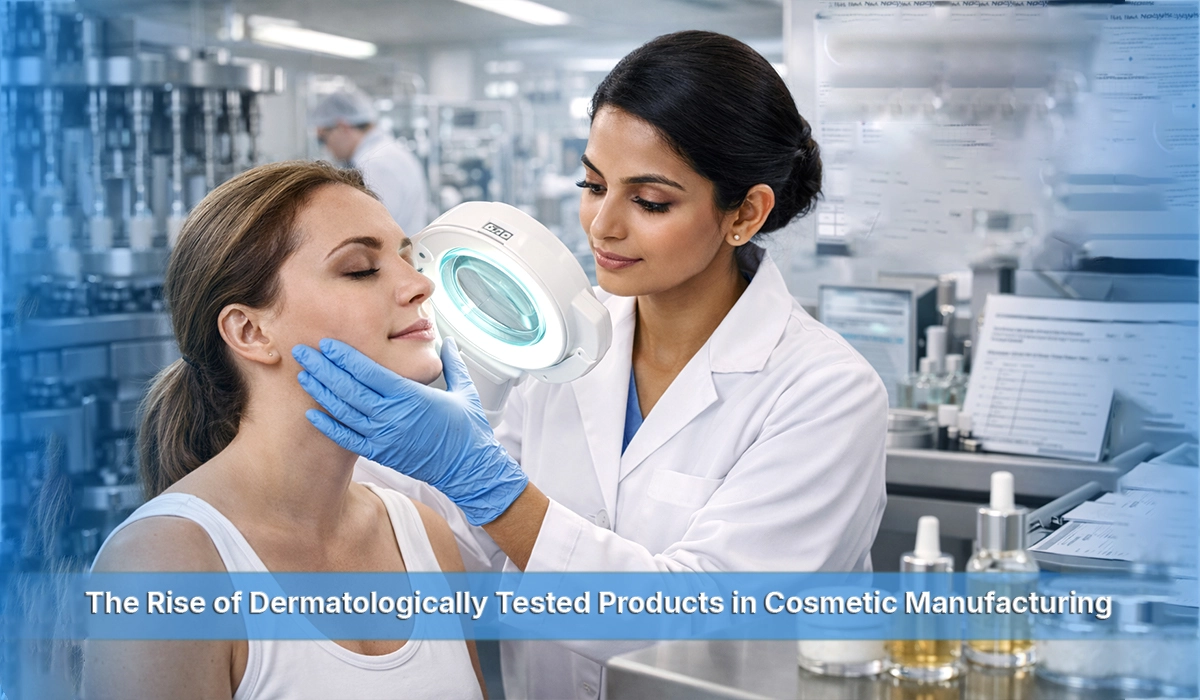
The Rise of Dermatologically Tested Products in Cosmetic Manufacturing

Introduction: A Simple Label That Changed Consumer Trust

Have you ever turned a skincare bottle around just to check one phrase — “dermatologically tested”?

For many consumers today, that small label means safety, credibility, and reassurance. In a world where sensitive skin issues, allergies, and product recalls make headlines, buyers are becoming more cautious. They want products that are not only effective but also safe and clinically evaluated.

This growing demand has fueled The Rise of Dermatologically Tested Products in Cosmetic Manufacturing, reshaping how cosmetic brands formulate, test, and market their products. What started as a niche requirement is now becoming an industry expectation.

Across the United States and global markets, dermatological testing has evolved from a competitive advantage to a core standard. But what does it really mean? And why is it transforming cosmetic manufacturing?

What Is The Rise of Dermatologically Tested Products in Cosmetic Manufacturing?

At its core, The Rise of Dermatologically Tested Products in Cosmetic Manufacturing refers to the growing industry shift toward clinical skin safety testing before products reach consumers.

“Dermatologically tested” means that a product has been evaluated under the supervision of a dermatologist to assess its skin compatibility.

It does not automatically mean:

  • Hypoallergenic
  • 100% irritation-free
  • Suitable for all skin types

Instead, it indicates structured safety testing conducted on human volunteers under controlled conditions.

In cosmetic manufacturing, this rise signals a broader commitment to:

  • Consumer safety
  • Regulatory compliance
  • Scientific validation
  • Transparency

Manufacturers are no longer relying solely on ingredient safety data. They are conducting real-world testing to validate finished formulations.

Why Consumers Are Driving This Shift

The cosmetic industry has changed because consumers have changed.

Today’s buyer:

  • Reads ingredient labels
  • Checks certifications
  • Searches product reviews
  • Follows dermatologists online
  • Questions brand claims

In the U.S., sensitive skin concerns are increasingly common. Pollution, stress, diet, and overuse of cosmetic actives contribute to irritation, breakouts, and inflammation.

As a result, consumers look for reassurance. “Dermatologically tested” offers that confidence.

This demand has accelerated The Rise of Dermatologically Tested Products in Cosmetic Manufacturing, forcing brands to invest in stronger safety protocols.

The Role of Clinical Testing in Modern Cosmetic Manufacturing

Dermatological testing is not just marketing. It involves structured evaluation processes such as:

Patch Testing

Small amounts of product are applied to the skin under controlled conditions to check for irritation.

Repeat Insult Patch Testing (RIPT)

Assesses long-term sensitivity after repeated exposure.

Safety Assessment Protocols

Monitoring redness, itching, inflammation, and allergic reactions.

Cosmetic manufacturers now integrate these protocols during product development rather than after launch.

This proactive approach reduces:

  • Product recalls
  • Consumer complaints
  • Legal risks
  • Brand damage

Regulatory Influence in the United States and Global Markets

Regulatory frameworks are also fueling The Rise of Dermatologically Tested Products in Cosmetic Manufacturing.

In the U.S., cosmetic regulations are evolving toward greater transparency and safety requirements.

While dermatological testing is not always legally mandatory, it strengthens compliance readiness and reduces risk exposure.

International markets such as:

  • European Union
  • Canada
  • Australia

often require stricter safety documentation. Manufacturers aiming for global distribution are adopting dermatological testing as a standard practice.

Sensitive Skin Awareness and Ingredient Scrutiny

Consumers today are more informed about ingredients like:

  • Parabens
  • Sulfates
  • Fragrances
  • Retinoids
  • Acids

This ingredient awareness has increased anxiety around skin reactions.

Dermatologically tested products help bridge the gap between active performance and skin tolerance.

Cosmetic manufacturers now balance:

  • Efficacy
  • Stability
  • Skin compatibility

This balance is central to the rise in dermatological testing practices.

The Marketing Value of Dermatological Testing

Beyond safety, there is a strategic advantage.

When brands label products as dermatologically tested, they signal:

  • Professional validation
  • Scientific credibility
  • Responsibility
  • Premium positioning

In competitive retail environments, that label influences buying decisions quickly.

This explains why The Rise of Dermatologically Tested Products in Cosmetic Manufacturing is also a branding shift.

Innovation in Cosmetic Formulation

Dermatological testing has reshaped how products are formulated.

Manufacturers now prioritize:

  • Non-comedogenic bases
  • Fragrance-free options
  • Barrier-support ingredients
  • Lower irritation profiles

Testing data informs reformulation when irritation thresholds exceed acceptable limits.

This cycle of test, analyze, adjust, and retest strengthens final product quality.

Dermatologists as Industry Partners

Modern cosmetic manufacturing increasingly collaborates with dermatologists during:

  • Product development
  • Testing phases
  • Marketing validation
  • Consumer education

Dermatologist endorsements build authority and trust.

This partnership model has become central to The Rise of Dermatologically Tested Products in Cosmetic Manufacturing.

Practical Example: How a Brand Adapts

Consider a skincare brand launching an acne serum.

Previously, it may have relied on ingredient studies alone.

Today, to meet market expectations, it:

  1. Conducts clinical patch testing.
  2. Documents irritation rates.
  3. Adjusts concentration if reactions exceed acceptable thresholds.
  4. Includes dermatologist-supervised claims.

The result?
Lower consumer risk and higher brand credibility.

Misunderstandings About Dermatologically Tested Products

Some common myths include:

  • It guarantees zero irritation.
  • It means dermatologist-approved.
  • It ensures suitability for all skin types.

These misunderstandings highlight the need for consumer education.

The rise of dermatological testing also increases demand for transparent communication.

Economic Impact on Cosmetic Manufacturers

Dermatological testing increases production costs due to:

  • Clinical study expenses
  • Testing facilities
  • Volunteer compensation
  • Documentation compliance

However, it reduces long-term risks.

Brands that invest in dermatological testing often experience:

  • Lower return rates
  • Higher customer retention
  • Improved brand trust
  • Better global expansion opportunities

Sustainability and Ethical Considerations

Consumers also care about:

  • Cruelty-free testing
  • Ethical human testing practices
  • Transparency in clinical methods

Modern dermatological testing avoids animal testing and prioritizes ethical human trials.

This alignment supports both safety and sustainability.

The Future of Dermatologically Tested Products

Looking ahead, The Rise of Dermatologically Tested Products in Cosmetic Manufacturing is likely to expand into:

  • AI-assisted skin analysis
  • Personalized dermatology-backed skincare
  • Biometric skin tolerance tracking
  • Data-driven formulation adjustments

As consumer expectations grow, dermatological testing may become a universal baseline standard rather than a premium feature.

Conclusion

The cosmetic industry is no longer driven only by beauty trends. It is shaped by safety, transparency, and scientific validation. The Rise of Dermatologically Tested Products in Cosmetic Manufacturing reflects a deeper shift — from marketing promises to measurable skin compatibility standards. Consumers want proof. Brands want credibility. Regulators demand responsibility. Dermatological testing connects all three. As awareness grows, dermatologically tested products will likely become the new normal — not just a label, but a sign of accountable manufacturing.

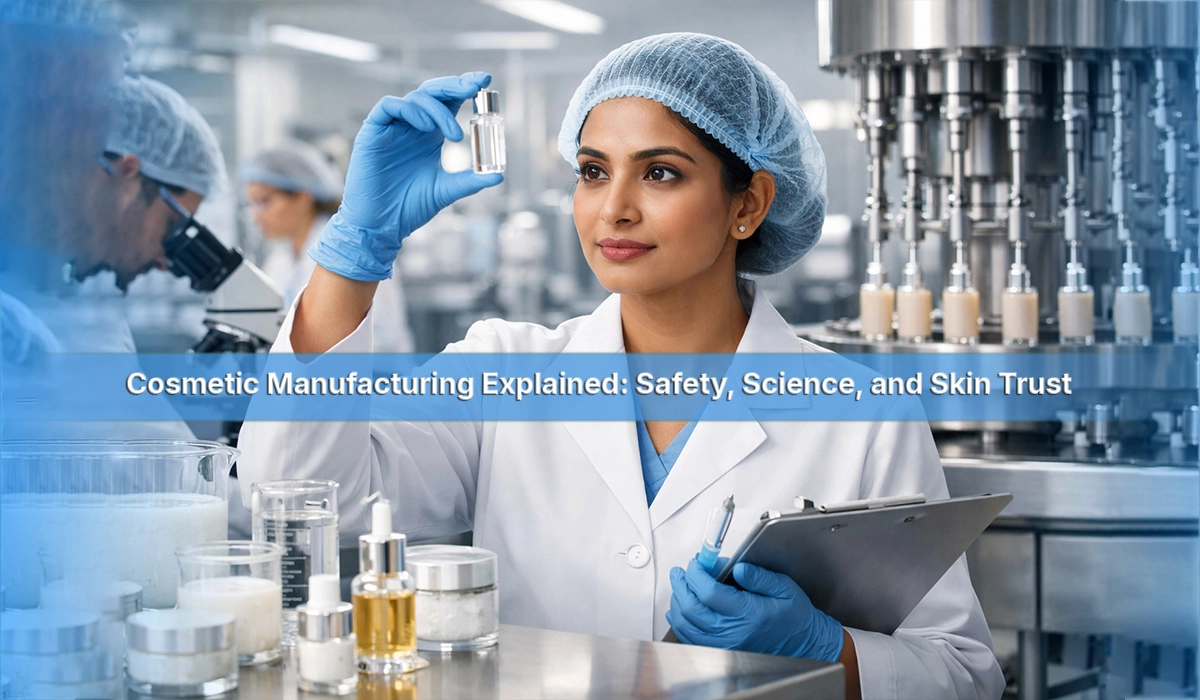
Cosmetic Manufacturing Explained: Safety, Science, and Skin Trust

Introduction

Have you ever picked up a skincare product and wondered what really goes into it before it touches your skin?

From moisturizers to serums and cleansers, we use cosmetics every single day. Yet most people rarely think about the process behind those products. Cosmetic manufacturing is not just about mixing ingredients and filling bottles. It is about safety testing, scientific formulation, strict quality control, and earning long-term consumer trust.

In today’s world—especially in the USA and global markets—consumers demand transparency, clean formulations, and regulatory compliance. Understanding cosmetic manufacturing helps you make better choices and builds confidence in what you apply to your skin.

This guide explains cosmetic manufacturing clearly, simply, and honestly—focusing on safety, science, and skin trust.

What Is Cosmetic Manufacturing?

Cosmetic manufacturing is the process of developing, testing, producing, and packaging beauty and personal care products under controlled scientific and regulatory standards.

It includes:

  • Ingredient sourcing
  • Formula development
  • Stability and safety testing
  • Quality control
  • Regulatory compliance
  • Packaging and labeling

Modern cosmetic manufacturing combines chemistry, dermatology, microbiology, and engineering. The goal is simple: create products that are safe, stable, effective, and consistent.

It is not just production. It is structured scientific development.

Why Cosmetic Manufacturing Matters More Than Ever

Consumers today are more informed. They read labels. They question ingredients. They look for cruelty-free, clean beauty, dermatologist-tested, and FDA-compliant products.

Because of this shift, cosmetic manufacturing has evolved in three major ways:

  1. Higher safety expectations
  2. Stricter regulatory frameworks
  3. Demand for transparency

A product that looks attractive on the shelf is not enough. It must prove safety, maintain stability, and deliver performance.

Trust is built in the factory—long before it reaches the store.

The Science Behind Cosmetic Formulations

Every cosmetic product starts with formulation science.

A cosmetic formula includes:

  • Active ingredients (like niacinamide or retinol)
  • Base ingredients (water, oils, emulsifiers)
  • Preservatives
  • Stabilizers
  • Fragrance or color components

Formulators carefully balance pH levels, texture, absorption rate, and compatibility. Even small changes in ingredient ratios can affect performance.

For example:
A cream that is too acidic may irritate skin.
A serum without proper preservation may grow bacteria.

Cosmetic manufacturing ensures formulas remain stable, effective, and safe over time.

Ingredient Safety in Cosmetic Manufacturing

One of the most important parts of cosmetic manufacturing is ingredient safety evaluation.

Before any ingredient is approved:

  • Toxicity data is reviewed
  • Irritation studies are analyzed
  • Allergen potential is examined
  • Regulatory approvals are verified

In the United States, cosmetic products must comply with FDA guidelines. In Europe, regulations are even stricter under EU Cosmetic Regulation (EC) No 1223/2009.

Reputable manufacturers also conduct:

  • Patch testing
  • Microbial testing
  • Stability testing
  • Dermatological assessments

Safety is not assumed—it is documented.

Quality Control and Good Manufacturing Practices (GMP)

Good Manufacturing Practices (GMP) are the backbone of cosmetic manufacturing.

GMP ensures:

  • Clean production environments
  • Controlled temperature and humidity
  • Proper equipment sanitation
  • Batch traceability
  • Documentation of every production step

If a problem occurs, manufacturers can trace it back to a specific batch. This system protects consumers and strengthens brand reliability.

The Role of Testing in Cosmetic Manufacturing

Testing ensures product safety and performance before launch.

Key tests include:

Stability Testing

Checks if the product maintains consistency over time under heat, humidity, and light.

Microbial Testing

Ensures no harmful bacteria, yeast, or mold are present.

Compatibility Testing

Confirms the packaging does not react with the formula.

Dermatological Testing

Assesses skin tolerance and irritation potential.

Testing is what separates serious cosmetic manufacturing from low-quality production.

Clean Beauty and Modern Cosmetic Manufacturing

The rise of clean beauty has changed cosmetic manufacturing significantly.

Consumers now look for:

  • Paraben-free formulas
  • Sulfate-free cleansers
  • Silicone-free skincare
  • Natural or plant-based ingredients

However, “natural” does not automatically mean safer. Scientific validation remains essential.

Responsible cosmetic manufacturing blends traditional ingredients with modern safety science.

Sustainability in Cosmetic Manufacturing

Sustainability has become central to cosmetic production worldwide.

Modern facilities focus on:

  • Reduced water usage
  • Eco-friendly packaging
  • Responsible ingredient sourcing
  • Cruelty-free practices
  • Carbon footprint reduction

Sustainable cosmetic manufacturing protects both skin and the environment.

Consumers increasingly choose brands aligned with environmental responsibility.

Private Label and Contract Cosmetic Manufacturing

Many beauty brands do not own factories. Instead, they work with contract manufacturers.

Contract cosmetic manufacturing includes:

  • Custom formula development
  • Private label production
  • Bulk manufacturing
  • Regulatory documentation

This model allows entrepreneurs to launch products while ensuring compliance and safety standards are met.

Choosing the right manufacturing partner is critical for brand credibility.

How Cosmetic Manufacturing Builds Skin Trust

Skin trust is earned when:

  • Products do not cause irritation
  • Results are consistent
  • Labels are transparent
  • Safety standards are documented

Consumers return to brands they trust. Cosmetic manufacturing is invisible to most people—but it is the foundation of that trust.

When science supports every bottle, confidence follows.

Common Myths About Cosmetic Manufacturing

Myth 1: Natural products need no testing

Even plant-based ingredients can cause allergies. Testing is always necessary.

Myth 2: Expensive products are always safer

Price does not determine safety. Manufacturing standards do.

Myth 3: Preservatives are harmful

Preservatives prevent bacterial growth. Without them, products can become unsafe.

Understanding these realities helps consumers make informed decisions.

Regulatory Compliance in the USA and Globally

In the USA, cosmetic manufacturing must comply with FDA guidelines. While cosmetics do not require pre-market approval like drugs, manufacturers are legally responsible for product safety.

Globally:

  • Europe enforces strict cosmetic regulation
  • Canada follows Health Canada cosmetic rules
  • Asia has varying compliance requirements

International cosmetic manufacturing requires careful regulatory planning.

Innovation and the Future of Cosmetic Manufacturing

Technology is transforming cosmetic production.

Emerging trends include:

  • AI-driven formulation development
  • Biotechnology ingredients
  • Microbiome-friendly skincare
  • Personalized cosmetics
  • Advanced stability simulation software

The future of cosmetic manufacturing is smarter, cleaner, and more transparent.

Conclusion

Cosmetic manufacturing is more than production—it is a system of safety, science, and responsibility.

From ingredient selection to final packaging, every step influences skin health and consumer trust. In a world where people apply products daily, understanding cosmetic manufacturing empowers smarter choices.

When science leads the process, safety follows.
And when safety is proven, skin trust grows naturally.

Let's Talk

Let's Talk

Our team is ready to guide you—connect with us today.

Get in Touch


    Call Us

    +91-8851219099

    Reach Us

    Plot no.68, Phase-1, Block C, DLF Industrial Area, Sector 32, Faridabad, Haryana 121003

    Video Logo

    We Care of your Health

    Copyright © 2026 Nukind Pharma Pvt Ltd. All Rights Reserved.

    Add to cart