Have you ever boiled vegetables, poured the water down the sink, and wondered whether you had thrown away some of their goodness? The way you prepare vegetables can affect their nutritional value.
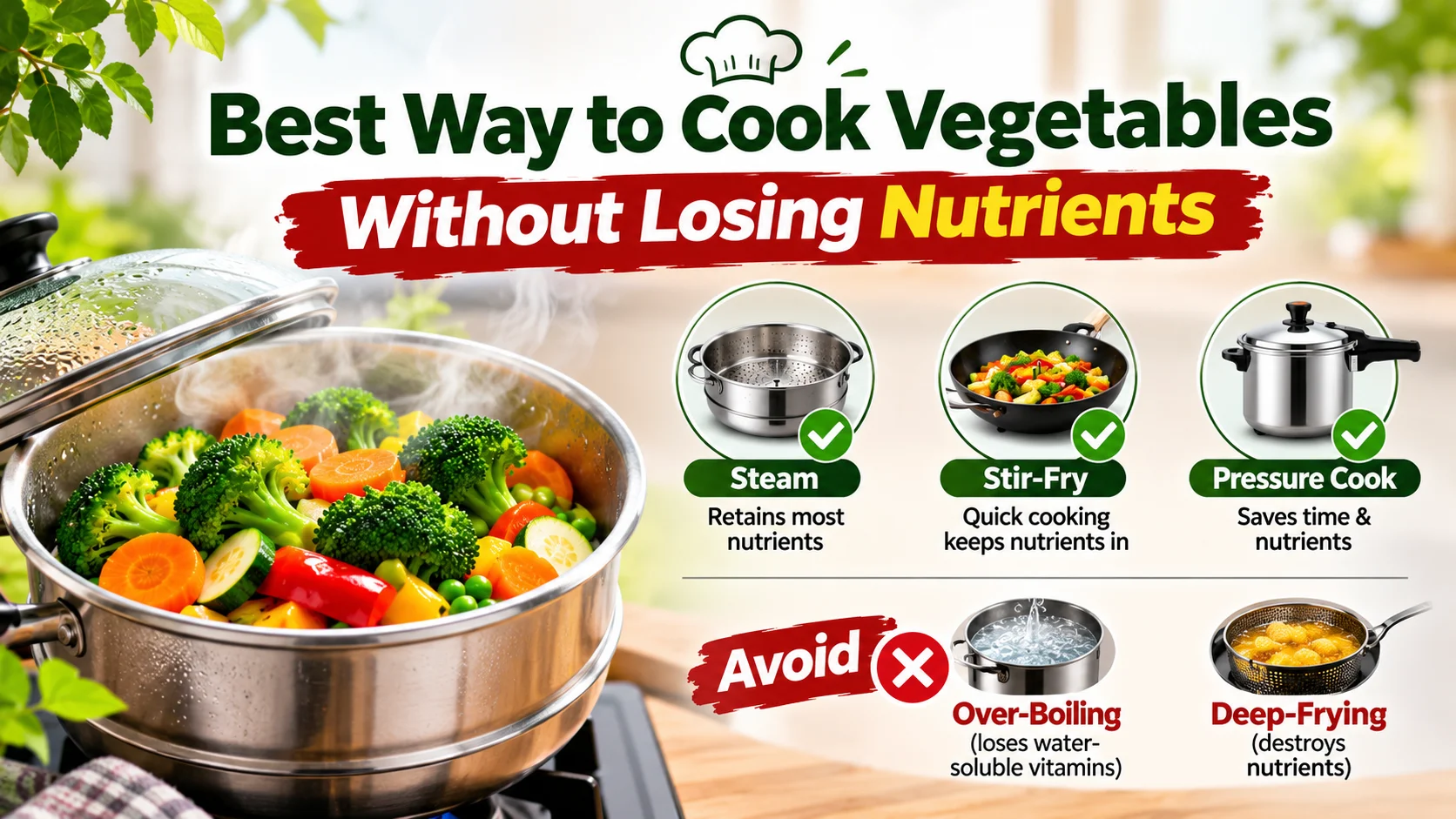
The best way to cook vegetables without losing nutrients is generally to use short cooking times, minimal water and methods such as steaming or microwaving. However, different vegetables respond differently to heat, so the healthiest approach combines several cooking methods.
1. Why Does Cooking Affect Vegetable Nutrients?
Cooking changes the structure of vegetables. Heat, water and prolonged cooking can reduce certain vitamins, especially vitamin C and some B vitamins.
However, cooking can also improve digestion and make certain nutrients easier for the body to absorb. The goal is not to avoid cooking but to cook wisely. PubMed+1
2. What Is the Best Way to Cook Vegetables?
Quick answer: Steaming is one of the best general methods for preserving nutrients.
Steaming limits direct contact with water, helping reduce the loss of water-soluble vitamins. It also preserves flavour, colour and texture.
Place vegetables in a steamer basket above boiling water and cook until tender but slightly crisp.
3. Steaming: A Nutrient-Friendly Method
Steaming works particularly well for broccoli, carrots, spinach, cauliflower and green beans.
- Use a covered steamer.
- Avoid overcrowding vegetables.
- Cook until just tender.
- Serve soon after cooking.
India’s National Institute of Nutrition recommends steaming as a useful method for retaining nutrients in vegetables. National Institute of Nutrition
4. Is Microwaving Vegetables Healthy?
Yes. Microwaving vegetables with a small amount of water and short cooking times can preserve nutrients effectively.
Research comparing cooking methods found that microwaving often retained more vitamin C than boiling, although results varied by vegetable. PubMed
5. Does Boiling Destroy Nutrients?
Boiling can cause vitamins such as vitamin C and folate to move into cooking water.
To reduce losses:
- Use minimal water.
- Avoid prolonged boiling.
- Keep vegetables in larger pieces.
- Use leftover cooking water in soups or gravies.
This is especially practical when preparing Indian dishes such as vegetable soup, dal and mixed vegetable curry.
6. Is Stir-Frying a Good Option?
Quick stir-frying uses little water and a small amount of oil. It helps preserve texture and can support the absorption of fat-soluble nutrients.
Try stir-frying capsicum, carrots, broccoli and beans briefly rather than cooking them until soft.
7. Steaming vs. Boiling vs. Microwaving
| Method | Nutrient-retention consideration | Best use |
|---|---|---|
| Steaming | Limited water exposure | Broccoli, beans, spinach |
| Microwaving | Short cooking time, little water | Mixed vegetables |
| Boiling | Some vitamins may enter water | Soups and curries |
| Stir-frying | Short cooking with little water | Capsicum, carrots, beans |
| Deep-frying | Adds substantial fat and calories | Limit for everyday cooking |
8. Should You Eat Vegetables Raw or Cooked?
Both raw and cooked vegetables can contribute to a healthy diet.
Cooking tomatoes can increase the availability of lycopene, while heat-sensitive nutrients may be better preserved in some raw vegetables.
Eating a variety of raw and cooked vegetables is more useful than relying on one preparation method. Tufts Health & Nutrition Letter
9. Five Tips to Preserve Vegetable Nutrients
- Wash vegetables before cutting.
- Avoid peeling unnecessarily.
- Cut vegetables into larger pieces.
- Cook for the shortest practical time.
- Avoid adding baking soda to preserve colour.
These practices help reduce nutrient losses during everyday preparation. agritech.tnau.ac.in+1
10. Frequently Asked Questions
Which cooking method preserves the most nutrients?
Steaming and microwaving are generally excellent choices, although results depend on the vegetable and nutrient.
Does pressure cooking destroy nutrients?
Some nutrient loss can occur, but shorter cooking times and minimal water can help. Pressure cooking is also useful for legumes.
Is boiling vegetables unhealthy?
No. Boiling is perfectly acceptable, especially when the cooking liquid is consumed.
Are cooked vegetables better than raw vegetables?
Neither is universally better. Both provide nutritional benefits.
Conclusion
The best way to cook vegetables without losing nutrients is to steam, microwave or stir-fry them using minimal water and cooking time. Avoid overcooking, and use cooking liquids whenever possible.
Remember: Healthy cooking is about preserving nutrients while making vegetables delicious, safe and enjoyable.