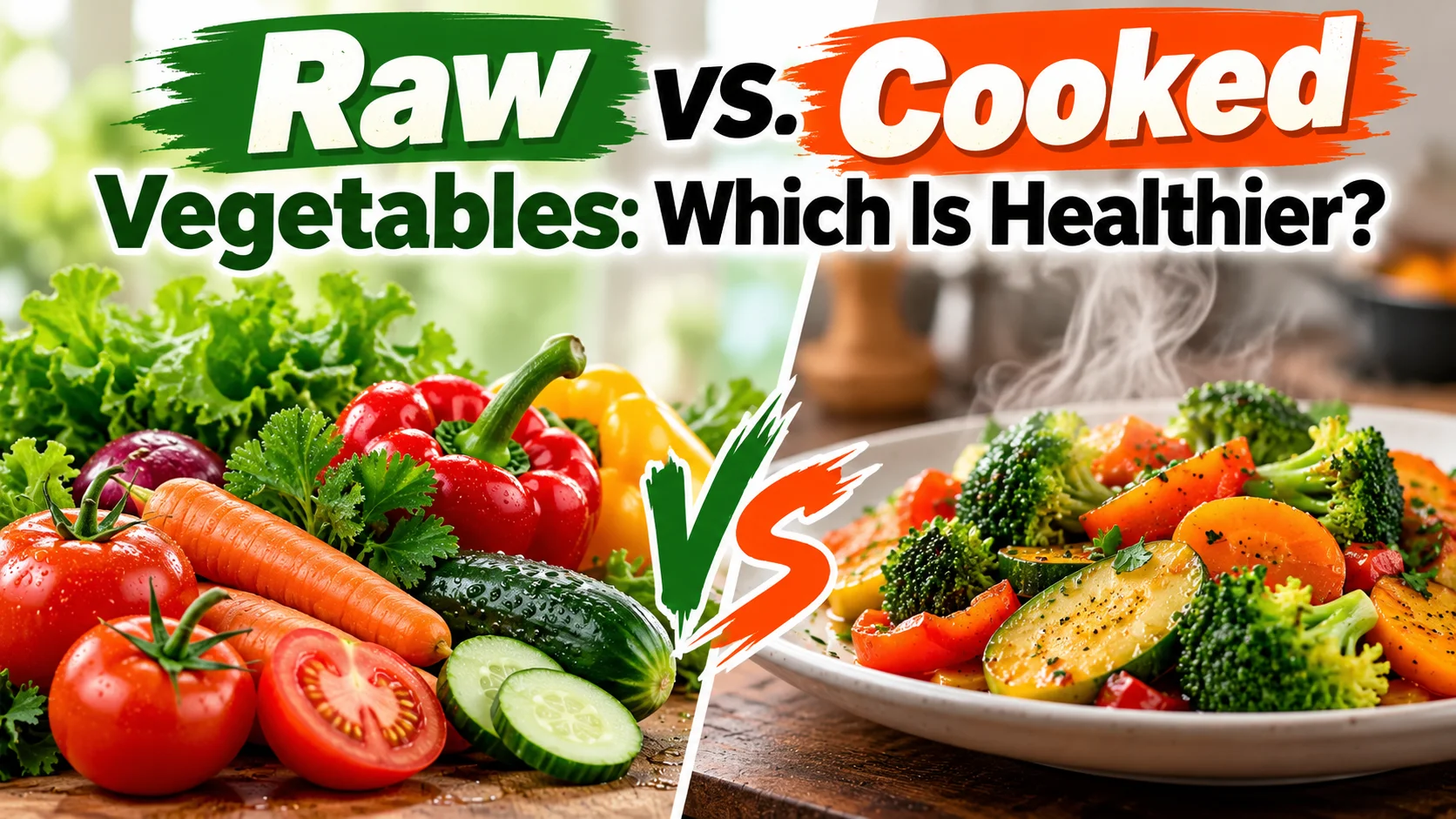
Introduction: Should You Eat Vegetables Raw or Cooked?
Imagine preparing your lunch. You have two options: a fresh cucumber, carrot, and tomato salad or a bowl of lightly cooked vegetables. Both look nutritious, but which one provides more health benefits?
This question is common among people trying to improve their diets, manage their weight, support digestion, or get more vitamins and minerals from everyday meals.
The answer is not as simple as choosing one over the other.
Raw vegetables can retain more of certain heat-sensitive nutrients, including vitamin C. Cooked vegetables, however, can make other nutrients easier for the body to absorb. For example, cooking tomatoes can improve the availability of lycopene, while cooking carrots can make some beta-carotene more accessible.
The cooking method also matters. Boiling vegetables in large amounts of water may cause some nutrients to move into the water, while steaming or microwaving can help preserve more of them.
For Indian households, this distinction is particularly useful. Everyday meals often include raw salads, cooked sabzi, leafy greens, vegetable curries, and soups. Rather than changing the entire diet to follow a raw-food trend, you can make simple choices that improve nutritional variety.
Quick answer: Both raw and cooked vegetables are healthy. The best approach is to eat a variety of vegetables in both forms, choose appropriate preparation methods, and follow safe food-handling practices.
Let’s explore the nutritional differences, health benefits, cooking methods, and practical ways to make vegetables a regular part of your diet.
1. What Is the Difference Between Raw and Cooked Vegetables?
Direct answer: Raw vegetables are consumed without heat-based cooking, while cooked vegetables are prepared using methods such as steaming, boiling, roasting, sautéing, or microwaving. These methods can change a vegetable’s texture, nutrient availability, digestibility, and safety.
Raw vegetables retain their natural structure until they are cut, chewed, or blended. Examples include cucumber, carrots, tomatoes, lettuce, and capsicum.
Cooked vegetables undergo physical and chemical changes when exposed to heat. Their cell structures may soften, some nutrients may become easier to absorb, and others may be reduced by heat or lost into cooking water.
Key differences
| Feature | Raw vegetables | Cooked vegetables |
|---|---|---|
| Vitamin C | Often retains more before preparation-related losses | May decrease with heat and prolonged cooking |
| Certain antioxidants | May remain more intact in some vegetables | Some become more available for absorption |
| Texture | Usually crisp and firm | Often softer and easier to chew |
| Digestibility | Depends on the vegetable and individual | Softening may make some vegetables easier to tolerate |
| Food safety | Requires careful washing and handling | Proper cooking can reduce many harmful microorganisms |
| Preparation | Often quick and simple | Requires cooking time and suitable equipment |
| Variety | Excellent for salads and fresh snacks | Suitable for sabzi, soups, curries, and side dishes |
Example: A cucumber salad provides a fresh, crunchy option, while cooked carrots can offer more accessible beta-carotene. Both can contribute to a balanced diet.
Practical tip: Avoid judging a vegetable’s nutritional value only by its appearance or whether it is raw. Consider the nutrient, preparation method, portion size, and overall meal.
2. Are Raw Vegetables Healthier Than Cooked Vegetables?
Direct answer: No. Raw vegetables are not always healthier than cooked vegetables. Raw preparation can help preserve some heat-sensitive nutrients, while cooking can improve the availability of certain compounds and make some vegetables easier to eat and digest.
The idea that raw foods are automatically superior overlooks how different nutrients respond to heat, water, and changes in plant structure.
Vitamin C and folate can be affected by cooking, particularly when vegetables are boiled for long periods. Other compounds, such as lycopene in tomatoes, may become more accessible after cooking.
The amount of a nutrient your body ultimately obtains also depends on how much of the vegetable you eat and how effectively you absorb that nutrient.
For instance, cooking leafy vegetables reduces their volume. A cup of cooked spinach may contain substantially more spinach by weight than a cup of raw spinach. Therefore, comparing equal cup-sized servings can be misleading.
What does the evidence suggest?
Research examining different cooking methods shows that nutritional changes vary according to the vegetable, nutrient, temperature, cooking duration, and amount of water used. There is no single cooking method that maximizes every nutrient in every vegetable.
Example: Eating raw capsicum can be useful when you want to preserve vitamin C. Eating cooked tomatoes can help increase the availability of lycopene.
Practical tip: Include raw salads and cooked vegetable dishes throughout the week instead of following a strict raw-only or cooked-only diet.
3. What Are the Health Benefits of Raw Vegetables?
Direct answer: Raw vegetables provide fibre, vitamins, minerals, water, and plant compounds. They can support a varied, nutrient-rich diet and offer a convenient way to add fresh produce to meals without requiring extensive cooking.
Raw vegetables are particularly useful when you need quick snacks or simple meal additions.
Main benefits of raw vegetables
1. They can retain heat-sensitive nutrients.
Vitamin C is sensitive to heat, oxygen, and certain storage conditions. Eating suitable vegetables raw can help avoid cooking-related losses.
2. They provide dietary fibre.
Vegetables such as carrots, cucumber, cabbage, and capsicum contribute fibre, which supports normal digestive function. Fibre intake should come from a variety of foods rather than relying on one vegetable.
3. They add water and volume to meals.
Cucumber, tomatoes, and lettuce contain considerable water. Their volume and texture can help make meals feel more substantial.
4. They are convenient.
Washed and prepared vegetables can be included in salads, sandwiches, wraps, and snack plates.
5. They add colour and variety.
Different-coloured vegetables contain different combinations of plant compounds. Eating a range of colours can help broaden your nutrient intake.
Which vegetables are commonly eaten raw?
- Cucumber
- Carrots
- Tomatoes
- Capsicum
- Lettuce
- Radish
- Cabbage, when properly washed and handled
Not every vegetable is suitable for raw consumption in every circumstance. Certain foods require thorough cooking for safety or better digestibility.
Example: A salad containing cucumber, carrots, tomatoes, and capsicum can add colour, fibre, and several nutrients to lunch.
Practical tip: Wash vegetables thoroughly under clean running water before eating them raw. Use clean utensils and surfaces, and refrigerate cut produce when appropriate.
4. What Are the Health Benefits of Cooked Vegetables?
Direct answer: Cooked vegetables provide fibre, minerals, and many vitamins while potentially increasing the availability of certain plant compounds. Cooking also softens plant tissues and can improve the palatability and digestibility of some vegetables.
Cooking does not automatically remove the nutritional value of vegetables. Its effects depend on the ingredients and preparation method.
Main benefits of cooked vegetables
1. Improved availability of some nutrients
Heating can soften plant cell walls and improve access to certain compounds. Cooking tomatoes, for example, can improve the availability of lycopene.
2. Easier chewing
Cooked carrots, pumpkin, spinach, and other vegetables become softer. This can make them more comfortable to eat for people who have difficulty chewing firm foods.
3. Greater meal variety
Cooking makes it possible to prepare vegetable curries, soups, dals with vegetables, stir-fries, and traditional Indian sabzi.
4. Better food safety for certain ingredients
Appropriate cooking reduces many harmful microorganisms. Some vegetables and plant foods also need cooking to reduce naturally occurring harmful substances.
5. Convenient ways to consume vegetables
People who dislike raw vegetables may find cooked versions more appealing because of their flavour, aroma, and texture.
Does cooking destroy all nutrients?
No. Cooking may reduce some nutrients, particularly when heat exposure is prolonged or vegetables are boiled in excess water. Other nutrients may remain relatively stable or become more accessible.
Minerals such as potassium and magnesium are not destroyed by heat in the same way as some vitamins, although they can move into cooking water.
Example: A bowl of lightly cooked spinach or mixed vegetable sabzi can contribute to a balanced meal alongside dal, roti, or rice.
Practical tip: Cook vegetables until they reach a pleasant texture and are safely prepared, rather than cooking them for unnecessarily long periods.
5. How Does Cooking Affect Vitamins and Minerals?
Direct answer: Cooking can increase, decrease, or leave relatively unchanged the amount of a nutrient available from a vegetable. Water-soluble vitamins such as vitamin C and some B vitamins are particularly vulnerable to heat and leaching into water, while minerals are generally not destroyed by heat but may be lost into discarded cooking liquid.
Understanding these differences helps explain why raw and cooked vegetables can both be valuable.
Vitamin C
Vitamin C is sensitive to heat and can also be affected by oxygen and storage. Prolonged cooking, especially boiling in excess water, may reduce the amount retained.
Capsicum and other vitamin C-containing vegetables can be included raw when appropriate. If cooking is preferred, shorter cooking times and limited water can help.
B vitamins and folate
Some B vitamins, including folate, can be lost through heat exposure or transferred into cooking water.
Steaming or using a small amount of water may reduce these losses compared with prolonged boiling.
Beta-carotene
Beta-carotene is a plant pigment that the body can convert into vitamin A. Cooking carrots and certain leafy vegetables can make beta-carotene more accessible by softening their structures.
Minerals
Minerals such as potassium, magnesium, and iron are not destroyed by ordinary cooking heat. However, some may move into the water used for boiling.
If that water is discarded, the overall amount retained in the meal can decrease.
Nutrient comparison
| Nutrient or compound | Potential effect of raw preparation | Potential effect of cooking |
|---|---|---|
| Vitamin C | Avoids heat-related losses | May decrease with heat and prolonged exposure |
| Folate | Avoids cooking-related losses | May decrease through heat and leaching |
| Beta-carotene | Present in carrots and some leafy vegetables | May become more accessible after cooking |
| Lycopene | Present in raw tomatoes | May become more accessible after cooking |
| Potassium | Retained in the uncooked vegetable | Some may leach into discarded cooking water |
| Fibre | Provides dietary fibre | Usually remains a useful fibre source, although texture and structure change |
These are general patterns rather than guaranteed outcomes. The exact results depend on the vegetable, cooking conditions, and serving size. Research comparing household cooking methods has found substantial variation in nutrient retention across vegetables.
Example: A meal containing raw tomato salad and lightly cooked carrots can provide a useful combination of different nutrients.
Practical tip: Think about the whole meal rather than trying to maximize a single nutrient in every vegetable.
6. Which Vegetables Are Better Raw, and Which Are Better Cooked?
Direct answer: Some vegetables are convenient and nutritious raw, while others are more suitable cooked for safety, digestibility, or nutrient availability. The best preparation depends on the vegetable and your individual needs.
There is no universal list that makes every raw vegetable superior or every cooked vegetable superior. However, some practical examples can guide everyday choices.
Vegetables commonly enjoyed raw
Cucumber: A refreshing, water-rich option for salads and snacks.
Capsicum: Can provide vitamin C and a crisp texture when eaten raw.
Tomatoes: Offer vitamin C and other plant compounds in their fresh form.
Carrots: Can be eaten raw for crunch and fibre.
Lettuce: A common salad ingredient that adds texture and variety.
These vegetables should be washed properly before consumption.
Vegetables that benefit from cooking
Carrots: Cooking can increase the accessibility of beta-carotene.
Tomatoes: Cooking can increase the availability of lycopene.
Spinach: Cooking reduces volume and can make it easier to consume a larger amount. Depending on the preparation method, it can also change the availability of certain compounds.
Pumpkin: Cooking softens its flesh and can improve access to beta-carotene.
Cauliflower: Cooking softens the florets and may make them more comfortable to eat.
Potatoes: Should be cooked before consumption. Proper cooking makes them easier to eat and digest.
A simple comparison
| Vegetable | Raw or cooked? | Practical reason |
|---|---|---|
| Cucumber | Usually raw | Convenient for salads and snacks |
| Capsicum | Raw or lightly cooked | Raw preparation helps avoid heat-related vitamin C losses |
| Tomato | Both | Raw provides vitamin C; cooking can improve lycopene availability |
| Carrot | Both | Raw offers crunch; cooking can improve beta-carotene accessibility |
| Spinach | Both, depending on preparation | Cooking reduces volume and changes the availability of some compounds |
| Pumpkin | Usually cooked | Cooking softens the flesh |
| Potato | Cooked | Cooking is the usual safe and practical preparation |
| Cauliflower | Both, where appropriate | Raw or cooked preparation can add variety |
Example: An Indian lunch can include cucumber and tomato salad with cooked carrot, spinach, or cauliflower sabzi.
Practical tip: Use a mix of raw and cooked vegetables, selecting the preparation method that makes each vegetable enjoyable and safe to eat.
7. What Is the Healthiest Way to Cook Vegetables?
Direct answer: Steaming, microwaving, and quick sautéing with modest amounts of oil can help preserve nutrients by reducing cooking time or contact with water. No method is best for every nutrient, so the goal is to avoid unnecessary overcooking while preparing vegetables safely.
Steaming
Steaming cooks vegetables using hot vapour rather than immersing them in water. This can limit the leaching of water-soluble nutrients.
Best for: Broccoli, carrots, cauliflower, and leafy vegetables.
Tip: Cook until the vegetables reach the desired tenderness.
Microwaving
Microwaving can cook vegetables quickly and often requires little water. This makes it a practical option for retaining certain nutrients.
Best for: Broccoli, beans, carrots, and mixed vegetables.
Tip: Use a microwave-safe container and a small amount of water when needed.
Quick sautéing
Sautéing cooks vegetables in a pan with a modest amount of oil. The method can be useful for everyday meals and may help with the absorption of fat-soluble compounds.
Best for: Capsicum, beans, cabbage, carrots, and mixed vegetables.
Tip: Avoid using excessive oil or repeatedly heating the same oil.
Boiling
Boiling can soften vegetables effectively, but some water-soluble nutrients may move into the cooking water.
Best for: Recipes where boiled vegetables are required or where the cooking liquid will be consumed.
Tip: Use only the necessary amount of water and avoid unnecessarily long cooking times.
Roasting
Roasting creates a distinct flavour and texture. However, prolonged or intense heating can reduce some heat-sensitive nutrients.
Best for: Pumpkin, carrots, cauliflower, and other suitable vegetables.
Tip: Use a moderate amount of oil and avoid burning the vegetables.
Research reviews generally favour shorter cooking times and limited water when the aim is to retain water-soluble nutrients. Steaming and microwaving can be useful approaches, although the best method varies by vegetable and nutrient.
Practical tip: For most everyday meals, start with steaming, quick sautéing, or microwaving. Choose other methods when they suit the recipe, and avoid overcooking.
8. Are Raw or Cooked Vegetables Better for Digestion?
Direct answer: Neither raw nor cooked vegetables are universally better for digestion. Cooking softens plant tissues and may make some vegetables easier to chew and tolerate, while raw vegetables can provide useful fibre. Individual responses depend on portion size, fibre tolerance, preparation, and digestive health.
Some people enjoy a large raw salad without discomfort. Others may experience gas, bloating, or fullness after eating the same amount.
Cooking may soften vegetables and make them easier to chew. However, it does not remove all fibre, and it does not guarantee that digestive symptoms will disappear.
How to choose based on comfort
- If raw vegetables cause discomfort, try smaller portions.
- Choose cooked vegetables when softer textures are easier to tolerate.
- Increase fibre intake gradually if your usual diet contains little fibre.
- Chew food thoroughly and eat at a comfortable pace.
- Keep a record of foods that repeatedly cause symptoms.
People with diagnosed digestive conditions may have individual dietary requirements. They should follow guidance from a qualified healthcare professional rather than assuming all raw vegetables must be avoided.
Example: Someone who experiences bloating after a large cabbage salad may find a smaller portion of cooked cabbage more comfortable.
Practical tip: Pay attention to how you respond to different vegetables and preparation methods. Persistent, severe, or unexplained digestive symptoms warrant medical advice.
9. Do Raw or Cooked Vegetables Help With Weight Management?
Direct answer: Both raw and cooked vegetables can support a balanced eating pattern for weight management. They provide fibre, water, and a range of nutrients, while many varieties are relatively low in energy. Preparation methods and added ingredients influence the final calorie content of a meal.
Vegetables can add volume and variety to meals without requiring large amounts of energy-dense ingredients.
Raw vegetables work well as snacks and salad components. Cooked vegetables can be included in soups, curries, and main dishes.
The key is to consider the entire recipe. A vegetable dish prepared with excessive oil, cream, or butter may contain considerably more energy than the same vegetables prepared with modest amounts of these ingredients.
Similarly, a salad can become energy-dense when large amounts of creamy dressing, fried toppings, or other calorie-rich additions are included.
Practical meal-building ideas
- Add cucumber, tomatoes, or carrots to lunch.
- Include cooked vegetables with dal, roti, or rice.
- Choose soups made primarily with vegetables.
- Use herbs, spices, lemon, or other suitable seasonings to add flavour.
- Combine vegetables with protein-rich foods and other components of a balanced meal.
Example: A meal containing roti, dal, mixed vegetable sabzi, and cucumber salad provides more variety than relying on a single vegetable preparation.
Practical tip: Focus on consistent, balanced eating habits rather than expecting raw vegetables or cooked vegetables alone to produce weight loss.
10. Are Raw Vegetables Safe to Eat Every Day?
Direct answer: Many vegetables can be eaten raw regularly when they are suitable for raw consumption and are washed and handled safely. However, raw produce can carry harmful microorganisms, so cleanliness, refrigeration, and appropriate food preparation are important.
Vegetables may become contaminated during growing, harvesting, transport, storage, or preparation. Washing can reduce dirt and some contamination, but it does not eliminate every potential hazard.
Raw vegetable safety checklist
- Wash your hands with soap and water before handling food.
- Rinse vegetables thoroughly under clean running water.
- Use a clean vegetable brush for suitable firm-skinned produce.
- Remove damaged or spoiled portions.
- Keep raw vegetables away from raw meat, poultry, seafood, and their juices.
- Use clean knives, chopping boards, and containers.
- Refrigerate cut vegetables when appropriate.
- Follow food safety advice relevant to the vegetable and the person eating it.
Do not use soap or household cleaning detergents to wash vegetables.
Some people may need additional precautions. Pregnant people, young children, older adults, and people with weakened immune systems can be more vulnerable to foodborne illness. They should follow appropriate food safety guidance and seek medical advice when unsure about higher-risk foods.
What about pesticide residues?
Washing vegetables thoroughly under running water helps remove dirt and may reduce some surface residues. Washing does not guarantee the removal of all pesticide residues. Peeling and cooking can also affect some residues, depending on the substance and vegetable.
Example: Before preparing a cucumber salad, wash the whole cucumber under running water and use a clean knife and cutting board.
Practical tip: Prioritize safe handling over the assumption that fresh or organic-looking vegetables are automatically free from contamination.
11. Raw vs. Cooked Vegetables: What Should You Eat in an Indian Diet?
Direct answer: A balanced Indian diet can include both raw salads and cooked vegetables. Combining different vegetables with pulses, whole grains, and other nutritious foods provides a wider range of nutrients than relying on only raw or only cooked produce.
Indian meals offer many practical ways to include vegetables throughout the day.
Breakfast
Depending on your preferences, include vegetables in an omelette, poha, upma, or another suitable breakfast. Cook vegetables thoroughly where the recipe requires it.
Lunch
Pair roti or rice with dal, seasonal sabzi, and a small serving of properly washed raw salad.
Evening snack
Choose suitable fresh vegetables, such as carrots or cucumber, as part of a snack. You can also use cooked vegetables in a homemade preparation.
Dinner
Include a vegetable curry, lightly sautéed vegetables, soup, or another preparation that suits your dietary requirements.
A practical meal example
| Meal | Raw option | Cooked option |
|---|---|---|
| Breakfast | Tomato or cucumber, where suitable | Vegetable poha or upma |
| Lunch | Cucumber and carrot salad | Seasonal sabzi with dal and roti |
| Evening snack | Carrot sticks | Homemade vegetable soup |
| Dinner | A small fresh salad | Steamed or sautéed vegetables |
The appropriate quantities depend on age, energy needs, activity level, health conditions, and overall dietary requirements.
India’s National Institute of Nutrition provides dietary guidance that emphasizes a varied and balanced diet rather than depending on a single food. Its Dietary Guidelines for Indians, 2024 is a useful national reference for people planning everyday meals.
Example: A home-cooked meal with dal, roti, seasonal sabzi, and a fresh salad can include both cooked and raw vegetables without requiring an expensive or complicated diet.
Practical tip: Choose seasonal vegetables that are available, affordable, and enjoyable. Consistency and variety matter more than following a complicated food trend.
12. Common Myths About Raw and Cooked Vegetables
Direct answer: Several popular beliefs about vegetable preparation are misleading. Cooking does not destroy every nutrient, raw vegetables are not always superior, and one preparation method cannot maximize every nutrient. The healthiest approach is to consider nutritional variety, cooking methods, and food safety together.
Myth 1: Raw vegetables are always healthier
Fact: Raw vegetables can retain more of certain heat-sensitive nutrients, but cooking can improve the availability of other compounds.
Myth 2: Cooking destroys all vitamins and minerals
Fact: Nutrient changes vary. Some vitamins decrease, while many minerals remain present, although some can move into cooking water.
Myth 3: Boiling is always unhealthy
Fact: Boiling is a useful cooking method. The main concern is that some nutrients may leach into the water. Using that liquid in soups or other dishes can help retain nutrients that have moved into it.
Myth 4: Cooked vegetables have no fibre
Fact: Cooking generally does not eliminate all dietary fibre. It can change vegetable texture and structure, but cooked vegetables remain useful sources of fibre.
Myth 5: You must eat a raw salad with every meal
Fact: Raw salads are one way to eat vegetables, but cooked sabzi, soups, and other preparations also contribute to a balanced diet.
Myth 6: One cooking method is best for all vegetables
Fact: The results depend on the vegetable, nutrient, temperature, cooking time, and water exposure.
Example: A combination of raw cucumber, cooked spinach, and tomato prepared in different ways can provide variety without requiring you to choose a single preparation method.
Practical tip: Base food decisions on sound nutritional guidance rather than absolute claims about raw or cooked foods.
Frequently Asked Questions: Raw vs. Cooked Vegetables
1. Which is healthier: raw or cooked vegetables?
Both can be healthy. Raw vegetables may retain more vitamin C and other heat-sensitive nutrients, while cooking can improve the availability of certain compounds. Eating a variety of vegetables in both forms is a practical approach.
2. Do vegetables lose nutrients when cooked?
Some nutrients can decrease during cooking, especially vitamin C and certain B vitamins. Losses depend on temperature, duration, and water exposure. Steaming and microwaving can help preserve some nutrients.
3. Is it better to eat carrots raw or cooked?
Both are nutritious. Raw carrots provide fibre and a crunchy texture, while cooking can make beta-carotene more accessible to the body.
4. Are raw tomatoes healthier than cooked tomatoes?
Both offer nutritional benefits. Raw tomatoes provide vitamin C, while cooking can increase the availability of lycopene. Including both forms can add variety to your diet.
5. Is spinach healthier raw or cooked?
Both forms can contribute nutrients. Cooking reduces spinach’s volume and changes the availability of some compounds. The best choice depends on your dietary needs, preferred texture, and preparation method.
6. Does boiling vegetables remove all their nutrients?
No. Boiling can reduce some heat-sensitive vitamins and cause water-soluble nutrients to move into the cooking water. Many nutrients remain in the vegetables. Using the cooking liquid in soups or sauces can help retain some nutrients that have leached out.
7. What is the healthiest way to cook vegetables?
Steaming, microwaving, and quick sautéing are useful options because they can limit cooking time or water exposure. However, the best method varies by vegetable and nutrient.
8. Can I eat raw vegetables every day?
Many suitable vegetables can be eaten raw regularly if they are washed and handled safely. Choose a variety of vegetables, and follow appropriate food safety precautions.
9. Are cooked vegetables easier to digest?
Cooking softens many vegetables and may make them easier to chew and tolerate. However, digestive responses vary. People with persistent digestive symptoms should seek advice from a qualified healthcare professional.
10. Are raw vegetables better for weight loss?
Not necessarily. Both raw and cooked vegetables can fit into a balanced eating plan. Added oils, dressings, and other ingredients influence the energy content of a meal.
11. Should I eat vegetables raw to get more vitamins?
Not always. Raw preparation can help preserve certain heat-sensitive vitamins, but cooking can improve the availability of other nutrients. A mixture of both forms is a sensible approach.
12. How can Indian families include more vegetables in their diets?
Include seasonal sabzi, vegetable-rich dals, soups, and suitable raw salads. Combining vegetables with pulses, whole grains, and other nutritious foods can help create balanced meals.
13. Are steamed vegetables healthier than boiled vegetables?
Steaming often helps preserve water-soluble nutrients because vegetables have less direct contact with water. However, the results vary by vegetable, nutrient, and cooking conditions.
14. Do raw vegetables contain more fibre than cooked vegetables?
Not necessarily in a straightforward serving-to-serving comparison. Cooking changes volume, texture, and water content. Both raw and cooked vegetables can contribute dietary fibre.
15. Where can I find reliable nutrition guidance in India?
The Indian Council of Medical Research and the National Institute of Nutrition publish dietary guidance for Indian populations. For personal advice related to a medical condition, consult a qualified healthcare professional or registered dietitian.
Conclusion: Raw vs. Cooked Vegetables — Which Should You Choose?
The answer to “Raw vs. cooked vegetables: which is healthier?” is that both deserve a place in a balanced diet.
Raw vegetables can help preserve certain heat-sensitive nutrients and provide fresh texture, fibre, and variety. Cooked vegetables can improve the availability of some plant compounds, soften food, and make a wider range of vegetables enjoyable.
The cooking method matters, too. Steaming, microwaving, and quick sautéing can help reduce some nutrient losses, while prolonged boiling may cause water-soluble nutrients to move into discarded cooking water.
For everyday meals, focus on three simple habits:
- Eat a variety: Include different vegetables and colours throughout the week.
- Prepare them thoughtfully: Use suitable cooking methods and avoid unnecessary overcooking.
- Prioritize food safety: Wash raw produce properly and handle it with clean equipment.
For Indian households, this can be as simple as combining a fresh cucumber and tomato salad with seasonal sabzi, dal, and roti.
You do not need to follow an all-raw diet or avoid cooked vegetables to eat healthily. Instead, choose a variety of vegetables, prepare them safely, and build balanced meals that suit your preferences and nutritional needs.
The takeaway: The healthiest vegetable is not necessarily the one eaten raw or cooked. It is the one you include regularly, prepare appropriately, and enjoy as part of a balanced diet.