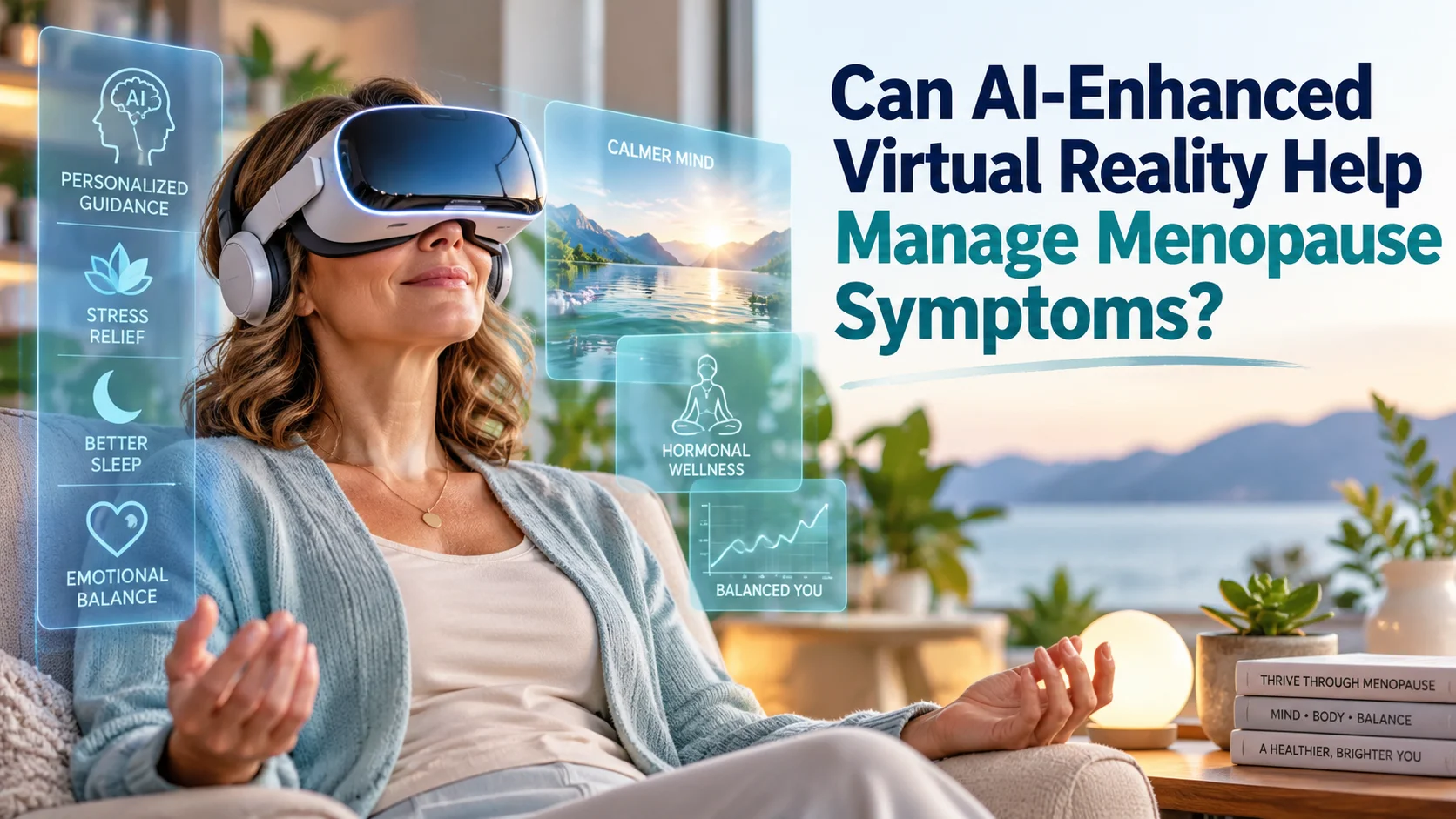
Imagine putting on a virtual reality headset after a difficult night of hot flashes and poor sleep. Instead of feeling overwhelmed, you enter a peaceful virtual garden where guided breathing and relaxation exercises help you unwind. Could technology like this make menopause easier to manage?
AI-enhanced virtual reality for menopause symptoms is an emerging area of digital healthcare. It combines immersive virtual environments, artificial intelligence (AI), and psychological techniques to explore new ways of supporting women through menopause. However, research is still limited, and this technology should not replace professional medical care.
What Is AI-Enhanced Virtual Reality for Menopause Symptoms?
Quick answer: It uses virtual reality experiences and AI-supported features to deliver personalised relaxation, mindfulness, or cognitive behavioural therapy (CBT)-based exercises that may help people cope with selected menopause symptoms.
A system might offer guided relaxation, calming environments, or exercises tailored to a user’s feedback. AI could help personalise sessions, although its capabilities depend on the specific platform.
Which Menopause Symptoms Could It Help With?
Quick answer: VR-based programmes may help support emotional well-being, stress management, and sleep. Their effectiveness for menopause-related hot flashes and other symptoms remains under investigation.
Menopause can involve hot flashes, night sweats, sleep difficulties, mood changes, and anxiety. A virtual relaxation session may provide a structured way to practise coping skills. However, it cannot be assumed to control the hormonal changes responsible for these symptoms.
How Does AI and VR Work Together?
Quick answer: VR creates an immersive environment, while AI may adapt the experience using information such as user preferences, session feedback, or symptom logs.
A typical session could involve:
- Choose an experience: Select a calming landscape or guided exercise.
- Follow instructions: Practise relaxation or CBT-based techniques.
- Record feedback: Note mood, comfort, sleep, or symptoms.
- Personalise future sessions: Where supported, AI may adjust recommendations.
Personalisation should be transparent, and sensitive health data should be protected.
What Does Scientific Research Say?
A 2025 review published in Menopause examined the potential of VR for menopause symptom management. It identified one study specifically targeting related symptoms: a pilot study involving 42 women with breast or ovarian cancer who experienced hot flashes.
The intervention combined immersive VR, AI, CBT-based techniques, and mindfulness. Researchers reported improvements in hot-flash frequency and several well-being measures. However, symptoms could have been related to cancer or its treatment, limiting how confidently the findings can be applied to menopause generally. More research is needed.
Can VR Replace Hormone Therapy or Medical Treatment?
No. VR is an emerging supportive approach, not an established replacement for hormone therapy or evidence-based treatments.
Menopausal hormone therapy can be an effective option for suitable patients. Menopause-specific CBT and certain prescription medicines may also help, depending on symptoms and individual circumstances. A healthcare professional can discuss their benefits, risks, and suitability.
AI-Enhanced VR vs Traditional Menopause Support
| Feature | AI-enhanced VR | Traditional support |
|---|---|---|
| Personalisation | May adapt digital sessions | Can be tailored by a clinician |
| Accessibility | Depends on devices and availability | Includes in-person and remote care |
| Evidence for menopause | Limited, emerging research | Established options have clinical guidance |
| Medical assessment | Cannot independently replace a clinician | Enables individual assessment |
How Can Women Explore VR Safely?
Before trying a menopause-focused VR programme:
- Ask a healthcare professional whether it suits your needs.
- Start with short sessions and stop if you experience dizziness, nausea, or discomfort.
- Check the provider’s privacy policy before sharing health information.
- Choose programmes that explain their evidence and limitations.
- Continue prescribed treatment unless your clinician advises otherwise.
Is AI Menopause Support Available in India?
Digital health services and VR experiences may be available through selected providers in India, but availability of menopause-specific, clinically validated programmes can vary. Women in Delhi NCR, Mumbai, Bengaluru, and other cities can ask a gynaecologist or menopause specialist about appropriate digital support alongside standard care.
Frequently Asked Questions
Can virtual reality reduce menopause hot flashes?
Early research is promising, but there is not enough evidence to conclude that VR reliably reduces hot flashes caused by menopause.
Is AI-based menopause therapy safe?
Safety depends on the device and programme. Consider motion sickness, privacy, accessibility, and whether the content is professionally developed.
Is VR better than traditional menopause treatment?
There is currently insufficient evidence to say VR is better. Established treatments should be discussed with a qualified healthcare professional.
Where can I find menopause support in India?
Start with a qualified gynaecologist or menopause specialist who can assess your symptoms and discuss suitable treatment and support options.
Conclusion: Could Virtual Reality Shape the Future of Menopause Care?
AI-enhanced virtual reality for menopause symptoms offers an interesting possibility: making relaxation and psychological support more immersive and personalised. Early findings justify further research, but the evidence is not yet strong enough to establish VR as a standard menopause treatment.
For now, the best approach is to combine reliable medical guidance with carefully evaluated supportive tools. Technology may help improve the menopause experience, but evidence—not excitement—should guide healthcare decisions.