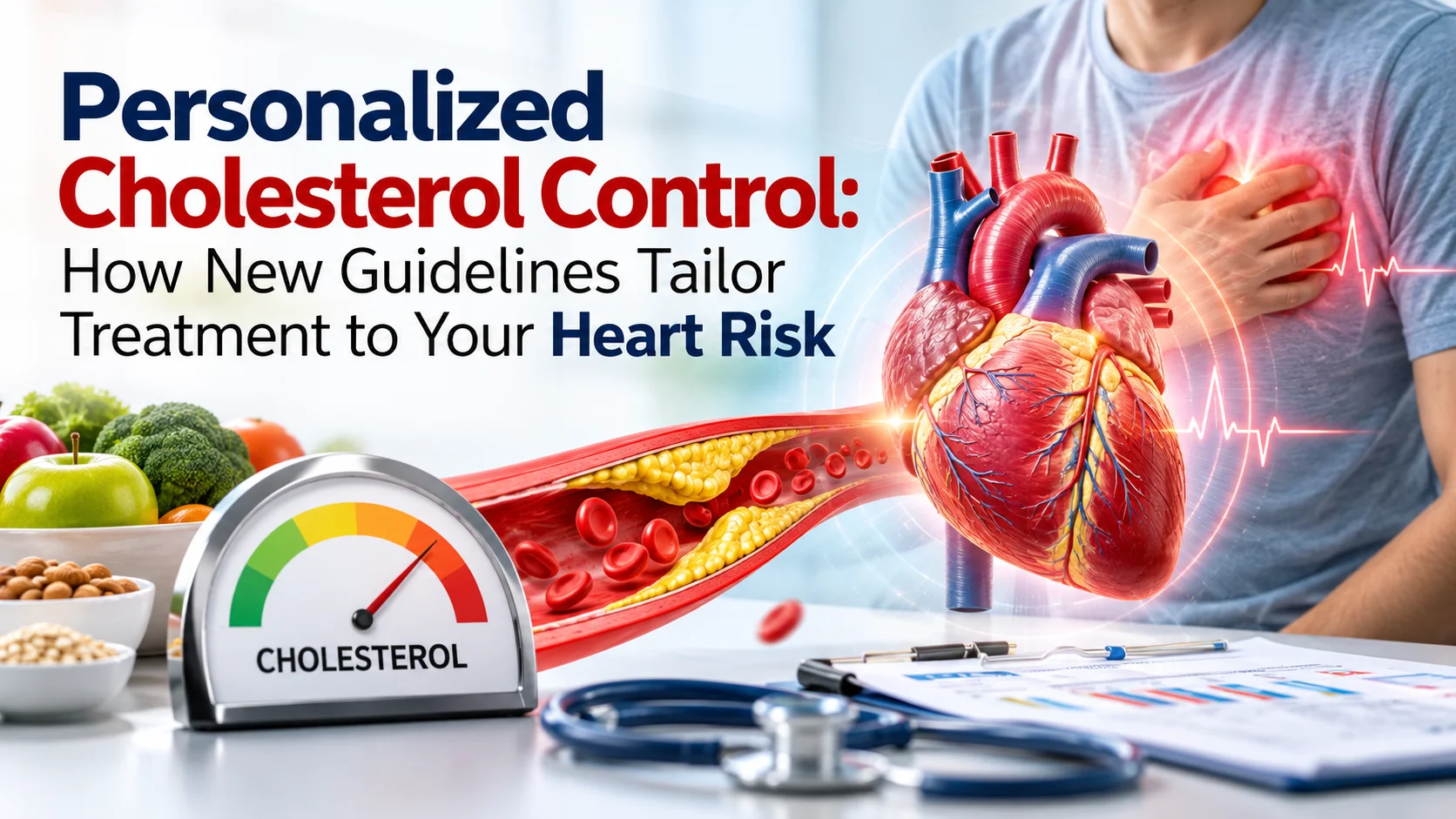
A cholesterol report can look simple: total cholesterol, LDL, HDL and triglycerides. But two people with the same LDL number may not have the same cardiovascular risk. That is why the 2026 ACC/AHA multisociety dyslipidemia guideline places greater emphasis on personalized risk assessment rather than treating cholesterol numbers in isolation.
The updated guidance replaces the 2018 cholesterol guideline and brings LDL-C treatment goals, newer risk calculations and additional markers such as lipoprotein(a) into clinical decision-making
What Is Personalized Cholesterol Control?
Quick answer: Personalized cholesterol control means choosing lifestyle measures, monitoring and lipid-lowering treatment according to a person’s overall cardiovascular risk, not just one cholesterol value.
Doctors may consider age, blood pressure, diabetes, kidney disease, family history, previous cardiovascular disease and additional lipid markers when assessing risk.
Why Does Heart Risk Matter?
Quick answer: LDL cholesterol contributes to atherosclerosis, but the impact of an LDL level depends partly on a person’s broader cardiovascular risk profile.
The 2026 guideline emphasizes reducing prolonged exposure to atherogenic lipoproteins and encourages earlier prevention when appropriate.
A New Way to Calculate Risk
Quick answer: The guideline recommends the PREVENT-ASCVD equations for estimating 10- and 30-year cardiovascular risk in many adults aged 30–79 without known ASCVD.
The new approach replaces the older Pooled Cohort Equations for this purpose. Risk is categorized as low, borderline, intermediate or high, helping clinicians discuss whether lipid-lowering treatment may be appropriate.
The “Calculate, Personalize, Reclassify” Approach
Quick answer: Risk assessment does not necessarily end with a calculator result.
The guideline describes a three-step approach:
- Calculate cardiovascular risk using PREVENT.
- Personalize the result using additional risk factors.
- Reclassify risk when appropriate, including selective use of coronary artery calcium (CAC) scoring.
This helps create a more individualized cholesterol management plan.
LDL-C Goals Are Back
Quick answer: The 2026 guideline brings specific LDL-C and non-HDL-C treatment goals back into cholesterol management.
For primary prevention, the guideline identifies LDL-C goals below 100 mg/dL for borderline/intermediate-risk adults and below 70 mg/dL for those at high risk. People with very high-risk ASCVD in secondary prevention have a recommended LDL-C goal below 55 mg/dL.
| Risk situation | LDL-C goal mentioned in 2026 guidance |
|---|---|
| Borderline/intermediate primary prevention | <100 mg/dL |
| High-risk primary prevention | <70 mg/dL |
| Very-high-risk ASCVD | <55 mg/dL |
These targets are not intended as self-treatment thresholds; the appropriate goal depends on clinical circumstances.
Lp(a): A Hidden Risk Marker
Quick answer: Lipoprotein(a), or Lp(a), can provide additional information about inherited cardiovascular risk.
The new guideline recommends measuring Lp(a) at least once in adulthood. Higher levels are associated with increased long-term risk of heart attack and stroke, while lifestyle changes generally have little effect on Lp(a) levels.
Where Does ApoB Fit In?
Quick answer: ApoB can help identify residual lipoprotein-related risk that may not be fully reflected by a standard lipid panel.
It may be particularly useful in people with elevated triglycerides, diabetes or other cardiometabolic risk factors, including situations where LDL-C appears controlled.
Lifestyle Still Comes First
Quick answer: Personalized cholesterol management does not mean medication for everyone.
The guideline continues to emphasize heart-healthy eating, physical activity, healthy weight, tobacco avoidance and healthy sleep. Medication may be added when the person’s risk and cholesterol levels indicate that lifestyle measures alone are insufficient.
What Treatments May Be Used?
Quick answer: Statins remain the foundation of lipid-lowering treatment, while additional medicines may be considered when LDL-C remains above the desired level.
Depending on individual risk and treatment response, clinicians may consider medicines such as ezetimibe, bempedoic acid or PCSK9 inhibitors. Treatment should be selected through a clinician-patient discussion.
What Does This Mean for People in India?
Quick answer: The principle of individualized cardiovascular risk assessment is relevant to Indian patients, but treatment decisions should be based on a person’s clinical profile and guidance from their healthcare professional.
A cholesterol report should therefore be interpreted alongside blood pressure, diabetes status, smoking, family history, kidney health and other relevant factors rather than viewed as an isolated number.
Can Cholesterol Control Prevent Heart Disease?
Quick answer: Lowering elevated atherogenic cholesterol can reduce cardiovascular risk, but cholesterol is only one part of overall prevention.
The practical goal is long-term risk reduction through appropriate lifestyle measures, monitoring and treatment when indicated. The 2026 guideline places particular emphasis on reducing prolonged exposure to elevated atherogenic lipoproteins.
Personalized Cholesterol Control Frequently Asked Questions
What is personalized cholesterol management?
It means tailoring cholesterol treatment to overall cardiovascular risk rather than relying on LDL-C alone.
What is the new PREVENT cholesterol risk calculator?
PREVENT-ASCVD estimates 10- and 30-year cardiovascular risk and is recommended in the 2026 guideline for appropriate adults.
Should everyone with high cholesterol take a statin?
Not necessarily. Treatment depends on cardiovascular risk, cholesterol levels, medical history and clinician-patient discussion.
What is Lp(a)?
Lp(a) is a lipoprotein influenced substantially by genetics that can contribute to cardiovascular risk.
Can lifestyle changes lower cholesterol?
Heart-healthy eating, physical activity, weight management and avoiding tobacco can support healthier lipid levels and cardiovascular health.
Key Takeaway
The 2026 approach moves cholesterol management toward risk-based, individualized care. Instead of asking only, “Is my cholesterol high?”, the more useful question is: “What does my overall cardiovascular risk mean for my cholesterol goals and treatment?”
A personalized assessment can help turn a routine lipid report into a clearer prevention plan.