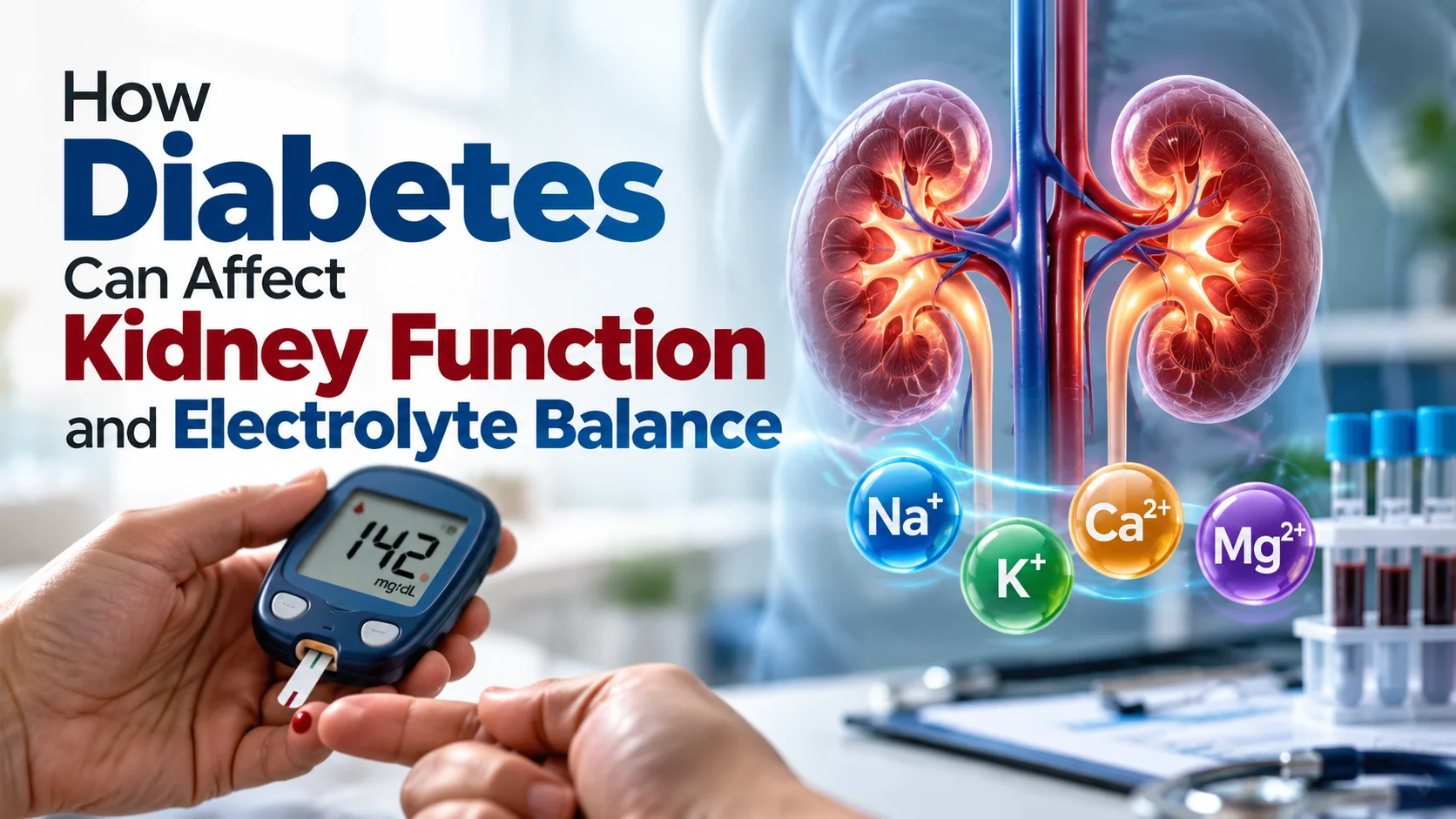
For many people living with diabetes, blood sugar is the main health concern. But the kidneys also deserve attention. Over time, diabetes can affect the small blood vessels and filtering structures inside the kidneys. As kidney function changes, the body’s ability to maintain the right balance of fluids and electrolytes can also be affected.
The good news is that early kidney screening and good diabetes management can help identify problems sooner. Current 2026 American Diabetes Association (ADA) guidance recommends regular assessment of kidney function in people with diabetes.
What Is Diabetic Kidney Disease?
Quick answer: Diabetic kidney disease is kidney damage associated with diabetes. High blood glucose and high blood pressure can damage kidney blood vessels and filtering structures over time, potentially reducing the kidneys’ ability to remove waste and maintain fluid and electrolyte balance.
The condition may develop gradually, and many people have no obvious symptoms in its early stages.
How Does Diabetes Affect Kidney Function?
Quick answer: Persistently high blood glucose can damage the kidney’s filtering system. Over time, this may lead to albumin leaking into the urine and a decline in estimated glomerular filtration rate (eGFR).
High blood pressure can add further stress to the kidneys. Diabetes and hypertension together therefore require careful management.
What Are Electrolytes?
Quick answer: Electrolytes are minerals that carry an electrical charge and help regulate important body functions, including fluid balance, nerve activity and muscle function.
Important electrolytes include:
- Sodium
- Potassium
- Calcium
- Phosphorus
- Magnesium
Healthy kidneys help regulate several of these minerals by controlling how much is retained or removed from the body.
Why Can Kidney Disease Affect Electrolyte Balance?
Quick answer: When kidney function declines, the kidneys may become less effective at maintaining the body’s normal chemical balance. Changes can involve electrolytes such as potassium, as well as calcium and phosphorus in more advanced kidney disease.
However, electrolyte abnormalities do not occur in exactly the same way in every person with diabetes or kidney disease.
What Happens to Potassium?
Quick answer: Potassium levels can become abnormal when kidney function is reduced, and some medicines used in people with diabetes and kidney disease can also affect potassium levels.
The ADA recommends periodic potassium monitoring in appropriate patients with CKD who take ACE inhibitors, ARBs or mineralocorticoid receptor antagonists because these medicines can increase potassium levels. Diuretics can have the opposite effect and may contribute to low potassium.
This is why people should not change or stop prescribed medicines based on a potassium result without medical advice.
Which Tests Check Kidney Function?
Quick answer: Two important assessments are estimated glomerular filtration rate (eGFR) and the urine albumin-to-creatinine ratio (UACR).
| Test | What it helps assess |
|---|---|
| eGFR | How well the kidneys filter blood |
| UACR | Albumin leaking into urine |
| Serum creatinine | Used to calculate eGFR |
| Electrolytes | Helps assess chemical and fluid balance |
The ADA recommends at least annual UACR and eGFR assessment for all adults with type 2 diabetes and for people with type 1 diabetes after five years of disease duration.
Can Kidney Damage Happen Without Symptoms?
Quick answer: Yes. Diabetic kidney disease can remain silent for a long time, which makes routine testing particularly important.
NIDDK notes that many people with diabetic kidney disease do not have symptoms and recommends blood and urine testing to identify kidney problems.
A normal-feeling day does not necessarily mean kidney function is normal.
What Increases the Risk?
Quick answer: Longer duration of diabetes, poorly controlled blood glucose, high blood pressure, smoking, excess weight, physical inactivity and cardiovascular disease can increase the risk of kidney complications.
Family history may also be relevant.
How Can People Protect Kidney Health?
Quick answer: Managing blood glucose and blood pressure, taking prescribed medicines correctly, staying physically active and following an appropriate eating plan can help protect kidney health.
Practical steps include:
- Monitor blood glucose as advised.
- Keep blood pressure under appropriate medical guidance.
- Attend regular kidney screening.
- Avoid smoking.
- Follow prescribed medicines.
- Discuss supplements and over-the-counter medicines with a healthcare professional.
Why Is Regular Monitoring Important?
Quick answer: Monitoring can identify changes in kidney function before complications become more advanced and can help healthcare professionals adjust treatment when necessary.
The 2026 ADA Standards recommend monitoring UACR and eGFR and also highlight potassium monitoring in specific patients with CKD receiving medicines that affect potassium.
For people with established CKD, monitoring frequency depends on the stage and individual clinical situation.
Diabetes and Kidney Function: Frequently Asked Questions
Can diabetes damage the kidneys?
Yes. Diabetes can damage kidney blood vessels and filtering structures over time and is a major cause of chronic kidney disease.
Can diabetes cause electrolyte imbalance?
Diabetes itself does not automatically cause an electrolyte imbalance, but diabetes-related kidney disease and certain treatments can affect electrolyte levels.
What is the most important kidney test for people with diabetes?
Both eGFR and UACR provide important information. They assess different aspects of kidney health and should be interpreted together.
How often should people with diabetes check kidney function?
The ADA recommends at least annual UACR and eGFR assessment for adults with type 2 diabetes and for people with type 1 diabetes after five years of disease duration. More frequent monitoring may be appropriate when CKD is present.
Can diabetic kidney disease be prevented or slowed?
Good management of blood glucose and blood pressure, along with appropriate medical treatment and regular monitoring, can help prevent or slow kidney damage.
Conclusion
Diabetes and kidney health are closely connected. Persistent high blood glucose and high blood pressure can damage the kidneys, while declining kidney function can affect the body’s ability to maintain fluid and electrolyte balance.
The key takeaway: don’t wait for symptoms. Regular eGFR and UACR testing, appropriate electrolyte monitoring, and good diabetes management can help identify kidney problems earlier and support long-term kidney health.