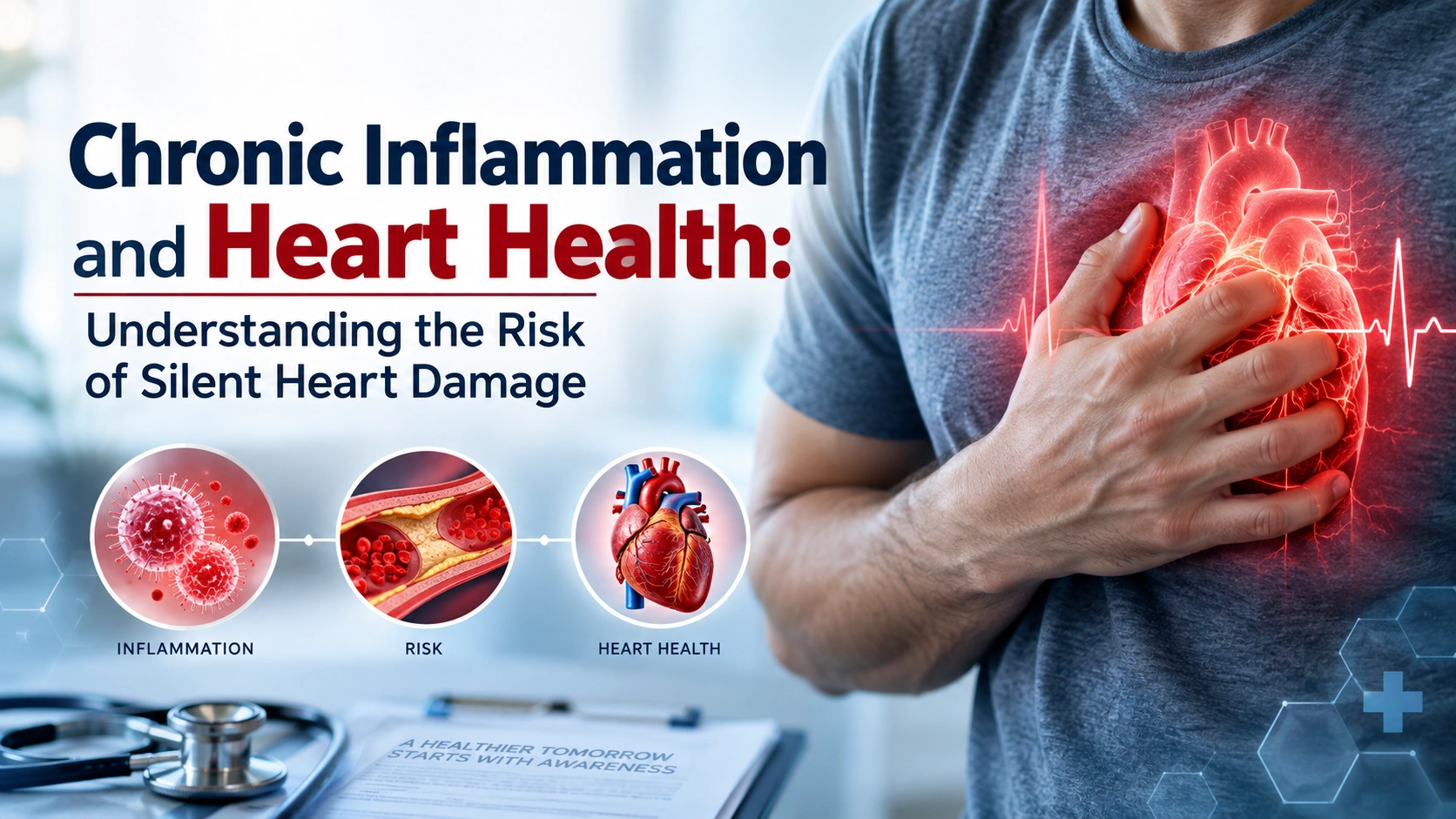
A heart problem does not always announce itself with dramatic chest pain or obvious symptoms. In some people, changes in the heart or blood vessels can develop quietly over time. One area receiving increasing attention is chronic inflammation and heart health—particularly how persistent inflammatory activity may contribute to atherosclerosis, vascular dysfunction and cardiac remodeling.
But an important distinction matters: chronic inflammation is associated with cardiovascular disease, yet that does not mean every person with inflammation will develop heart damage. Understanding the connection can help people discuss their cardiovascular risk with a healthcare professional.
What Is Chronic Inflammation?
Quick answer: Chronic inflammation is a prolonged immune response that can continue when the body is exposed to ongoing injury, metabolic stress or inflammatory disease. Unlike short-term inflammation, persistent inflammation may contribute to tissue and blood-vessel changes over time.
Inflammation is normally part of the body’s defense and repair system. Problems can arise when inflammatory activity does not resolve appropriately. Research increasingly identifies inflammation as an important component of cardiovascular disease.
How Is Chronic Inflammation Linked to Heart Health?
Quick answer: Persistent inflammation can contribute to endothelial dysfunction and the development and progression of atherosclerosis, processes that can increase cardiovascular risk.
Inflammatory pathways involving mediators such as IL-1β, IL-6 and TNF-α have been studied in cardiovascular disease. These pathways can influence blood-vessel function, plaque development and cardiovascular remodeling.
What Does “Silent Heart Damage” Mean?
Quick answer: Silent heart damage refers broadly to cardiac injury or disease that produces few or no noticeable symptoms. A silent heart attack is one specific example and may only become apparent through medical testing.
The American Heart Association notes that some heart attacks occur with little or no obvious symptoms. An ECG, echocardiogram or cardiac MRI may later reveal evidence of previous heart damage.
Therefore, “silent” does not necessarily mean harmless.
Can Inflammation Damage the Heart Without Symptoms?
Quick answer: Persistent inflammation may contribute to cardiovascular changes before obvious symptoms appear, but the relationship is complex and depends on the underlying condition and other risk factors.
Research into subclinical inflammation has identified pathways involving endothelial dysfunction, microvascular changes and myocardial remodeling. Some studies are investigating biomarkers and advanced imaging for identifying these changes earlier.
What Role Does hs-CRP Play?
Quick answer: High-sensitivity C-reactive protein (hs-CRP) is a blood marker that can help indicate systemic inflammation and is associated with cardiovascular risk. It should be interpreted alongside other clinical information rather than used alone to diagnose heart disease.
The American Heart Association and American College of Cardiology recognize hs-CRP as one factor that can help refine cardiovascular risk assessment in appropriate patients.
| Marker or assessment | What it can help indicate |
|---|---|
| hs-CRP | Systemic inflammatory activity |
| LDL cholesterol | Atherosclerotic cardiovascular risk |
| Blood pressure | Vascular and cardiovascular risk |
| Blood glucose | Metabolic risk |
| ECG | Electrical activity and possible cardiac abnormalities |
| Echocardiogram | Heart structure and function |
Which Conditions Can Increase Cardiovascular Risk?
Quick answer: Several chronic inflammatory and cardiometabolic conditions are associated with higher cardiovascular risk, including rheumatoid arthritis, lupus, psoriasis, diabetes, obesity and chronic kidney disease.
Inflammatory diseases can interact with traditional cardiovascular risk factors, making overall risk assessment important.
Having one of these conditions does not mean that heart disease is inevitable.
What Lifestyle Factors Matter?
Quick answer: Healthy lifestyle habits can help address several cardiovascular risk factors that may coexist with chronic inflammation.
Useful habits include:
- Eating a balanced diet
- Maintaining a healthy weight
- Staying physically active
- Avoiding tobacco
- Getting adequate sleep
- Managing blood pressure, cholesterol and blood glucose
- Following prescribed treatment for chronic conditions
Lifestyle alone should not be presented as a treatment for an inflammatory disease. People with chronic conditions should follow their healthcare professional’s advice.
Can Inflammation Be Treated Directly?
Quick answer: Some targeted anti-inflammatory treatments are being studied or used for specific cardiovascular and inflammatory conditions, but treatment depends on the underlying disease and individual risk.
The cardiovascular field has increasingly investigated inflammation-targeted approaches, although not every anti-inflammatory medicine is appropriate for preventing heart disease.
This is why people should not start anti-inflammatory medicines or supplements specifically to “protect the heart” without medical guidance.
Who Should Discuss Heart Risk With a Doctor?
People may benefit from cardiovascular risk assessment if they have factors such as:
- Diabetes
- High blood pressure
- High cholesterol
- Smoking history
- Obesity
- Chronic kidney disease
- A family history of cardiovascular disease
- Long-standing inflammatory diseases
For people in India, including those in Delhi, Mumbai, Bengaluru or other major cities, cardiovascular prevention should be based on individual risk rather than a single test or symptom.
Why Early Assessment Matters
Quick answer: Cardiovascular risk can involve several interacting factors, and some heart problems can remain unnoticed for a long time. Risk assessment can identify areas where prevention or further evaluation may be appropriate.
The 2026 ACC/AHA lipid guideline includes chronic inflammatory conditions and several cardiometabolic factors among considerations that can refine cardiovascular risk assessment.
A practical approach is to discuss blood pressure, cholesterol, glucose, lifestyle, family history and relevant medical conditions during routine healthcare visits.
Frequently Asked Questions About Chronic Inflammation and Heart Health
Can chronic inflammation affect heart health?
Yes. Persistent inflammation is associated with processes involved in cardiovascular disease, including atherosclerosis and vascular dysfunction.
What is silent heart damage?
It describes cardiac injury or disease that may occur with few or no noticeable symptoms. A silent heart attack is one example.
Is hs-CRP a test for heart disease?
hs-CRP measures inflammation and can contribute to cardiovascular risk assessment, but it does not by itself diagnose heart disease.
Can healthy lifestyle habits reduce cardiovascular risk?
Healthy eating, physical activity, avoiding tobacco and controlling blood pressure, cholesterol and glucose can address important cardiovascular risk factors.
Should everyone get an inflammation test?
Not necessarily. Whether hs-CRP or another test is appropriate depends on an individual’s overall cardiovascular risk and should be discussed with a healthcare professional.
Conclusion
Chronic inflammation is increasingly recognized as an important part of cardiovascular disease biology. It can interact with processes such as atherosclerosis, endothelial dysfunction and cardiac remodeling, while some cardiac problems can develop with few noticeable symptoms.
The key message is not to fear inflammation or rely on a single biomarker. Heart health is best understood through the complete picture—risk factors, medical history, lifestyle and appropriate clinical evaluation.