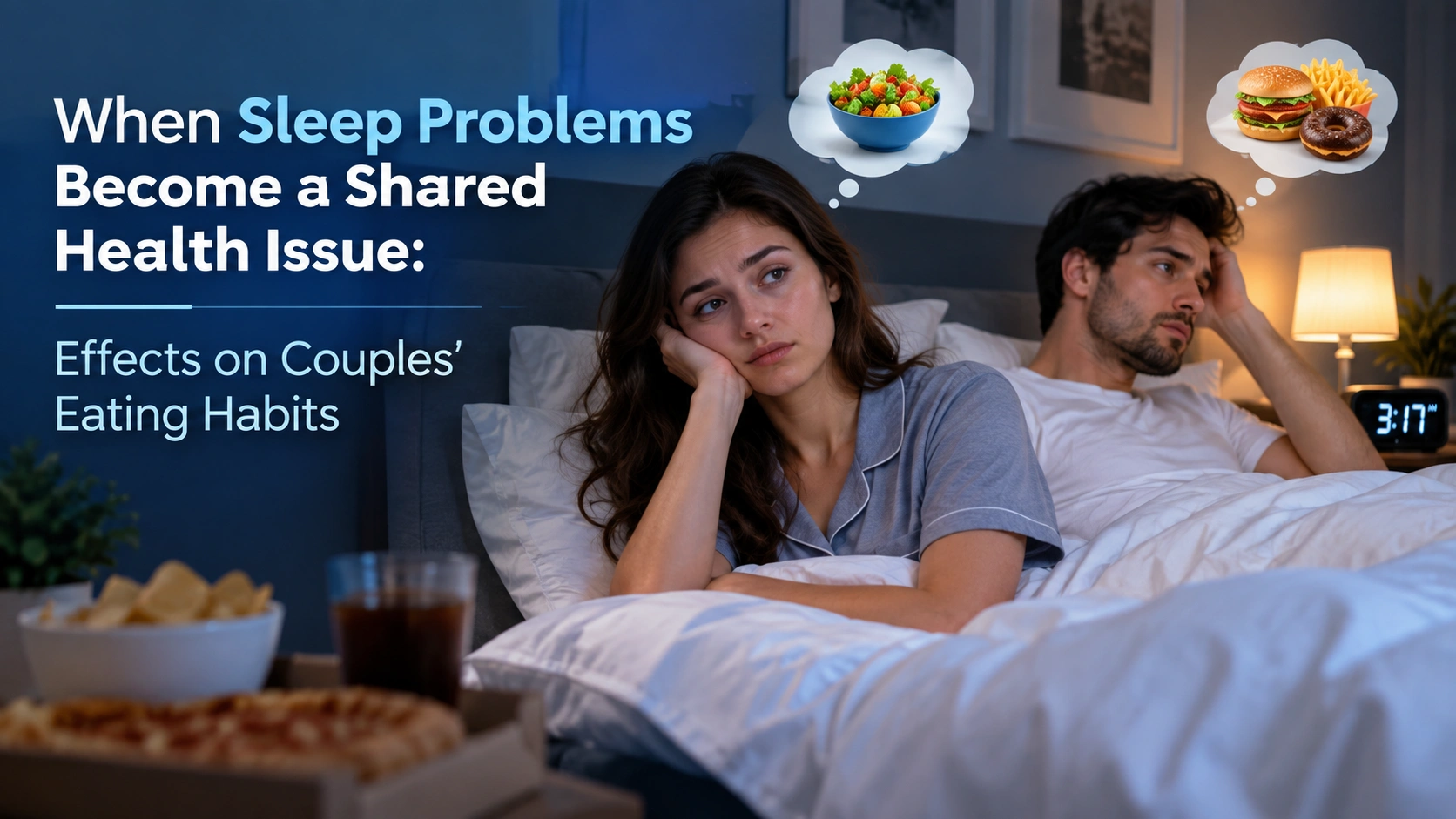
One partner has a restless night. The next morning, breakfast is rushed, meal plans are skipped, and convenience food suddenly seems much more appealing. It may feel like an individual sleep problem—but new research suggests that poor sleep can be connected to both partners’ eating habits.
A 2026 study published in Annals of Behavioral Medicine followed 204 cohabiting couples (408 people) for three months. Researchers found that poorer sleep quality was associated not only with an individual’s diet quality but also with their partner’s diet quality.
What Does Poor Sleep Have to Do With Eating?
Quick answer: Poor sleep can make it harder to maintain healthy eating habits, and this effect may extend to a partner because couples share meals, routines and their home food environment.
Sleep affects more than how rested you feel. Previous research has linked sleep loss with increased calorie intake, more snacking and greater consumption of foods high in fat and carbohydrates. The new study adds a relationship-level perspective.
What Did the New Couples Study Find?
Quick answer: The researchers found significant “actor” and “partner” associations between sleep quality and diet quality.
The study assessed couples at baseline, one month and three months. Participants also completed a 14-day daily diary about diet-related self-regulation. Poorer sleep was associated with poorer diet quality for the individual and their partner.
Importantly, this was an observational study, so it cannot prove that poor sleep directly causes a partner to eat less healthily.
Why Can One Partner’s Sleep Affect Two People?
Quick answer: Couples often share the same kitchen, meals, shopping routines, schedules and food environment.
If one person sleeps poorly, shared routines may become harder to maintain. Meal preparation may be replaced by convenient options, grocery planning may be delayed, or late-night snacking may become more common.
The researchers suggest these shared routines and environments may help explain the partner association.
Sleep Can Affect Healthy-Eating Motivation
Quick answer: The study found that poorer sleep was associated with lower diet-related self-regulation, including reduced self-efficacy and effort.
In simple terms, when someone is tired, sticking to a planned eating routine may require more effort. The study found similar effects associated with a partner’s sleep quality, suggesting that healthy eating can be partly influenced by the couple’s shared environment.
What Happens to Food Choices After Poor Sleep?
Poor sleep does not automatically mean someone will choose unhealthy food. However, previous experimental research has associated sleep restriction with greater calorie intake, more frequent snacking and stronger preference for energy-dense foods.
A practical example is simple: after a difficult night, preparing a balanced meal may feel harder than ordering convenient food.
The Shared Home Food Environment Matters
Quick answer: What is available at home can influence what both partners eat.
If one partner regularly brings highly processed snacks, sugary foods or convenient meals into the home, the other partner is exposed to the same choices.
That does not mean one partner is responsible for another person’s diet. Instead, it highlights how shared environments can support—or make it harder to maintain—healthy habits.
Can Couples Improve Their Eating Habits Together?
Yes. Rather than treating sleep and nutrition as completely separate issues, couples can create shared routines.
Try:
- Planning meals together
- Keeping nutritious snacks available
- Preparing simple meals in advance
- Setting consistent sleep and wake times
- Limiting late-night eating
- Creating a relaxing bedtime routine
- Supporting each other without blame
Small changes can make healthy choices easier for both people.
Sleep and Diet: A Two-Way Relationship?
Quick answer: Sleep and eating habits are connected, but the relationship is complex.
Poor sleep may influence food choices and self-regulation, while diet, meal timing and lifestyle can also affect overall sleep patterns. The 2026 study primarily examined associations between sleep quality, diet quality and self-regulation rather than proving a direct cause-and-effect cycle.
Does One Partner Need to “Fix” Their Sleep?
Not necessarily. Sleep problems can have many causes, including insomnia, stress, irregular schedules and sleep-disrupting conditions.
The goal should be shared support rather than blame. If persistent insomnia or another sleep disorder is suspected, professional evaluation can be appropriate. Research on partner-assisted insomnia interventions also suggests that partners can provide practical and emotional support during treatment.
What Can Couples Do Tonight?
Start with three simple steps:
1. Protect bedtime: Keep a consistent sleep schedule.
2. Prepare tomorrow’s food: Make healthy choices easier when energy is low.
3. Work as a team: Encourage healthier habits instead of criticizing each other’s choices.
These steps are practical, low-cost and adaptable whether you’re living together in Delhi, Mumbai, Bengaluru or elsewhere in India.
Couples’ Sleep and Eating Habits: Quick Comparison
| Situation | Possible Challenge | Helpful Approach |
|---|---|---|
| One partner sleeps poorly | Lower motivation | Prepare meals together |
| Both have irregular schedules | Skipped meals | Plan simple meals |
| Late-night snacking | More convenient foods | Keep healthier options available |
| Poor sleep routine | Shared disruption | Create a consistent bedtime |
| Different health goals | Conflicting choices | Agree on shared household habits |
What Does This Mean for Couples?
Quick answer: Healthy sleep may be worth treating as a shared household priority rather than only an individual concern.
The research suggests that one partner’s sleep quality can be associated with the other partner’s diet quality and diet-related self-regulation. However, researchers emphasize that the observational findings do not establish causation or prove that improving one partner’s sleep will automatically improve both diets.
The bigger lesson is about health habits as a couple. Sleep, food, schedules and the home environment often overlap.
Frequently Asked Questions
Can poor sleep affect eating habits?
Yes. Research has linked poor sleep with poorer diet quality and reduced ability to regulate eating behaviors. The 2026 couples study found associations with both an individual’s and their partner’s diet quality.
Can my partner’s poor sleep affect my diet?
The 2026 study found that poorer sleep quality in one partner was associated with poorer diet quality in the other partner. However, the study was observational and does not prove direct causation.
Why do couples influence each other’s eating habits?
Partners commonly share meals, shopping, cooking routines and the home food environment. These shared factors can influence dietary behaviors over time.
Should couples work on sleep and diet together?
A shared approach can make healthy routines easier to maintain. Couples can coordinate meal planning, sleep schedules and household food choices while avoiding blame.
When should someone seek help for poor sleep?
Persistent or severe sleep problems that interfere with daytime functioning should be discussed with a qualified healthcare professional.
The Bottom Line
Sleep problems may not stay on one side of the bed. New research suggests that poor sleep in one partner is associated with diet quality and healthy-eating self-regulation in both partners.
Rather than blaming one person for unhealthy choices, couples can look at the bigger picture: better sleep, supportive routines and a healthier home food environment can be shared goals.