You wake up after a restless night and tell yourself, “I’ll manage today.” Maybe you reach for another cup of coffee, push through work, and hope the tiredness disappears.
But poor sleep can show up in more ways than simply feeling sleepy. It can affect attention, memory, mood, reaction time, appetite and everyday performance. Over time, consistently inadequate sleep is also associated with several health risks.
For adults, sleep experts generally recommend 7–9 hours of sleep per night. Individual needs can vary, but regularly getting less than you need deserves attention.
What Is Sleep Deprivation?
Quick answer: Sleep deprivation means not getting enough sleep, while sleep deficiency is a broader term that can also include poor-quality sleep, sleeping at the wrong time, or a sleep disorder.
A single poor night does not automatically mean you have a sleep disorder. However, repeated sleep problems can affect daily functioning and overall health.
Practical tip: Look at your sleep pattern over several days rather than judging your sleep from one night alone.
1. Daytime Sleepiness
Question: Why am I extremely sleepy after a bad night?
Quick answer: Insufficient sleep can reduce daytime alertness and make it difficult to stay awake during routine activities.
You may feel like you could fall asleep while reading, watching television, sitting in a meeting or travelling. Excessive daytime sleepiness is one of the clearest signs that your sleep may not be adequate.
Tip: Take unusual daytime sleepiness seriously, particularly before driving.
2. Brain Fog and Poor Concentration
Quick answer: Poor sleep can interfere with attention, learning, memory, decision-making and reaction time.
You might read the same sentence repeatedly, forget small tasks or struggle to concentrate during a meeting. Sleep plays an important role in learning and memory, so a tired brain may not perform at its usual level.
3. Irritability and Mood Changes
Question: Can lack of sleep affect your mood?
Yes. Sleep deficiency can make it harder to manage emotions and cope with everyday challenges. You may become more irritable, frustrated or emotionally sensitive after inadequate sleep.
Real-life example: A small disagreement that normally feels manageable may seem much more stressful after a poor night.
4. Slower Reaction Time
Quick answer: Sleep loss can slow reactions and increase mistakes.
This matters particularly when driving, operating machinery or performing tasks requiring sustained attention. Sleep deficiency can also cause microsleeps—brief, uncontrollable episodes of sleep while you appear to be awake.
Tip: If you feel dangerously sleepy, don’t rely on coffee alone to make driving safe.
5. Changes in Appetite
Quick answer: Inadequate sleep can influence hormones involved in hunger and fullness and may increase food intake.
Sleep deficiency has been associated with changes in ghrelin and leptin, hormones involved in appetite regulation. It can also be associated with greater consumption of fatty, sweet and salty foods.
This may explain why a poor night can leave you craving convenient, energy-dense foods.
6. Headaches and Physical Discomfort
Some people experience headaches, aches, exhaustion or general physical discomfort when sleep is poor. These symptoms can also have many other causes, so they should not automatically be attributed to lack of sleep.
7. Your Immune System May Feel the Impact
Quick answer: Sleep supports normal immune function, while ongoing sleep deficiency can affect how the body’s defenses respond.
That does not mean one sleepless night will automatically make you sick. The bigger concern is persistent or repeated inadequate sleep.
8. When One Bad Night Becomes a Pattern
Occasional poor sleep is common. The concern increases when sleep problems happen repeatedly or interfere with everyday life.
| Occasional Poor Sleep | Ongoing Sleep Problem |
|---|---|
| May follow stress or travel | Happens repeatedly |
| Temporary tiredness | Persistent daytime sleepiness |
| Usually improves | May affect work and relationships |
| Short-term concentration problems | Ongoing attention and mood problems |
| Often resolves with better sleep | May require professional assessment |
The NHS notes that a few nights of poor sleep are usually not a reason for concern, but regular sleep problems can affect mood, appetite, relationships and daily activities.
9. How Much Sleep Do You Need?
Quick answer: Most adults should aim for 7–9 hours of sleep per night.
Sleep requirements vary by age. Teenagers generally need more sleep than adults, while children need considerably more.
The goal is not simply to spend more time in bed. Consistent, good-quality sleep matters too.
10. Simple Ways to Improve Sleep
Try these practical habits:
- Keep a consistent sleep and wake schedule.
- Give yourself enough time for sleep.
- Keep the bedroom quiet, cool and dark.
- Avoid caffeine close to bedtime.
- Avoid heavy meals shortly before bed.
- Limit alcohol before bedtime.
- Use the hour before bed for quieter activities.
- Stay physically active during the day.
Small changes are often easier to maintain than trying to completely redesign your routine overnight.
11. When Should You Talk to a Doctor?
Quick answer: Seek medical advice when sleep problems are persistent, daytime sleepiness is significant, or you regularly wake feeling unrefreshed.
Tell a healthcare professional if you frequently have difficulty falling asleep, repeatedly wake during the night, experience excessive daytime sleepiness, or have symptoms such as loud snoring or waking up gasping. Sleep evaluation can help identify conditions such as sleep apnea and other sleep disorders.
12. The Bigger Picture: Sleep Is Part of Health
Sleep is not simply “downtime.” It supports brain function, physical health, metabolism, immune function and cardiovascular health. Persistent sleep deficiency is associated with increased risks of conditions including obesity, high blood pressure, diabetes, heart disease and stroke.
The important distinction is that association with poor sleep does not mean every health problem is caused by one sleepless night. Long-term patterns and individual health factors matter.
The Bottom Line
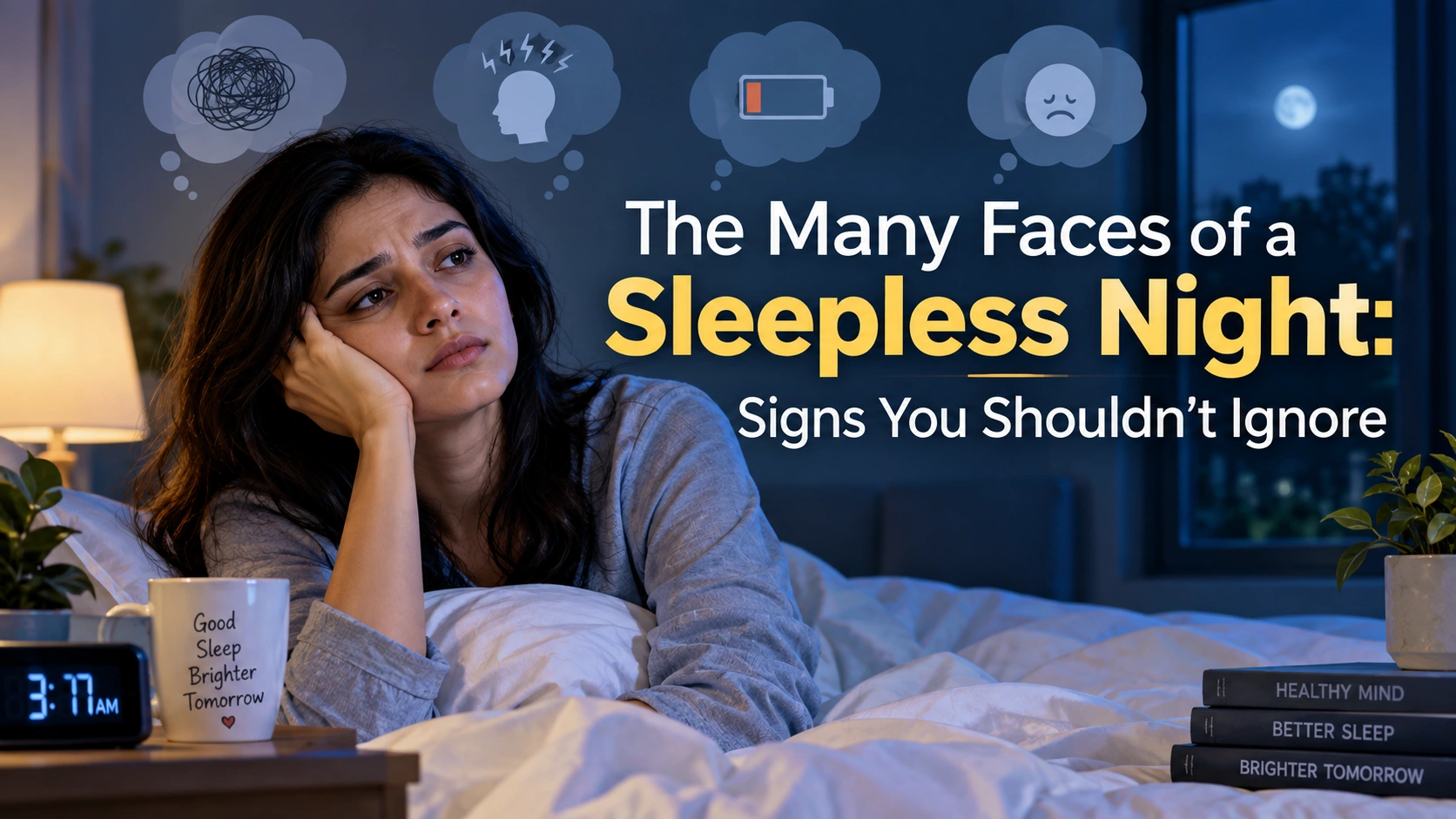
A sleepless night can have many faces: sleepiness, brain fog, irritability, slower reactions, appetite changes and reduced concentration.
One bad night may simply mean you need to recover. But if poor sleep becomes a regular part of life, don’t normalize it.
Better sleep isn’t a luxury—it is part of taking care of your health.
Frequently Asked Questions
What are the common signs of sleep deprivation?
Common signs include daytime sleepiness, difficulty concentrating, slower reactions, memory problems, irritability and reduced ability to manage everyday tasks.
How many hours should adults sleep?
Adults generally need around 7–9 hours of sleep per night. Individual sleep needs can vary.
Can one sleepless night affect concentration?
Yes. Even short-term sleep loss can affect attention, learning, reaction time and decision-making.
Can poor sleep affect appetite?
Yes. Sleep deficiency can affect hormones involved in hunger and fullness and has been associated with increased food consumption.
When should I see a doctor about poor sleep?
Consider speaking with a healthcare professional if sleep problems are frequent, you regularly feel unrefreshed, or significant daytime sleepiness interferes with daily life.