Introduction
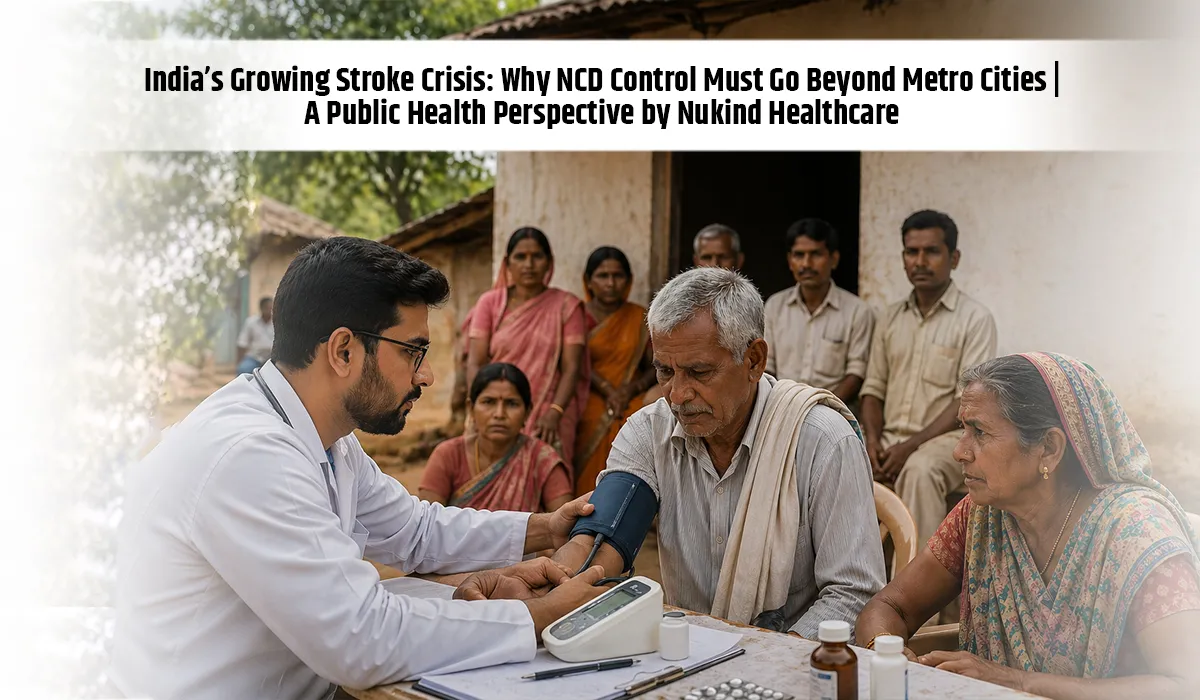
A 52-year-old farmer in a small town wakes up one morning unable to move his arm. His speech is slurred. His family assumes it’s fatigue—until it’s too late. By the time he reaches a hospital in the nearest city, critical hours have passed.
This is not an isolated story. It reflects a much larger and urgent issue—India’s growing stroke crisis: why NCD control must go beyond metro cities.
Stroke, a major non-communicable disease (NCD), is rapidly increasing across India—not just in urban centers but also in semi-urban and rural regions. While metro cities have access to advanced healthcare systems, millions living outside these areas lack early diagnosis, preventive care, and timely treatment.
For global audiences, including the USA, this highlights a broader public health concern: how healthcare inequality can impact outcomes, even in fast-growing economies.
Understanding India’s Growing Stroke Crisis: Why NCD Control Must Go Beyond Metro Cities
The phrase India’s growing stroke crisis: why NCD control must go beyond metro cities reflects a shift in disease patterns. Stroke is no longer limited to aging populations in cities—it is affecting younger individuals and underserved populations.
What is a Stroke?
A stroke occurs when blood supply to the brain is interrupted, leading to brain cell damage. It can be:
- Ischemic stroke: Caused by blockage
- Hemorrhagic stroke: Caused by bleeding
Both require immediate medical attention.
Why Stroke Cases Are Rising in India
India is witnessing a sharp increase in stroke cases due to lifestyle and environmental changes.
Key contributing factors:
- Poor diet and nutrition
- Lack of physical activity
- Rising hypertension and diabetes
- Tobacco and alcohol use
- Stress and pollution
These factors are not limited to cities—they are spreading rapidly to rural and semi-urban areas.
The Urban-Rural Healthcare Gap
One of the biggest reasons behind India’s growing stroke crisis: why NCD control must go beyond metro cities is the disparity in healthcare access.
In metro cities:
- Advanced hospitals
- Specialized stroke units
- Quick emergency response
In non-metro areas:
- Limited healthcare facilities
- Lack of specialists
- Delayed diagnosis and treatment
This gap significantly affects survival and recovery rates.
Why NCD Control Must Extend Beyond Metro Cities
Non-communicable diseases like stroke require long-term management and prevention strategies.
Challenges outside metro cities:
- Low awareness of symptoms
- Limited preventive screenings
- Inadequate healthcare infrastructure
- Financial constraints
To address India’s growing stroke crisis, NCD control programs must reach grassroots levels.
The Importance of Early Detection and Awareness
Time is critical in stroke management.
Common warning signs (FAST method):
- F – Face drooping
- A – Arm weakness
- S – Speech difficulty
- T – Time to act
Awareness campaigns can save lives by encouraging early intervention.
Preventive Healthcare: A Key Solution
Prevention is the most effective way to reduce stroke risk.
Key preventive measures:
- Regular health check-ups
- Blood pressure monitoring
- Healthy diet
- Physical activity
- Stress management
Preventive healthcare must be made accessible beyond urban populations.
Role of Pharmaceutical Companies in NCD Control
Pharmaceutical companies play a critical role in addressing India’s growing stroke crisis: why NCD control must go beyond metro cities.
Their contributions include:
- Developing effective medications
- Supporting awareness campaigns
- Ensuring affordable drug availability
- Expanding distribution networks
Companies like Nukind Healthcare contribute by focusing on accessible and reliable healthcare solutions.
Bridging the Gap: Technology and Telemedicine
Technology can help overcome geographical barriers.
Key solutions:
- Telemedicine consultations
- Mobile health units
- Digital health monitoring
- AI-based diagnostics
These innovations can bring healthcare closer to underserved populations.
Lessons for Global Healthcare Systems (Including the USA)
While the context is India, the message is global.
Healthcare systems worldwide face challenges in:
- Rural healthcare access
- Preventive care adoption
- Managing chronic diseases
The lesson is clear—healthcare must be inclusive and proactive.
Practical Steps to Strengthen NCD Control
To address India’s growing stroke crisis, a multi-layered approach is needed:
Government initiatives:
- Expand rural healthcare infrastructure
- Increase funding for NCD programs
Healthcare providers:
- Focus on early diagnosis
- Promote preventive care
Individuals:
- Adopt healthier lifestyles
- Recognize early symptoms
Changing Perception: From Treatment to Prevention
Traditionally, healthcare has focused on treatment. However, the future lies in prevention.
A shift toward preventive care can:
- Reduce disease burden
- Lower healthcare costs
- Improve quality of life
This is essential for tackling India’s growing stroke crisis.
The Road Ahead: A Collective Responsibility
Addressing stroke and NCDs requires collaboration between:
- Government bodies
- Healthcare providers
- Pharmaceutical companies
- Communities
Only a collective effort can ensure that healthcare reaches every corner of the country.
Conclusion
India’s growing stroke crisis: why NCD control must go beyond metro cities is not just a healthcare issue—it is a societal challenge.
From awareness and prevention to infrastructure and innovation, every step matters. Expanding healthcare access beyond urban centers is essential to saving lives and building a healthier future.
For countries like the USA and beyond, the takeaway is clear: healthcare systems must prioritize inclusivity, prevention, and accessibility.
The question is no longer if action is needed—but how soon we can act.