Introduction
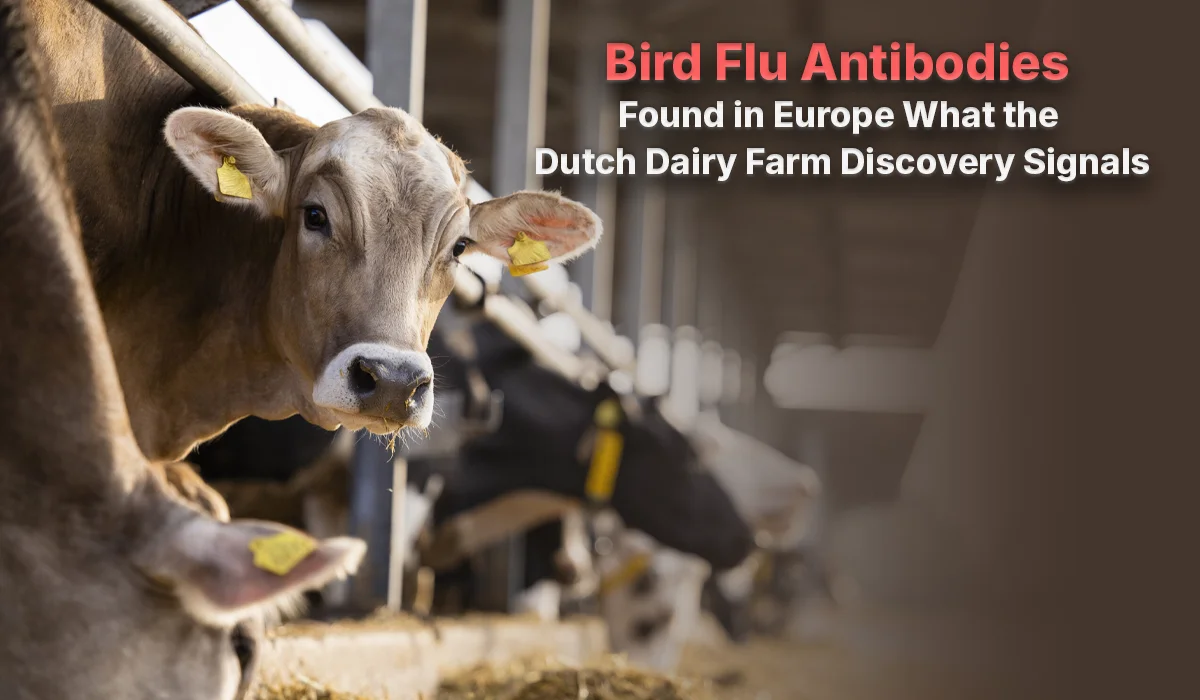
Bird flu has long been considered a threat primarily confined to poultry and wild birds. That assumption is now being re-examined. The recent discovery of bird flu antibodies in a Dutch dairy farm has raised new questions about how avian influenza viruses behave, spread, and adapt in Europe.
The finding—reported after routine health surveillance—suggests that exposure may be broader and more complex than previously understood. Bird Flu Antibodies Found in Europe is no longer a hypothetical scenario; it is a documented event with implications for animal health, human safety, and disease monitoring systems.
As someone who closely follows zoonotic disease research and public health risk assessments, this development stands out as a critical signal. It highlights why avian influenza surveillance in dairy cattle and cross-species transmission studies are gaining urgency worldwide. This article breaks down what the Dutch dairy farm discovery really means—and why it matters now.
What Are Bird Flu Antibodies and Why Does Their Presence Matter?
Bird flu antibodies are proteins produced by the immune system after exposure to an avian influenza virus. Their presence does not necessarily indicate active infection. However, they confirm prior exposure, which is what makes the Dutch dairy farm discovery significant.
In this case, antibody detection suggests that cattle were exposed to a bird flu strain at some point. This challenges the long-held belief that avian influenza viruses rarely interact with livestock beyond birds.
From a public health perspective, bird flu antibodies found in Europe raise important questions:
- How did the exposure occur?
- Was it environmental, feed-related, or wildlife-driven?
- Could similar exposures be happening undetected elsewhere?
These questions explain why experts view antibody findings as early-warning signals rather than isolated anomalies.
Why Is the Dutch Dairy Farm Discovery Trending Across Europe?
The discovery is trending because it represents a potential shift in avian influenza behavior. Europe has invested heavily in monitoring bird flu in poultry, but cattle have not traditionally been part of routine avian influenza surveillance.
Experts are paying attention for three reasons:
- Cross-Species Exposure Risk
While antibodies do not mean illness, they indicate that the virus crossed a biological boundary. That alone warrants deeper investigation. - Food Chain Safety Concerns
Dairy farms sit at the intersection of agriculture and human consumption. Even low-risk findings prompt scrutiny when food systems are involved. - Pandemic Preparedness Lessons
Previous global outbreaks have shown that early signals are often missed or underestimated. This discovery is being taken seriously to avoid repeating that mistake.
The fact that bird flu antibodies were detected without widespread illness suggests surveillance systems are doing their job—but also that they may need to expand.
Can Bird Flu Spread from Cattle to Humans? What Experts Say
This is one of the most searched questions following the announcement. Current evidence indicates that the risk to humans remains very low. No direct transmission from cattle to humans has been confirmed in this case.
Experts emphasize several reassuring points:
- Antibodies indicate exposure, not active infection
- No symptoms were reported in farm workers
- Pasteurization and food safety protocols remain effective
That said, scientists caution against complacency. Avian influenza viruses are known for mutation and adaptation. Monitoring antibody presence helps researchers track how viruses behave outside their usual hosts.
In short, the discovery does not signal an immediate health crisis—but it does reinforce the importance of proactive monitoring.
What This Means for Global Health Surveillance and Policy
The Dutch dairy farm case is already influencing how health authorities think about disease surveillance. Traditionally, monitoring focused on:
- Poultry farms
- Wild bird populations
- Live animal markets
Now, experts are discussing broader livestock surveillance, particularly in regions with dense farming and migratory bird routes.
Key policy implications include:
- Expanding routine testing to non-avian livestock
- Strengthening One Health frameworks that link animal, human, and environmental health
- Improving data sharing between agricultural and public health agencies
The discovery shows that early signals can appear outside expected settings, reinforcing the need for flexible, science-driven monitoring systems.
Conclusion
The finding of bird flu antibodies found in Europe at a Dutch dairy farm is not a cause for panic—but it is a clear signal. It tells us that avian influenza viruses may be interacting with animal populations in ways we are only beginning to understand.
This discovery underscores the value of early detection, cross-sector collaboration, and transparent communication. It also reminds us that public health preparedness depends on paying attention to subtle clues before they become major problems.
As research continues, one thing is certain: the Dutch dairy farm discovery will shape future conversations about zoonotic disease surveillance, food safety, and global health resilience.