Introduction
Have you ever wondered how some beauty brands seem to appear overnight—complete with sleek packaging, trending ingredients, and loyal customers?
Behind many of these brands is a powerful engine most consumers never see: Private Label Cosmetic Manufacturing.
In today’s global beauty market, where skincare and cosmetics trends move fast, launching a brand no longer requires building a factory from scratch. Instead, entrepreneurs, influencers, and established companies are turning to private label cosmetic manufacturing to bring products to life efficiently and professionally.
From indie skincare startups in California to wellness brands expanding across Europe and Asia, private labeling has changed how cosmetics are developed, produced, and distributed. If you’re planning to launch a beauty brand—or scale one—understanding this model is essential.
What Is Private Label Cosmetic Manufacturing?
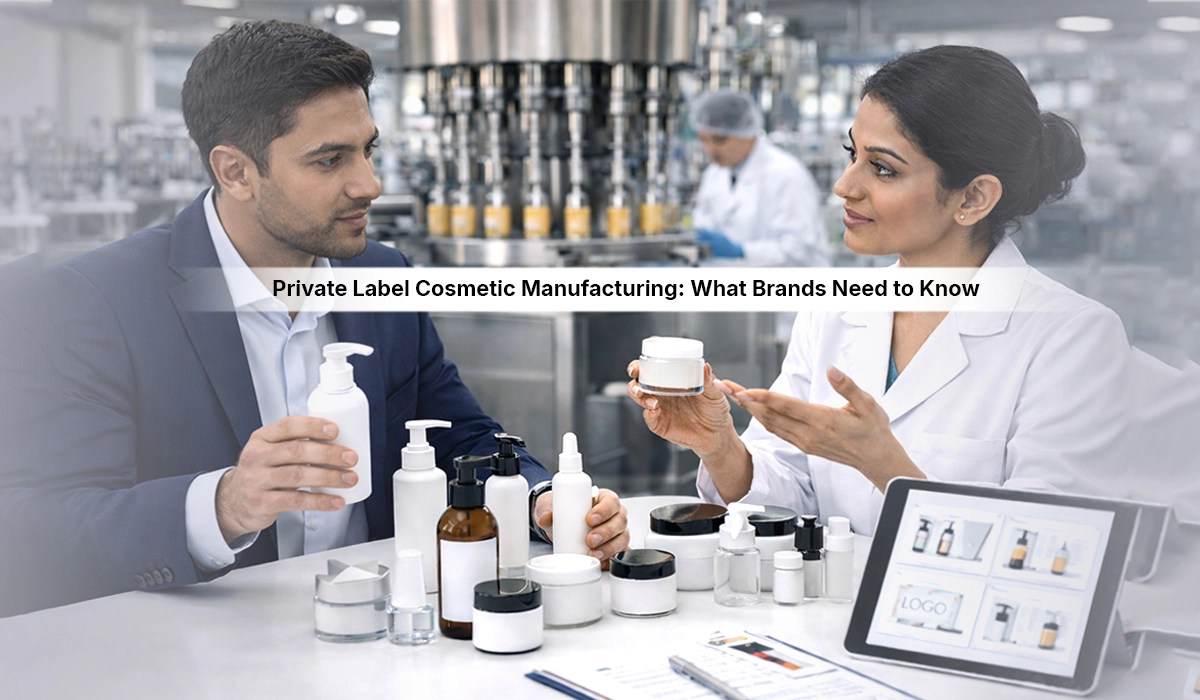
Private Label Cosmetic Manufacturing is a business model where a manufacturer produces cosmetic products that are branded and sold under another company’s name.
In simple terms:
- The manufacturer creates the formula.
- The brand adds its own logo and packaging.
- The product is marketed as the brand’s own.
Unlike custom formulation (where products are developed from scratch), private labeling often uses pre-developed, tested formulations. This reduces time, cost, and complexity.
It allows brands to focus on:
- Marketing
- Brand identity
- Distribution
- Customer experience
While the manufacturer handles:
- Product formulation
- Compliance
- Quality control
- Bulk production
Why Private Label Cosmetic Manufacturing Is Growing Worldwide
The beauty industry is expanding rapidly. Consumers are demanding:
- Clean ingredients
- Vegan formulas
- Cruelty-free products
- Dermatologically tested skincare
Launching quickly matters more than ever.
Private label cosmetic manufacturing offers:
- Faster time to market
- Lower startup investment
- Reduced regulatory burden
- Scalable production
In the United States especially, small business owners are using private label solutions to enter crowded markets without heavy capital investment.
How Private Label Cosmetic Manufacturing Works
Step 1: Selecting a Manufacturer
Brands begin by choosing a private label cosmetic manufacturer that offers:
- GMP certification
- FDA-compliant processes (in the USA)
- Ingredient transparency
- Clear MOQs (minimum order quantities)
This partnership is critical. The manufacturer becomes the backbone of the brand.
Step 2: Choosing Products
Manufacturers often offer ready-made categories such as:
- Facial serums
- Moisturizers
- Body lotions
- Lip balms
- Hair oils
- Sunscreens
Brands select formulations that match their target audience.
Step 3: Branding and Packaging
The product formula may stay the same, but the identity changes.
Brands design:
- Labels
- Logo
- Outer packaging
- Marketing claims
This is where differentiation happens.
Step 4: Compliance and Testing
In the USA and other major markets, cosmetics must follow safety regulations.
Private label cosmetic manufacturing companies usually:
- Conduct stability testing
- Ensure ingredient compliance
- Maintain manufacturing records
- Provide necessary documentation
Step 5: Production and Delivery
Once finalized:
- Products are manufactured in bulk
- Labeled
- Packed
- Shipped to distribution centers
Brands then take over marketing and sales.
Private Label vs Custom Cosmetic Manufacturing
Many brands confuse these two models.
| Private Label | Custom Formulation |
|---|---|
| Ready-made formula | Developed from scratch |
| Faster launch | Longer R&D phase |
| Lower cost | Higher investment |
| Less flexibility | Full creative control |
Private label cosmetic manufacturing is ideal for startups and mid-sized brands wanting speed and efficiency.
Benefits of Private Label Cosmetic Manufacturing
1. Lower Startup Costs
No need to invest in:
- Equipment
- Lab facilities
- Regulatory teams
This reduces financial risk.
2. Faster Time to Market
Instead of spending 12–18 months on development, brands can launch in weeks.
3. Professional Quality Standards
Established manufacturers operate under:
- GMP guidelines
- International safety standards
- Quality control systems
4. Scalability
As sales grow, production can scale without new infrastructure.
5. Focus on Brand Growth
Founders can concentrate on:
- Social media marketing
- Influencer collaborations
- Retail expansion
Instead of managing production logistics.
Key Things Brands Must Evaluate Before Choosing a Manufacturer
Ingredient Transparency
Consumers today want clean beauty. Brands must understand:
- Active ingredients
- Preservatives
- Allergen risks
Regulatory Compliance
For U.S. brands, compliance includes:
- FDA cosmetic labeling requirements
- INCI ingredient listing
- Safety substantiation
MOQ (Minimum Order Quantity)
Some manufacturers require large production volumes. Startups should seek manageable MOQs.
Customization Options
Even in private labeling, brands may request:
- Fragrance variations
- Packaging upgrades
- Ingredient enhancements
Common Mistakes Brands Make
Choosing Based Only on Price
Low-cost production can compromise quality.
Ignoring Documentation
Always request:
- MSDS sheets
- Ingredient certificates
- Stability reports
Overlooking Packaging Quality
Packaging affects:
- Shelf life
- Brand perception
- Consumer trust
Trends Influencing Private Label Cosmetic Manufacturing
The industry is evolving rapidly.
Clean Beauty
Demand for:
- Paraben-free
- Sulfate-free
- Silicone-free formulas
Sustainable Packaging
Eco-friendly materials are becoming standard.
Personalized Skincare
Brands now segment products by:
- Skin type
- Age
- Climate
Private label cosmetic manufacturing companies are adapting quickly to these demands.
How Private Label Supports Influencer and DTC Brands
Many social media influencers are launching skincare lines.
Private label cosmetic manufacturing allows them to:
- Launch fast
- Test product-market fit
- Expand globally
Without investing in manufacturing plants.
Cost Structure of Private Label Cosmetic Manufacturing
Costs generally include:
- Product formula cost
- Packaging cost
- Label printing
- Bulk production
- Shipping
Pricing varies by:
- Ingredient complexity
- Order volume
- Customization level
Is Private Label Cosmetic Manufacturing Safe?
Yes—when done correctly.
Reputable manufacturers follow:
- GMP guidelines
- Microbial testing protocols
- Stability testing
- Safety assessments
Brands must ensure documentation before selling.
Conclusion
The beauty industry has changed. Today, launching a cosmetics brand is not about owning a factory—it’s about building a strong identity supported by reliable production. Private Label Cosmetic Manufacturing gives brands access to professional-grade formulations, regulatory compliance, and scalable production without overwhelming costs. For startups, influencers, and growing companies, it offers a practical path to market entry. For established brands, it offers expansion opportunities. The key lies in choosing the right manufacturing partner, understanding compliance, and maintaining quality standards. In the end, successful beauty brands are not built only on products—but on trust.