Introduction
Have you ever picked up a skincare product and wondered what really goes into it before it touches your skin?
From moisturizers to serums and cleansers, we use cosmetics every single day. Yet most people rarely think about the process behind those products. Cosmetic manufacturing is not just about mixing ingredients and filling bottles. It is about safety testing, scientific formulation, strict quality control, and earning long-term consumer trust.
In today’s world—especially in the USA and global markets—consumers demand transparency, clean formulations, and regulatory compliance. Understanding cosmetic manufacturing helps you make better choices and builds confidence in what you apply to your skin.
This guide explains cosmetic manufacturing clearly, simply, and honestly—focusing on safety, science, and skin trust.
What Is Cosmetic Manufacturing?
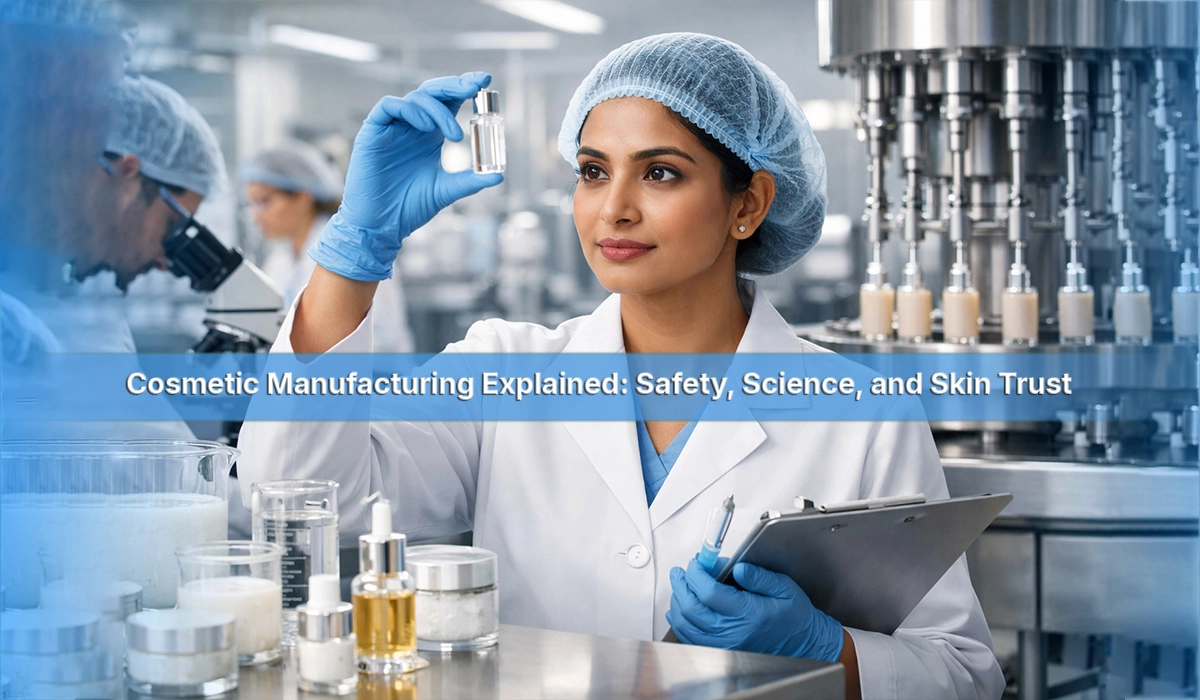
Cosmetic manufacturing is the process of developing, testing, producing, and packaging beauty and personal care products under controlled scientific and regulatory standards.
It includes:
- Ingredient sourcing
- Formula development
- Stability and safety testing
- Quality control
- Regulatory compliance
- Packaging and labeling
Modern cosmetic manufacturing combines chemistry, dermatology, microbiology, and engineering. The goal is simple: create products that are safe, stable, effective, and consistent.
It is not just production. It is structured scientific development.
Why Cosmetic Manufacturing Matters More Than Ever
Consumers today are more informed. They read labels. They question ingredients. They look for cruelty-free, clean beauty, dermatologist-tested, and FDA-compliant products.
Because of this shift, cosmetic manufacturing has evolved in three major ways:
- Higher safety expectations
- Stricter regulatory frameworks
- Demand for transparency
A product that looks attractive on the shelf is not enough. It must prove safety, maintain stability, and deliver performance.
Trust is built in the factory—long before it reaches the store.
The Science Behind Cosmetic Formulations
Every cosmetic product starts with formulation science.
A cosmetic formula includes:
- Active ingredients (like niacinamide or retinol)
- Base ingredients (water, oils, emulsifiers)
- Preservatives
- Stabilizers
- Fragrance or color components
Formulators carefully balance pH levels, texture, absorption rate, and compatibility. Even small changes in ingredient ratios can affect performance.
For example:
A cream that is too acidic may irritate skin.
A serum without proper preservation may grow bacteria.
Cosmetic manufacturing ensures formulas remain stable, effective, and safe over time.
Ingredient Safety in Cosmetic Manufacturing
One of the most important parts of cosmetic manufacturing is ingredient safety evaluation.
Before any ingredient is approved:
- Toxicity data is reviewed
- Irritation studies are analyzed
- Allergen potential is examined
- Regulatory approvals are verified
In the United States, cosmetic products must comply with FDA guidelines. In Europe, regulations are even stricter under EU Cosmetic Regulation (EC) No 1223/2009.
Reputable manufacturers also conduct:
- Patch testing
- Microbial testing
- Stability testing
- Dermatological assessments
Safety is not assumed—it is documented.
Quality Control and Good Manufacturing Practices (GMP)
Good Manufacturing Practices (GMP) are the backbone of cosmetic manufacturing.
GMP ensures:
- Clean production environments
- Controlled temperature and humidity
- Proper equipment sanitation
- Batch traceability
- Documentation of every production step
If a problem occurs, manufacturers can trace it back to a specific batch. This system protects consumers and strengthens brand reliability.
The Role of Testing in Cosmetic Manufacturing
Testing ensures product safety and performance before launch.
Key tests include:
Stability Testing
Checks if the product maintains consistency over time under heat, humidity, and light.
Microbial Testing
Ensures no harmful bacteria, yeast, or mold are present.
Compatibility Testing
Confirms the packaging does not react with the formula.
Dermatological Testing
Assesses skin tolerance and irritation potential.
Testing is what separates serious cosmetic manufacturing from low-quality production.
Clean Beauty and Modern Cosmetic Manufacturing
The rise of clean beauty has changed cosmetic manufacturing significantly.
Consumers now look for:
- Paraben-free formulas
- Sulfate-free cleansers
- Silicone-free skincare
- Natural or plant-based ingredients
However, “natural” does not automatically mean safer. Scientific validation remains essential.
Responsible cosmetic manufacturing blends traditional ingredients with modern safety science.
Sustainability in Cosmetic Manufacturing
Sustainability has become central to cosmetic production worldwide.
Modern facilities focus on:
- Reduced water usage
- Eco-friendly packaging
- Responsible ingredient sourcing
- Cruelty-free practices
- Carbon footprint reduction
Sustainable cosmetic manufacturing protects both skin and the environment.
Consumers increasingly choose brands aligned with environmental responsibility.
Private Label and Contract Cosmetic Manufacturing
Many beauty brands do not own factories. Instead, they work with contract manufacturers.
Contract cosmetic manufacturing includes:
- Custom formula development
- Private label production
- Bulk manufacturing
- Regulatory documentation
This model allows entrepreneurs to launch products while ensuring compliance and safety standards are met.
Choosing the right manufacturing partner is critical for brand credibility.
How Cosmetic Manufacturing Builds Skin Trust
Skin trust is earned when:
- Products do not cause irritation
- Results are consistent
- Labels are transparent
- Safety standards are documented
Consumers return to brands they trust. Cosmetic manufacturing is invisible to most people—but it is the foundation of that trust.
When science supports every bottle, confidence follows.
Common Myths About Cosmetic Manufacturing
Myth 1: Natural products need no testing
Even plant-based ingredients can cause allergies. Testing is always necessary.
Myth 2: Expensive products are always safer
Price does not determine safety. Manufacturing standards do.
Myth 3: Preservatives are harmful
Preservatives prevent bacterial growth. Without them, products can become unsafe.
Understanding these realities helps consumers make informed decisions.
Regulatory Compliance in the USA and Globally
In the USA, cosmetic manufacturing must comply with FDA guidelines. While cosmetics do not require pre-market approval like drugs, manufacturers are legally responsible for product safety.
Globally:
- Europe enforces strict cosmetic regulation
- Canada follows Health Canada cosmetic rules
- Asia has varying compliance requirements
International cosmetic manufacturing requires careful regulatory planning.
Innovation and the Future of Cosmetic Manufacturing
Technology is transforming cosmetic production.
Emerging trends include:
- AI-driven formulation development
- Biotechnology ingredients
- Microbiome-friendly skincare
- Personalized cosmetics
- Advanced stability simulation software
The future of cosmetic manufacturing is smarter, cleaner, and more transparent.
Conclusion
Cosmetic manufacturing is more than production—it is a system of safety, science, and responsibility.
From ingredient selection to final packaging, every step influences skin health and consumer trust. In a world where people apply products daily, understanding cosmetic manufacturing empowers smarter choices.
When science leads the process, safety follows.
And when safety is proven, skin trust grows naturally.